A conversation with Lawyer and Legal Technologist Dera Nevin
This is part of my series on thought leaders in the innovation space.
Dera Nevin became a lawyer by way of graphic design. Perhaps not the typical path to law and a surprise even to her. After fifteen years of working in commercial graphic design, Dera decided to sell her business and go to law school. “I broke up my life, stopped doing contract freelance graphic design work, and elected to go to law school, mostly for fun. I ended up liking it, but it wasn’t part of the plan. If you had asked me even two or three years before what I would be doing, my answer wouldn’t have been law school.”
Dera Nevin became the first e-discovery lawyer at a law firm in Canada.
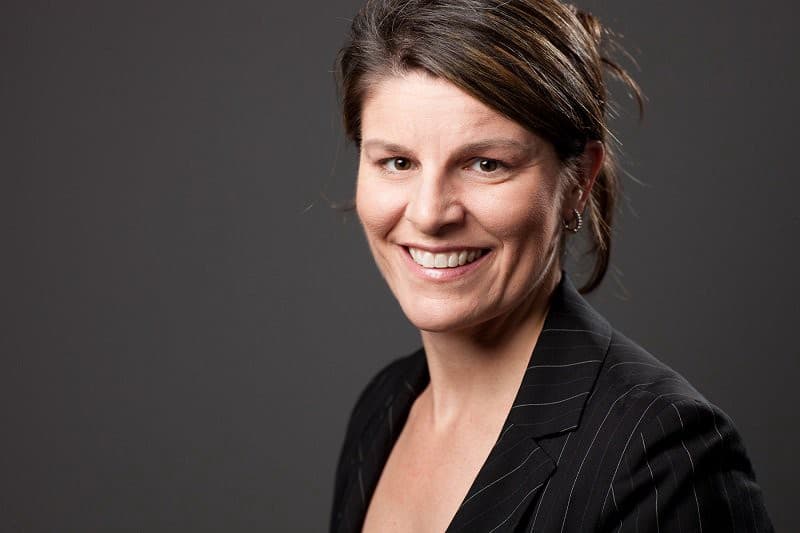
Early in her law career, Dera was one of the few litigators who relied heavily on technology, specifically litigation support technology, which evolved into the field known as e-discovery. Eventually, she became the first e-discovery lawyer at a law firm in Canada. “There were very few people in this particular market who understood technology and business, and who understood what lawyers were doing, and could combine those things.”
Legal Technology
While many envision a lawyer’s office full of paperwork, files, and an old fax machine, Nevin knew technology could amplify what lawyers do and make their jobs easier. “For the past ten years, I’ve moved out of traditional practice. I’ve been helping to modify practice for the digital world, and have been helping lawyers introduce technology or new workflows into their practice. I help lawyers evolve their practice. I can understand net-new legal advice, and I can help lawyers modify their existing practices for greater profitability, efficiency, or effectiveness.”
“I help lawyers introduce technology or new workflows into their practice.”
She’s been described as “innovation counsel.” She sits between technology, business, and practice, and helps people understand opportunities to do things a bit differently.
Room For Improvement
When it comes to innovation, there is always someone out there not making the most of it. Dera sees this in two main areas:
Associating Innovation With Creativity
She says: “If you’re not trying to solve a specific question, or if you don’t have any rigor or discipline around creation, testing, and delivery, you’re unlikely to meet a marketplace need. You’re unlikely to delight customers enough such that they want to spend their time and energy on your product as opposed to what they’re already doing.”
Associating Innovation With Technology
“Technology is always the biggest destroyer of value in the innovation process. Technology requires a significant investment to make something new, and to make it work. It’s among the more risky innovation levers that you can draw. What I see is a lot of people buying technology and then not deploying it. People aren’t using the available modalities within the existing technology they have. You’re just layering more stuff, which is not always effective in generating net-new value.”

What is Cognitive Aikido?
Dera knows she has a lot to offer law firms in terms of innovation, but she also knows that others have experiences she may not. That is why she practices what she calls Cognitive Aikido. “I can put myself, empathetically, in the situation of the person that I’m talking to, but I know that I don’t carry any of the risk associated with that activity. It’s not my name or my reputation on the line when any of this happens. It allows me to ask questions differently than somebody who can’t relate to that moment of stress. Because I can ask questions differently, and because I’ve been trained as a litigator on how to ask questions, I can get them to come to the insight.Often, they come to insights that I can’t come to because I don’t have their personal experience.”
“That’s a form of aikido because I’ve transferred my enthusiasm about the change to them.”
“Because they’ve come to those insights on their own, but through the questions, I’ve asked, it leads to more impact, greater insight, greater propensity for action, and greater collaboration. That’s a form of aikido because I’ve transferred my enthusiasm about the change to them. They’ve sharpened it, they’ve owned it, and since they’re in charge of the business, they can now tell me what to do. They can direct me, which is the most powerful way because you’ve got a stakeholder who’s engaged in the change. Then they’re using my skill set in executing on that change to make it happen.”

How She Defines Innovation
Dera sees the innovation in the outcome — one that makes an impact on a buying or operating decision. She takes a more business-operational approach to measuring change. “There are several ways to do this, but often I look to net-new revenue, or expenses reduced, or additional assets. It can also be measured in customer satisfaction, through retention or referral, or lowering the cost of goods or the cost of new customer acquisition. It can also be measured in net-new products or business lines.”
Before trying to design a successful innovation program, she feels you have to look at the market you are trying to disrupt. “The organizations I work with are generally conservative and risk-averse. There is a low tolerance for failure, a high degree of security involved, and tight reporting lines for all activity… I prefer to have tight relationships with FP&A, risk, and a sponsor to a business line. I find easy wins — things to take away to make people’s lives easier — to get credibility without spending a lot of money.”
Dera’s Innovation Silver Bullet: Credibility, trust, and communication. But mostly: there’s nothing better than a great team of collaborators.
Failure or Revamp
One of Dera’s favorite stories of innovation is when a client felt a program was failing and they were thinking about killing it. Through surveys, they discovered that the program wasn’t the issue; the issue was operating hours that weren’t easily accessible to customers. Dera shared: “We changed the on-ramps and created a 1–800 line that could be accessed before and after the work hours, and eventually developed an on-line Q&A feature. Business jumped a lot just by making those small changes.”
This is an excellent example of how a small change can make a significant impact. Through discovery, you can find out more to be better informed before making big decisions.

My Favorite Technology
Dera feels technology is all around us, but often we fail to see it in the purest forms. “People often ask me what my favorite technology is, and I often just hold up a Post-it note or a piece of paper.”
“The most powerful technology is the technology that disappears. My mug. My marker. All of this is technology. It just may not be computer-based technology. We forget that we do things in a certain way because of existing, pervasive technology.”
“The most powerful technology is the technology that disappears.”
“A lot of what I do when I’m innovating is creating scenarios: ‘What if I were suddenly transported to a world where no paper existed? How would my life change?’ Then we start to think: ‘What if we couldn’t use paper anymore because no more trees existed? That would lead to a host of other problems, but let’s work with that.’ Often we’ll come up with some creative ideas about how we can remove paper from one process, and improve it.”
Dera thinks that jumping immediately to technology solutions can often miss the point. It can be less expensive to start from a simpler perspective before jumping into the costly technologies as the answer.
Risk-Averse and Safe Experimenting
Dera works in a field with clients that have a very low tolerance for failure because of what is at stake. “Lawyers’ inputs are remarkably omnivorous and diverse. Lawyers are remarkably creative people. They have to be because their job is foundationally creative. But, lawyers are conservative in their output, because their clients have a low risk of failure. The consequence of a lawyer ‘failing’ are immense. People go to jail. People lose patents. That’s why lawyers have a low tolerance for failure in output.”
“If somebody had asked me to experiment on the eve of trial, I would’ve told them where to go. When I’m about to go to trial and my client may go to jail, it’s not the time to experiment. I’m going to go with what I know is most likely to work.”
“I create safety cladding around experimentation.”
Dera finds the context and moment where experimentation is safe. “A lot of time, I focus on creating a feeling of safety around lawyers so that they can take a structured risk. A lot of the time, I’m designing proof of concepts so that two things are running in alignment. If the new thing doesn’t work, they can immediately go into their safety harnesses. I create safety cladding around experimentation.”
If you want to read my other articles about innovation experts and practitioners, please check them all out here.