A conversation with Safi Bahcall, entrepreneur, physicist, and author of the bestseller Loonshots
This is part of my series on thought leaders in the innovation space.
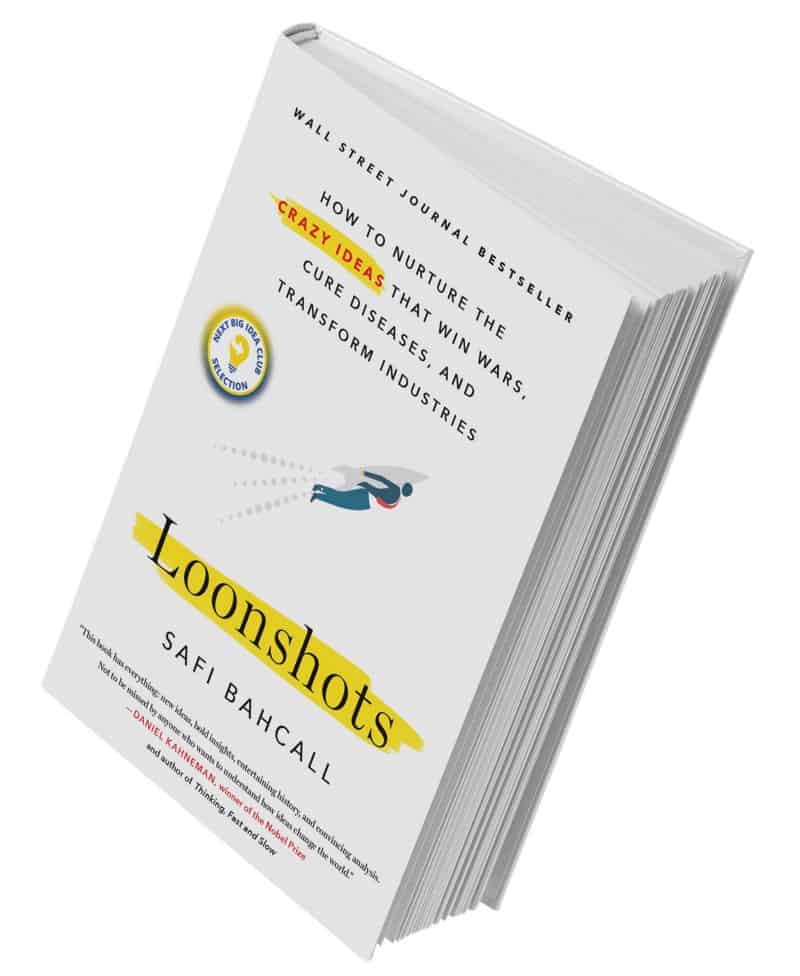
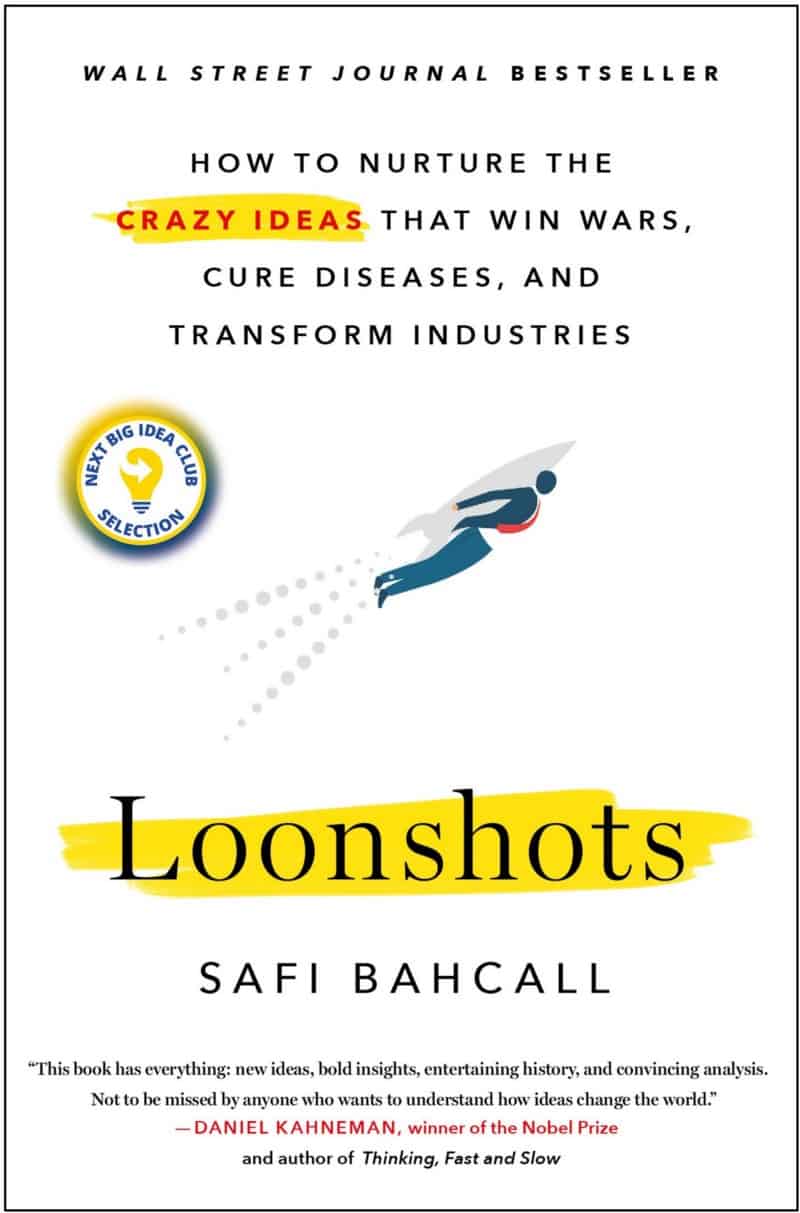
When Bill Gates, Malcolm Gladwell, and Tim Ferriss all recommended a new book, I’ll probably grab a copy. Soon after it was released last March, I read Safi Bahcall’s Loonshots: How to Nurture the Crazy Ideas that Win Wars, Cure Diseases, and Transform Industries. Having really enjoyed the book, I was excited to talk to him on the phone a few weeks ago.
We spoke about Loonshots and the book’s ideas on business and innovation. Our conversation touched on many provocative ideas, such as how team structure and incentives can influence the way people operate and perform.
“If The Da Vinci Code and Freakonomics had a child together, it would be called Loonshots.” — Senator Bob Kerrey
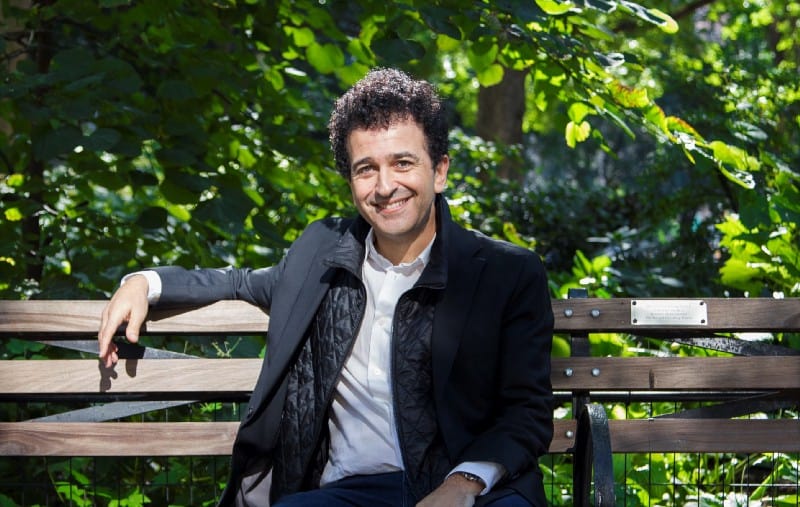
Before we dig into highlights from our conversation, let me tell you a bit more about the impressive Safi. In 2001, Safi co-founded a biotechnology company that developed new drugs for cancer. He led its IPO and served as its CEO for 13 years. In 2008, he was named E&Y New England Biotechnology Entrepreneur of the Year. In 2011, he worked with President Obama’s council of science advisors (PCAST) on the future of national research. Safi received his BA in physics from Harvard summa cum laude and his Ph.D. in physics from Stanford. Safi regularly speaks with leadership teams about innovation, transformation, and reinvention.
Structure, Not Culture
The red thread through our conversation (and one of the main topics in Loonshots) was the idea of how structure defines organizations. “I use storytelling to illustrate that — for example, structure, rather than culture, helped the allies in World War II. There are takeaways, lessons, and rules that companies can apply to innovate faster and better.”
As well as structure, another significant theme was the two forces at play inside any organization: “Whenever you organize people into a group with a reward tied to their mission, you automatically create two competing forces, a tug of war.”
“Whenever you organize people into a group with a reward tied to their mission, you automatically create two competing forces, a tug of war.”
Broadly, I’d describe these two forces as 1) the more “wild,” entrepreneurial, or artistic force and 2) the more conservative, safe, and hierarchical force.
Safi talked about how these competing forces have specific patterns of behavior; he uses his physics background to compare these business patterns to the behavior of water molecules — there is both the flow of liquid and the rigidity of ice. This metaphor helps Safi underscore the difficulty of changing behavior patterns or culture.
“Changing culture is incredibly hard. No amount of singing ‘Kumbaya,’ holding hands, or forcing people to watch a video will change culture. Just like when a glass of water changes from liquid to solid, there’s no CEO molecule with a bullhorn saying, ‘I think it’s 33 Fahrenheit, everybody slosh around. Oh wait, it’s 31, everybody line up.’ That’s called an emergent behavior in physics. They just do it.”
“Changing culture is incredibly hard. No amount of singing ‘Kumbaya,’ holding hands, or forcing people to watch a video will change culture.”

Stake vs. Rank
Safi argues that one of the reasons that it’s hard to enact change in companies is because their existing reward systems lead to specific behaviors. “When you create a team or a company, you create these two forces — one is ‘stake and outcome,’ and the other is ‘perks of rank.’”
“Stake and outcome” is when a business’ outcome or monetary gains directly— and significantly—benefit the people working there. Safi explained: “Let’s say you have ten people at a small biotech company. You’re developing a cancer drug. If it works, everyone is a hero millionaire. It fails; everyone is unemployed. Stake and outcome are huge.”
On the other end of corporate rewards and incentives is what he calls “perks of rank.” He told another story to illustrate: “Now, imagine you’re inside Pfizer. Same drug, same people. Simply the forces are different. Your stake and outcome is tiny. But, if you can make funny remarks in meetings and say something that your boss agrees with and so on, then you might get promoted. So at Pfizer, perks of rank are huge, and stake and outcomes are tiny.”
That’s why Safi believes some organizations are apt to reject wild ideas — they are set up for “perks of rank” versus “stakes and outcome.”
However, the importance of the concept is that by understanding and identifying these forces, you can begin to manage them. “Once you understand a phase transition, you can begin to understand those aspects of a structure and manage it to do what you need. The key is understanding that there are two different phases. Just like there’s a solid and a liquid phase.”
Safi believes that some large companies think they are giving employees “stake and outcome,” but in actuality, they’re not. “Large companies, say ‘Let’s give everybody stock options. Now they’re owners.’ No, they’re not, they’re not owners. Owners are someone who’s outcome of their work is directly tied to their incentives and rewards. For example, if you work harder on your coffee machine, it’s going to move the equity needle by zero. If you work poorly on your coffee machine, it’s going to move the equity needle of your company by zero.” In other words, there’s not enough incentive for the employee to innovate inside this reward structure because the payback for that behavior is minimal.
“If you reward rank, you will create a political culture. If you celebrate and reward results and ideas, you will create an innovative culture.”
Instead, inside large corporations, employees are typically rewarded for playing politics versus being creative. Safi says: “If you play smart politics and suck up to your boss and do a decent job, you might get promoted, and that’s going to matter. So that’s how you encourage politics. Structure drives culture. If you reward rank, you will create a political culture. If you celebrate and reward results and ideas, you will create an innovative culture. It’s less about what you say or what movies you insist people watch.”
The Two Phases
Safi doesn’t see the two types of behaviors or structures as bad or good. Both have their place and benefits. Businesses must have both to succeed and need to learn how to balance the “core” and the “new.”
It’s not about turning everyone into wild-and-crazy innovators with no organizational hierarchy. He stresses that specific patterns are essential for certain aspects of a business: “To make something, you have to create a bridge to the soldiers and the manufacturers who will scale it up and deliver it to customers on time, on budget, and on spec.”
“The takeaway is that there are two phases — solid and liquid. Embrace wild, new innovative ideas, focus on franchise and execution…I’m not a believer that it’s different types of people. Just like if you take a molecule of water, you drop it into a glass of liquid, it’ll slosh around with the other ones. If you drop that same molecule into a block of ice, it’ll freeze. It’s not a property of the molecule; it’s a property of the environment.”
In other words, we might think that people are naturally entrepreneurial or naturally conservative, but Safi sees it more as people molding to their environment. He told this story about when he ran a bio-tech start-up: “We used to tell each other, ‘We’re innovative because we’re risk-taking entrepreneurs and those big corporate guys are risk-averse…’ As we grew up, matured, and started to work with them, we saw that they’re just like us. Exactly like us, and when we would hire them, they were us. And then they would go back to the large company, and they would be that risk-averse. It’s because it’s the environment, the emerging behavior, and the structure.”
Again, this risk-averse nature can be a positive and is even essential: “If you’re trying to manufacture guns, planes, and ships, you need very high-quality control and low failure rates. Risk is a bad thing. If you’ve taken the risk out of a battle — thumbs up, but, if you go to an artist and say, ‘You’ve taken all the risk out of your art,’ that’s a horrific insult.”
So, risk-averse structures and rewards work in specific environments, but failure should be pushed and utterly encouraged with the groups that need to be new, visionary, and innovative.
“You need that artist-creator group to be failing — to be trying ten things, nine of which fail.”
“You want to be trying ten things, and nine of them should fail. And if they don’t, then you’re not pushing the envelope. You’re doing a bad job because your competitor will find something better. You need that artist-creator group to be failing — to be trying ten things, nine of which fail. One should be trying wacky new things; one should be delivered on time, on budget, on spec to customers.”
Org Design
When you know what “type” your team is, that should inform your incentives and rewards. Instead, Safi talked about how companies usually end up somewhere in the muddy middle. He calls this the “What temperature do you like your tea?” question: “If you poll a big audience at South by Southwest and ask them, “What temperature do you like your tea?” the average that you will get is lukewarm room temperature. No one likes room temperature tea. The reason you’re getting that answer is that half like it hot and half like it iced, and the average is lukewarm.”
He continued: “The reason [companies] are getting incentives and management wrong is because it’s asking about the average across the company. Once you realize that there are two phases, there are two completely different objectives. One, you want to maximize risk; one you want to minimize risk. One you want very high, on time, on budget, quality control and then have incentives aligned with that goal. And the other, you want them trying all sorts of new stuff.”
Manage the transfer
The hope is that leaders, teams, and companies can tend to both sides — core and innovation. Additionally, companies need to find successful ways to bridge these two worlds. How does the innovative, artistic, or creative work transfer to the business-minded operations? It’s easy to generate good ideas; it’s not as easy to bring those ideas to life. Safi says: “The failure point is never or rarely in the idea generation. The failure is almost always in the transfer to the field, both directions.”
Some of the issues stem from opposing cultures or patterns: “It starts because they don’t like each other, and for a good reason. [One group] is busy, they’re paid on commission, they’re not paid to try crazy new stuff. With the artists, it’s what I call the ‘beautiful baby program.’ This is a beautiful baby. It’s so beautiful. [But the other guys] see vomit and poop. And that’s exactly right; they’re both right. Babies are beautiful, and they’re covered in vomit and poop. They have nice promising things, but they’re also full of flaws and warts and crap and shit and stuff that blows up, and that never works right.”
Additionally, the tension between the two groups goes back to different incentives. If a product goes poorly, the “soldiers” are not rewarded for failure like the creatives: “It’s not how they’re rewarded. It’s not how they’re measured. It’s not how they’re incentivized.”
In other words, each group needs a matching incentive system and organizational structure: “One you have to incentivize failure, the other you have to decentivize failure. One you want a flat organization, one you want structure.”
“One you have to incentivize failure, the other you have to decentivize failure. One you want a flat organization, one you want structure.”
To define the right management style, organizational structure, and incentives, you need to know what you want to achieve. “When you want accuracy, you want a narrow structure because you want redundancy, and redundancy is perfect. When you’re manufacturing planes, you don’t want a lot of variability or innovation in the freaking screw. But, over here [in innovation], you want as flat as possible because you don’t want it to be about politics and shooting your neighbor’s ideas down and getting promoted. You want it to be a bunch of people, more like a club.”
If you want to read my other articles about innovation experts and practitioners, please check them all out here.