A conversation with innovation consultant and author Tendayi Viki
This is part of my series on thought leaders in the innovation space.
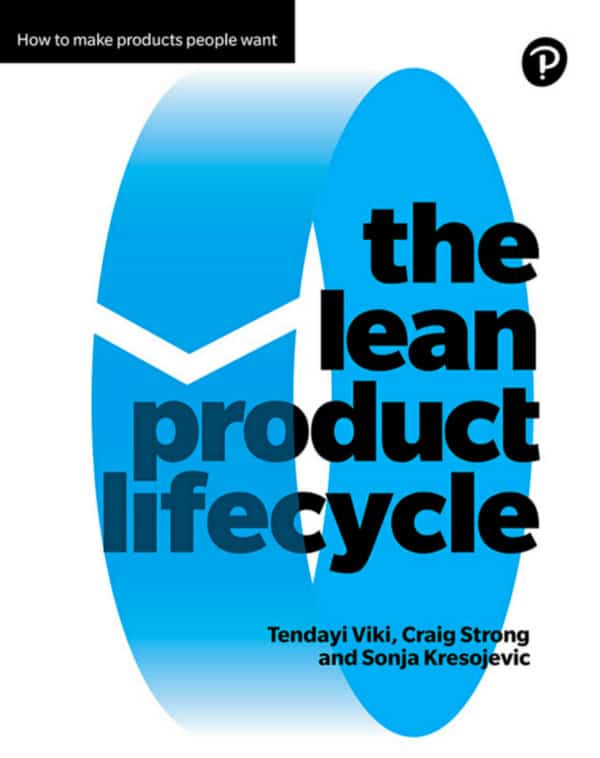
Innovation consultant Tendayi Viki is the author of The Corporate Startup, The Lean Product Lifecycle and is an Associate Partner at Strategyzer, where he “works with leaders to help them rethink how they manage innovation.”
Born and raised in Zimbabwe, Tendayi moved to London when he was 24. Creating and creativity have been central themes in his career. In the early days, this took the form of rapping, which he did until he finished college: “Once I stopped creating, I got interested in the process of creating. Creativity became an interest of mine and then connecting it with business and innovation. I used to write songs. It was a good way to get lost in an artistic pursuit, that calmness you get when you’re writing. I think that’s translated to writing books and articles.”
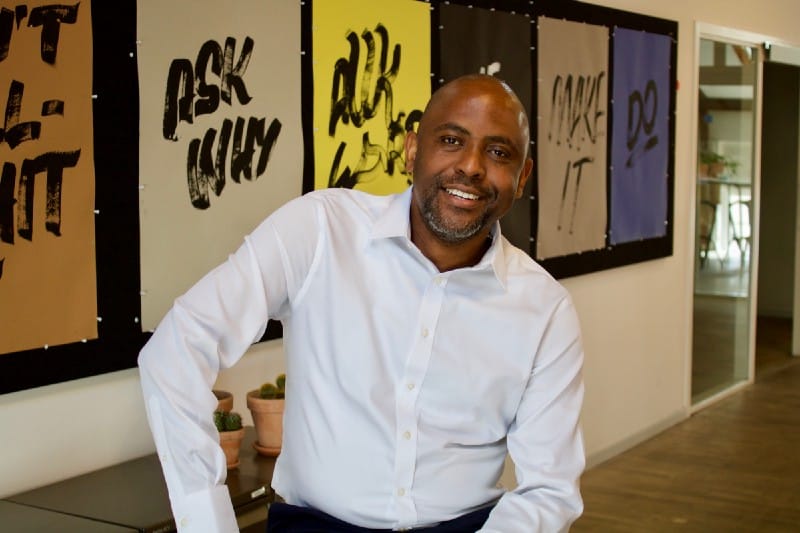
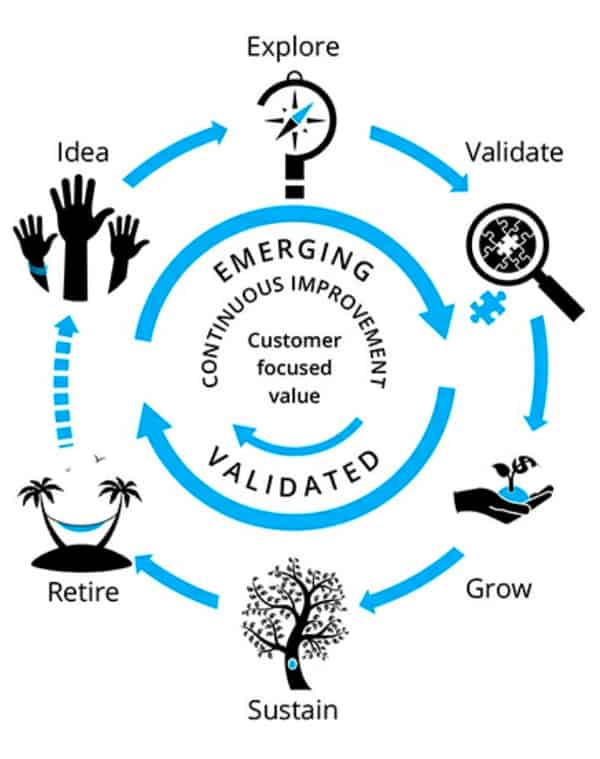
Tendayi’s fascinating career spans academia and business. He holds a Ph.D. in Psychology, an MBA, and is a regular contributing writer for Forbes. In his 12 years in academia, he taught at the University of Kent where he is now Honorary Senior Lecturer. During his time at Pearson, he co-designed Pearson’s Product Lifecycle, which is an innovation framework that won the Best Innovation Program 2015 at the Corporate Entrepreneur Awards in New York.
To What End?
Having worked inside many companies, Tendayi has seen many corporate innovation programs. Across the board, he’s seen one thing that he identifies as a common weakness: “The exclusive focus on ideation.” He explained further: “Ideas are not the same as innovation. Great ideas have to be married to good business models.”
“Ideas are not the same as innovation. Great ideas have to be married to good business models.”
So while hack-a-thons and ideation workshops might be excellent tools, Tendayi encourages companies to always factor in the business aspect: “It always feels as if they think a business question will kill creativity.” This business-minded perspective loops back to his days as a rapper: “It comes from my period as a musician. You can choose to be a starving artist if you want to. Or, you can choose to balance that art with some commercial savviness.”
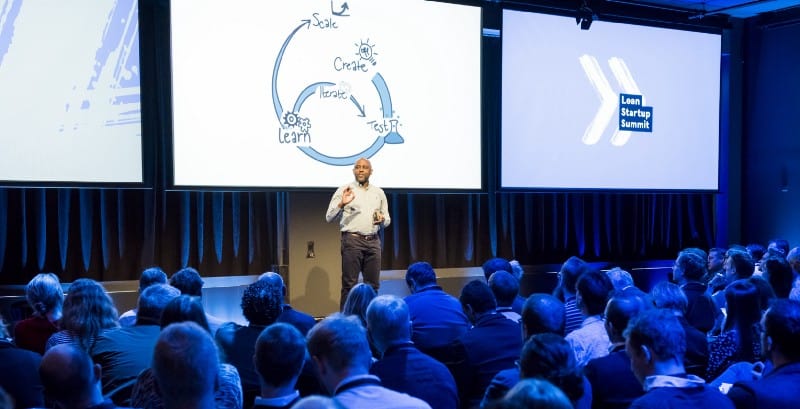
Tendayi also taps into his psychology degree when it comes to consulting with leaders on innovation. “One of the things we say in psychology is that the first step in any therapy is self-awareness. Self-awareness by itself can be curative. It’s a question that few business leaders ask: To what end? We’re doing a hack-a-thon — to what end? We’re doing an ideation jam — to what end?”
“Any innovation activity should be an expression of your strategic intent.”
Tendayi urges companies to start by solidifying their specific “why” before diving into idea generation: “Any innovation activity should be an expression of your strategic intent. Once you answer — ‘to what end?’— you get to the center of why you want to innovate.”
Test & Learn
Tendayi also urges companies not to let their good ideas stall out after they’ve come up with them. “After these events, everybody goes back to their desk and turns on their day job. What do you do after a hackathon? You have to start thinking: how do we bring this idea to life? Bringing this idea to life means more than just making a product. It’s making a product, figuring out how to sell the product, figuring out whether there’s a customer job to be done. Figuring out what the customers are willing to pay to have those problems solved.”
Tendayi believes in having a solid perspective on how you’re going to build your product; however, he’s not a proponent of creating inflexible and supposedly infallible business cases to be executed against. “When we say go find a business model that works, we mean — go test the idea with the possibility that the idea could fail. Go out there, and you test your assumptions; then you might learn from something that works, or you might learn something that doesn’t work. The point is to bring all those lessons and use them to form your next set of decisions.”
“Test your assumptions; then you might learn from something that works, or you might learn something that doesn’t work.”
This more iterative, test-and-learn approach to building products is one that organizations have to cultivate. “It’s hard to make decisions months down the road. You have to make decisions as learnings emerge. It’s a practice that organizations have to have embedded inside their organization — to allow people to be able to do things like that.”
Tendayi’s seen this learn-as-you-go innovation model hindered by two things. First, large businesses have their core business to run. “There’s always a siren call of revenue and more profit in growing the core business. Also, a lot of companies tend to be organized around their main business model.”
Second, decision making and internal processes can also stand in the way of innovation: “There’s a bureaucracy on how to make decisions. The process that leaders require from their employees before they can decide to release money or get ideas funded can either constrain or accelerate your innovation.”
Two Portfolios
While companies may feel that they are reducing risk by having complex processes in place to determine what innovation gets funded, Tendayi sees it as false hope: “Those processes don’t mitigate risk. If I’m an innovation team and I make up a business case, and it’s convincing, you’ll give me all the money, and I could lose it all. Innovation failure is still high in places where they have these business cases. And then they can get strict, which means they only invest in what’s already succeeded in the past. Then companies end up working on things they’ve always worked on.”
Because of the inherent riskiness of innovation endeavors, Tendayi encourages businesses to think of two distinct portfolios. “There’s the portfolio that is the core portfolio where you’re exploiting your current advantages for scale, growth, and revenue. Then there’s a separate portfolio that is your innovations portfolio where you’re exploring new opportunities.”
These two portfolios, which he called the “explore” and “exploit” portfolios, need to be managed differently. The core, exploit portfolio is about cutting costs and growing revenue. On the other hand, with the explore portfolio, Tendayi says: “You protect funding for innovation. You make an incremental bet — small bets that scale as the teams get traction. You use innovation metrics to track success — customer traction, customer need, early sign-ups, retention, and questions like ‘Are we close to profitability or finding a business model that works?’ All of these things are important for tracking your innovation portfolio.”
“With the development of innovation accounting and innovation metrics, leaders don’t have to be patient. They can be patient for profit and revenue, but they can show people progress towards that.” —Tendayi Viki
Tendayi urges companies to have patience as they wait to see how innovation programs are performing. Companies aren’t used to measuring innovation projects: “Historically we’ve only used revenue and profit and customer numbers to measure the success of a product. We tell our leaders to be patient with innovation because it takes a long time to hit that revenue moment. With the development of innovation accounting and innovation metrics, leaders don’t have to be patient. They can be patient for profit and revenue, but they can show people progress towards that.” By tracking things like customer desirability and viability, “innovators can show leaders that if they keep on investing, they’re gonna get closer and closer to a revenue moment.”
Transformation Versus Product Innovation
The behavior change that’s required to support internal innovation at many companies has to be intentional. “You have to do that in a very systematic way. You can’t just say ‘I’m going to change my organization.’ You have to be much more systematic about working with early adopters inside your business and developing those relationships. I’ve noticed that innovators are impatient when it comes to transformation. But it does take time.”
Because of this, Tendayi sees a distinction between the innovators working on new products and services and those that work on the organizational structure to support internal innovation. “In most of the companies I work with, I say, ‘Let’s distinguish these two teams.’ You need a group of people that are responsible for building the innovation system and the innovation architecture. That’s what they do, and they don’t get involved directly in building products. They support the building of the product by building out the innovation architecture. I think that’s critical.”
“Think about the teams that are working on growth and building products as the flowers. Think about the innovation architecture as the garden in which those flowers sit.” — Tendayi Viki
He expanded on this notion with a useful metaphor: “Think about the teams that are working on growth and building products as the flowers. Think about the innovation architecture as the garden in which those flowers sit. The place where the innovations are nurtured and can grow to the light.”
*
Currently, Tendayi is working on two new books, Right Question, Right Time and Pirates in the Navy.
If you want to read my other articles about innovation experts and practitioners, please check them all out here.