Think about these factors when picking a great location for your Design Sprint or creative workshop.
Where you hold your Sprint is critical. Whether you are running a Design Sprint, Innovation Workshop, Visioning Session, or another type of workshop, your venue or space is part of the event’s success. When planning your next workshop, I recommend that you consider these seven things.
1. LOCATION
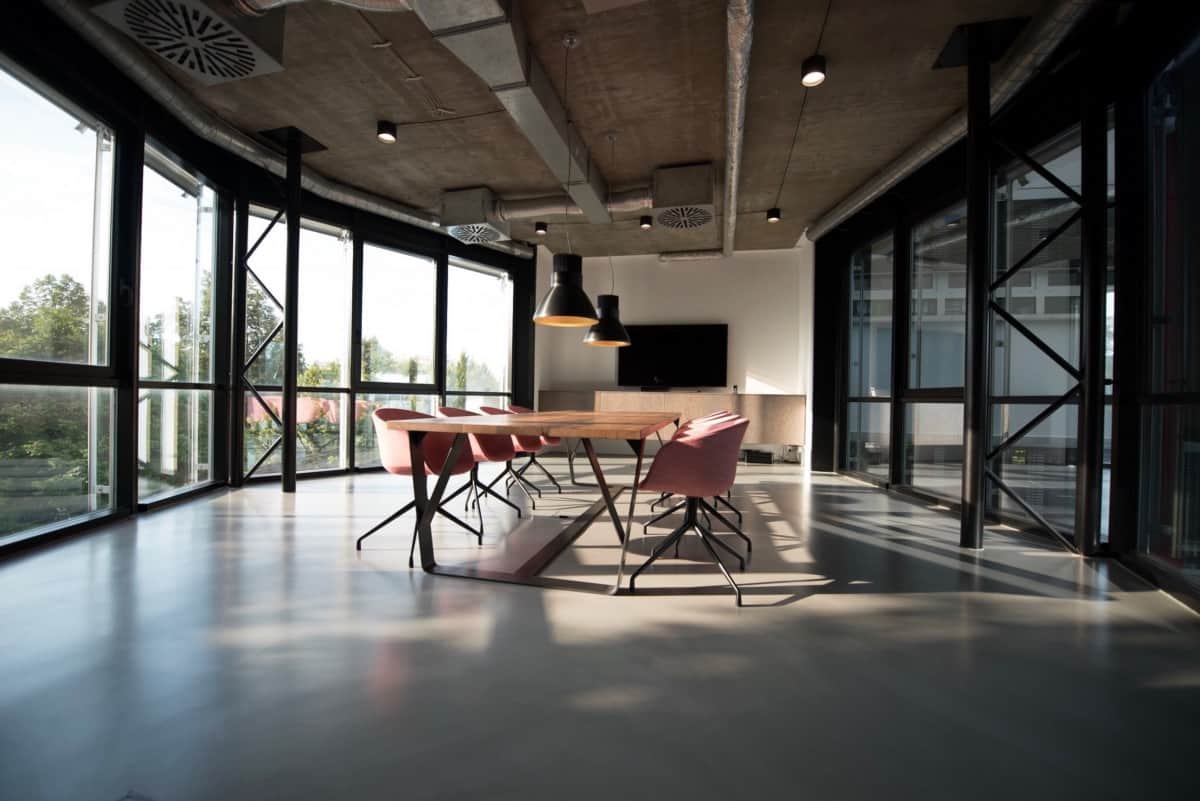
Location is often the first consideration. Start with any geographical or budgetary constraints. Often, we pick a location based on where the majority of the workshop participants reside in order to reduce travel costs.
However, it’s important not to settle for whatever rooms might be available at your office. Many offices lack spaces that are ideal for workshops, so we recommend that you consider remote offsite locations. The investment is worth it. Working offsite might be helpful to get people out of their typical mindset. A change of scenery can be helpful for some companies, especially environments entrenched in the status quo.
Sometimes, instead of prioritizing the budget, we have to consider the availability of resources. Is there a participant or expert that we really want to include in-person? Perhaps we want to co-locate with our target users so that we can do our interviews in person. The opportunity cost could easily eclipse any additional cost of an outside venue.
Pro Tip: Check out websites Peerspace and Breather to find great creative spaces to hold your Sprint!
2. SPACE
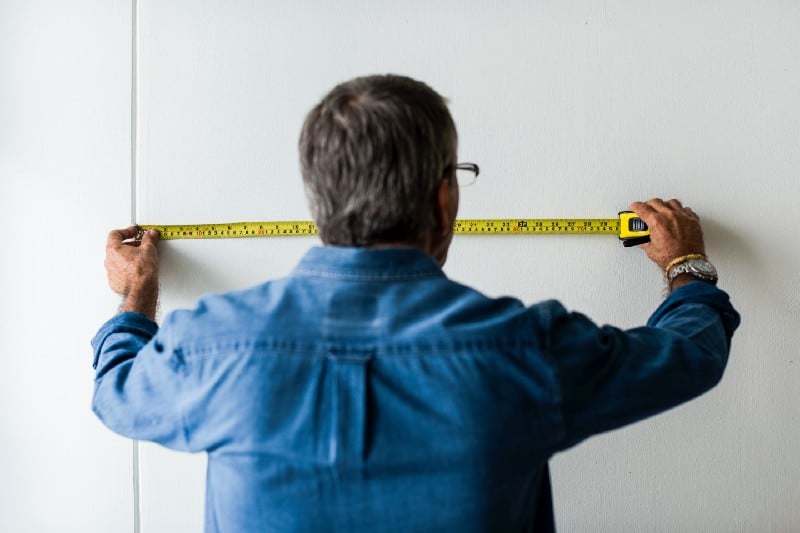
It might seem nit-picky, but you should carefully consider the details of the room itself. First, it can’t be too small! Choose a space that is big enough to accommodate all attendees at the table(s). Don’t forget that you need enough room to move around and huddle at the walls.
A good rule of thumb is to pull all the chairs out from under the table so there is just a bit of space from the seat of the chair to the table. Is there still enough room to walk past the chair? That’s the absolute smallest room you should accept! Make sure to select a room that can proportionately accommodate the expected number of participants while respecting their personal space.
Pro Tip: For a Design Sprint with seven people, we recommend a room no smaller than 12 x 20 ft.
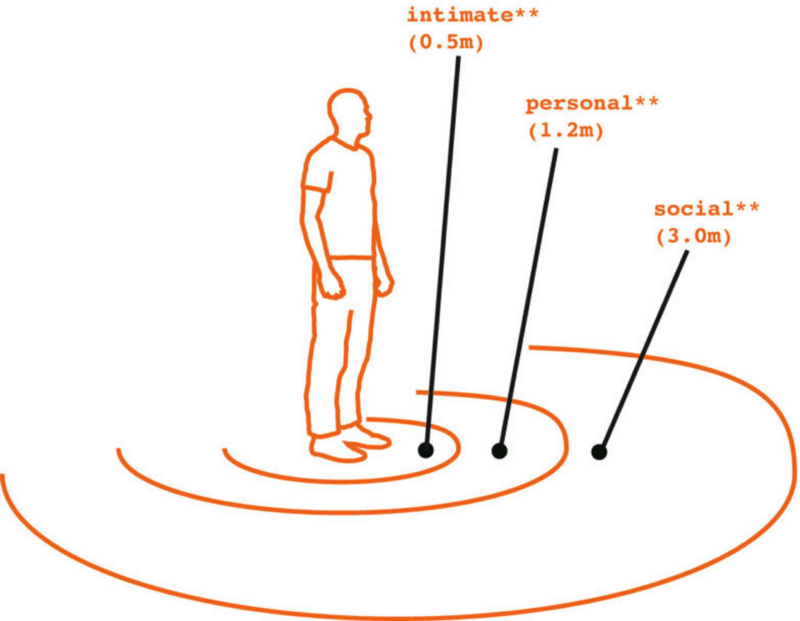
To take a more scientific approach, consider Proxemics. Proxemics, the study of personal space and boundaries, can give you some quick rules of thumb. During a Sprint, where seven people are in a single room, everyone is operating for an entire workweek in the Personal Distance Zone, which ranges from 2–5 feet. This space is reserved for friends and family — people you know and trust. It’s an easy and relaxed space for talking, shaking hands, gesturing, and making faces.
3. ENVIRONMENT
Think about how the workshop space will make your participants feel. This isn’t touchy-feely stuff, it’s actually key to the success of your event. Is it conducive to focus and fun? Is the space pleasant to work in and free from distractions? Consider air quality, decor, lighting, and the general vibe of the space.
Windows are always nice so that folks don’t feel like they are locked in a closet all day. A room that gets natural light from a window is always a good bet. Fun fact—daylit environments are known to increase productivity! A related consideration is the room’s temperature. Make sure you can control the temperature of the room so people aren’t too hot or too cold. (Or, make a note of it, so you can tell participants to bring a sweater!)
Pro Tip: Music is a powerful way to make your environment more inviting. Bringing a small speaker so you can play appropriate tunes when people arrive, during breaks, or even during brainstorming sessions.

4. FURNITURE
Ideally, your venue comes equipped with all the furniture you’ll need. You’ll need at least one chair for every participant. But, you also don’t want too many chairs or superfluous furniture cluttering up space.
Look for rooms that have tables that are easily moved and can be configured into different arrangements depending on your activities. For example, do you need to be seated in one large group for brainstorming? Or, will you be breaking into smaller groups? In that case, you need tables that can be utilized for breakout teams.
Pro Tip: Factor in time before your workshop starts to rearrange the room and make it *just right* for your agenda and participants. You’ll need at leave 20–30 minutes and more than one person to help!
5. WALL SPACE & WHITEBOARDS
One of the most important features of a great workshop venue is space for creation. You absolutely need dedicated space for hanging ideas, posters and/or Post-its. Make sure there is enough space on the walls to pin or tape things or that there are plenty of whiteboards.
For Design Sprint and most other workshops, you typically need two large whiteboards or 3–5 small ones. If you can’t get whiteboards, the 3M flipcharts can work. If so, consider buying an easel stand or two so they have something to sit on.
Pro Tip: If you have walls to hang on, they should be smooth enough that Post-it notes will stick to them. Avoid the comedy of errors of constantly falling Post-its at all costs!
6. AV / TECH
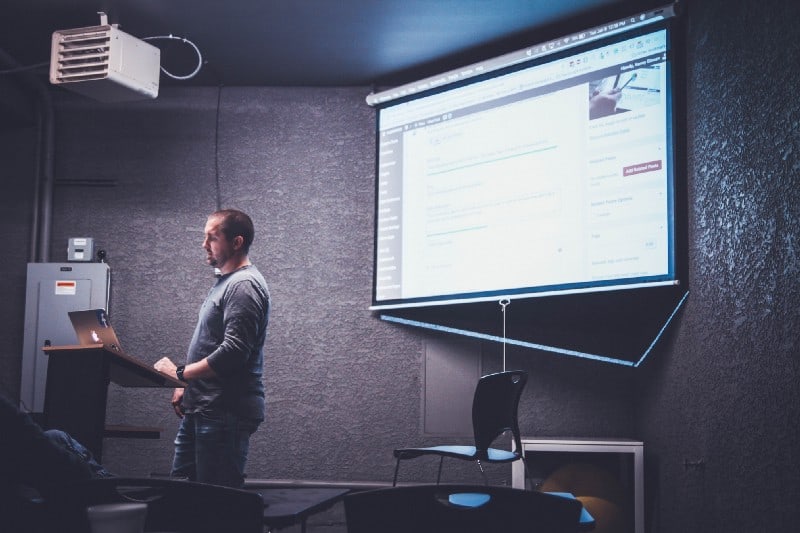
Ask about the venue’s audio-visual features and make sure it covers your needs. Usually, you can get by with a TV or projector with HDMI, VGA, or Airplay, which is used for projecting your presentation.
Also, having WiFi is preferred, but you could get away without it. Although, your participants might not like it!
7. REFRESHMENTS
When you are looking at venues, think about where the participants will eat. Well-fed participants are happy participants! If you do not have a separate space for lunch, there should be room in your space to accommodate lunch. Have an additional table at the ready where you can lay out your lunch spread without disturbing your workspace.
Lastly, this might sound mundane, but be sure that there are adequate recycling, compost, and landfill containers for the team in the space. Bonus points if you can get the waste bins out of the room after lunch to prevent any distracting odors throughout the afternoon.
These are the criteria we use at Voltage Control when planning and facilitating Design Sprints and innovation workshops for our clients.
Pro-tip: with these considerations in mind, use our Workshop Design Canvas download to design your workshop like a learning experience pro.
Are you in need of a facilitator for your next meeting or workshop? We’re here to help. Voltage Control facilitates events of all kinds, including design thinking workshops, innovation sessions, and Design Sprints. Let’s chat!