How Madison Traviss Found Her Voice in Facilitation and Built a Career on Connection, Curiosity, and Creativity
I’ve always been fascinated with communication. In college, I struggled to narrow down my major because I was excited by so many fields— linguistics, teaching, business, environmental science, child life specialist. I took all kinds of courses and kept pulling at the threads of what connected them. Communication became that golden thread. It felt like the foundation beneath everything I was interested in.
A professor gave me advice I’ll never forget: don’t go to grad school yet. Go get real-world experience first, see where communication really matters, and then come back if you want to. That shaped my approach. I went out into the world and found myself drawn to spaces where communication was essential but often invisible—event planning, project management, nonprofit work. And similarly, I would come to learn, when facilitation is working well, you don’t always see the machinery behind it, but you feel the impact.
Over the years, I worked in nonprofit fundraising and awareness for pediatric cancer in Iowa, corporate financial literacy partnerships in Colorado, conservation stewardship in Wyoming, and most recently, in arts and heritage here in Western North Carolina. Across all these roles, industries, and causes, communication kept showing up as the underlying and often overlooked critical factor. I started to see myself as a kind of translator—someone who could connect left-brain and right-brain thinkers. That work of making different perspectives visible to each other lit me up. I realized I wasn’t just managing logistics, I was curating conversations and connections.
One vivid memory was in Wyoming when I was part of the team gauging the refreshed approach to a bear-canister loaner program. Biologists had one perspective, visitor experience staff had another, and none of them felt fully understood. They confided in me, and I found myself holding all these different truths. That was rewarding but exhausting. I thought, there has to be a better way—what if we could have these conversations all together, instead of me being the go-between? That was a turning point in realizing I needed facilitation skills.
Even earlier, I’d seen the magic of adaptation through event planning. In college, I worked on Dance Marathon, a 24-hour fundraiser for families and kids affected by pediatric cancer. We planned every minute of programming, but at 3 a.m. the fire alarm sounded. Our backup entertainment—beach balls—became the highlight of the night. That moment taught me the beauty of letting go of control, staying flexible, and inviting creativity. Those same lessons would come back in facilitation.
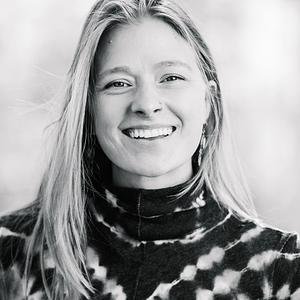
Meeting my now partner Heath on a long distance hiking trail and living for three and a half years in a converted bus changed how I think about groups and spaces. When your home is tiny and your plans depend on weather, road conditions, and community, you learn humility and presence fast. I carried that into rooms and projects—focusing on what matters right now, with the people who are here.
Making Room for Many Ways of Knowing
The first time facilitation truly sparked my imagination was being invited into the conversations of planning an intertribal symposium in Wyoming. The Wyoming Wilderness Association brought together tribal liaisons, nonprofits, and government agencies, to share their lenses while acknowledging the oversight and often exclusion of traditional ecological knowledge that would inform the future of forest planning. A colleague led the effort, and though she wasn’t formally trained as a facilitator, the way she held space was powerful. Public art, intentional gathering, deep listening—it all wove together. I saw how facilitation could expand beyond pre-existing structures and create entirely new possibilities.
At the same time, I was feeling growing frustration with poorly run meetings. No agendas, no purpose, the same voices dominating. I’d leave wondering what we even accomplished. Those experiences pushed me further toward facilitation. I started stepping in, guiding conversations, bringing clarity. It wasn’t my job title, but it felt like my calling.
Another thread was the tech and access barriers I kept encountering. Government partners who couldn’t open cloud docs; community members who preferred conversation to surveys; people who didn’t have easy access to Zoom. I learned to design alternatives—listening sessions, phone trees, printed summaries—so that more voices could be included. That design mindset is what eventually made “facilitation” click for me: it isn’t just a meeting, it’s an architecture for belonging.
When my partner Heath and I wrapped up bus life, I was in a career transition. I knew I loved events and project management, but something was missing. As I reflected on the moments that mattered—building trust, holding conversations, bridging perspectives—I realized facilitation was at the heart of it all. That’s when I found Voltage Control.
Choosing Voltage Control
I came across Voltage Control while searching for ways to deepen my facilitation skills. The certification program stood out not just for the curriculum, but for the community. The fact that there was a scholarship program made it possible for me to say yes during a financially uncertain time. That support was huge. It helped me commit fully.
A friend had once written me a card after a job ended, saying I had a gift for making people feel safe, heard, and seen. Reading that during a vulnerable time reinforced my intuition: this was the work I was meant to do. Around the same time, my mentor in Denver encouraged me to stop overthinking and just go for it. “Just commit,” she told me. That was the final nudge I needed.
More than anything, I was looking for confidence. I’d facilitated plenty in practice, but I wrestled with impostor syndrome. Who was I to claim this title? What if I wasn’t good enough? I went in intimidated but eager, hoping the program would help me step into that identity with more courage.
I also wanted practical architectures I could use the next day—ways to set purpose, draw out quieter voices, structure choices, and make decisions visible. I hoped the program would give me tools, but also the discernment to choose the right tool for the moment.
Confidence Through Community
The certification experience was both humbling and empowering. At first, I was intimidated by the brilliance of my cohort—so many accomplished people already doing incredible facilitation work. But over time, I realized we were all at different steps in our journeys. Some were ahead of me, some right beside me, some just starting out. That balance was affirming. It reminded me that growth isn’t about comparison, it’s about presence.
I’ll never forget my cohort mates. Landy was our hype woman, bringing energy and encouragement when we needed it most. Chloe, my first partner, felt like a serendipitous match—she was working at the intersection of sustainability and somatics, which resonated deeply with me. Her dedication, even while moving across continents with a newborn, was inspiring. And Tahira generously shared resources that helped me strengthen my verbal communication skills as an introvert, reminding me that authenticity can be just as powerful as charisma.
The hardest part for me was the portfolio. I procrastinated endlessly, doubting myself. Everyone else’s portfolios seemed incredible. But when I finally slowed down, centered myself, and embraced Thich Nhat Hanh’s mantra—“I am here, I have arrived.”—something shifted. I stopped worrying about what was next and simply showed up for the work. What emerged was something authentic and deeply mine. Looking back, I’m proud of that piece. It was an aha moment: facilitation isn’t about comparison, it’s about showing up fully as yourself.
I still return to a few practices from the program: purpose-first framing, Nine Whys to find meaning beneath goals, and small-structure moves like 1-2-4-All to widen participation fast. Those are now part of my muscle memory, and they continue to ground me when meetings drift.
Building Bridges at Work
Since completing certification, I’ve noticed tangible shifts in my work. First and foremost, I’ve slowed down. Nonprofit work is relentless, with endless to-do lists and limited resources. But facilitation has given me a built-in pause—a way to bring more intentionality, humility, and creativity into challenges. I’ve gained confidence to suggest new approaches and to hold space for listening before rushing into action.
One example is our Resource Development Committee. It started as just board members, but I expanded it to include resident artists and community members. Now it’s a diverse group brainstorming funding, volunteers, and programming together. Bringing different brains to the table has sparked more viable and creative solutions. That’s facilitation in action.
I’ve also begun pitching a “Bridging Brains Workshop,” an idea that grew out of my portfolio. It’s about connecting the practical and the visionary, the analytical and the creative. We map tensions, name the value on both sides, and design experiments small enough to try next week. There’s been some resistance, but also real excitement. Having the language, confidence, and framework from the certification has helped me advocate for this vision more clearly.
Colleagues have noticed changes too. I’m often the youngest person in the room, which used to make me defensive. But I’ve shifted toward curiosity instead of frustration. I listen more, respond less quickly, and create space for others before moving to action. That listening capacity has been recognized and appreciated. It feels like a quiet but profound transformation.
Another change is my relationship with measurement. I can confidently stand my ground to articulate that true impact is beyond dollars raised or programs launched. Now I track the smaller signals that make those possible: who spoke who hadn’t before, where we found unexpected agreement, which decision is now actually clear. Those micro-moments tell me we’re building capacity, not just completing tasks.
Following Curiosity Into the Future
Looking ahead, I’m curious how I can integrate sensory somatic forest bathing with facilitation in conservation, advocacy, and coalition spaces. I’ve been inspired by Adrienne Maree Brown’s Emergent Strategy, especially her reflections on facilitation and growing resilience to move at the speed of trust. I believe facilitation can be a balm in social impact work—a way to hold difficult conversations, prevent burnout, and invite creativity into seemingly intractable challenges. I want to explore how facilitation can support both the mission and the people behind the mission.
Practically, that looks like more listening sessions with community members who don’t usually come to meetings, more co-design with partners who hold different forms of expertise, and more prototypes instead of perfect plans. It also looks like protecting the humans doing the work—embedding check-ins, pacing, and recovery into our processes so we’re not burning bright and burning out.
I don’t know exactly where that path will lead, but I’m following curiosity. I trust that facilitation, with its balance of structure and play, rigor and imagination, will continue to be the thread guiding me forward. House of Fig feels like my most authentic way to create spaces of curiosity that increase collective confidence, connection, and collaboration through grounded action, strengthening intuitive ideation, and experiencing interconnection.
If I had one piece of advice for anyone considering the certification, it would be: be present. Don’t worry about how you’ll use it or what comes next. Just show up fully for the experience. That presence will shape you in ways you can’t predict. It certainly did for me.
And if you’re on the fence, borrow what helped me: ask a mentor to reflect back what they see in you, and listen closely to the people who already trust you. If your work keeps pulling you into the role of connector, translator, or space-holder, the certification gives you the tools, community, and confidence to do that work on purpose—and with more ease.