Discovering Facilitation — and Seeing My Work Differently
Thirty years in, I rediscovered the magic of facilitation, and the courage to bring all of me to the room.
The very first time I felt the hum of facilitation, I didn’t have language for it. I had a liberal arts degree in sociology and French, a head full of ideas, and absolutely no idea what to do next. I stumbled into a tiny tech writing firm in the early 90s, DA Consulting, doing procedural documentation. It was a great gig out of school, and I learned business by interviewing people about how they did their work. But after cranking out massive three-ring binders and watching them collect dust on someone’s desk, I knew something was missing.
The binders weren’t changing behavior. People were still doing what they’d always done. One day, I marched in and said, “What if we build training instead of just documentation?” That was the pivot. The company took a chance; we shifted from just tech writing to include training services, so I took a 2-day workshop, and suddenly I was the trainer. The only trainer for a while. I was maybe two weeks ahead of everyone else, and somehow that made me the internal director of training. I didn’t know enough to be scared. That helped.
I grew up in a family of academics, so learning was our family sport, but not just learning for learning’s sake. The question was always, how does this apply? How do we get our hands dirty? So I went hunting for anything that got people involved: tactile activities, social learning, experiences that moved the body and the brain. I did magic tricks at Exxon. I had executives lie on the floor to meditate. I didn’t know it was weird. It just worked. People laughed, put their guard down, and, most importantly, remembered.
Then I found Accelerated Learning. University of Houston had this specialized program centered on whole-brain learning, music, color, movement, environmental design, social dynamics. It felt like I’d found my home language. I had a mentor who traced much of the method back to language learning, and it bridged everything I cared about: creativity, rigor, and making learning visceral and alive. I didn’t stick to the protocol forever, but the threads from that program are still in my work thirty years later.
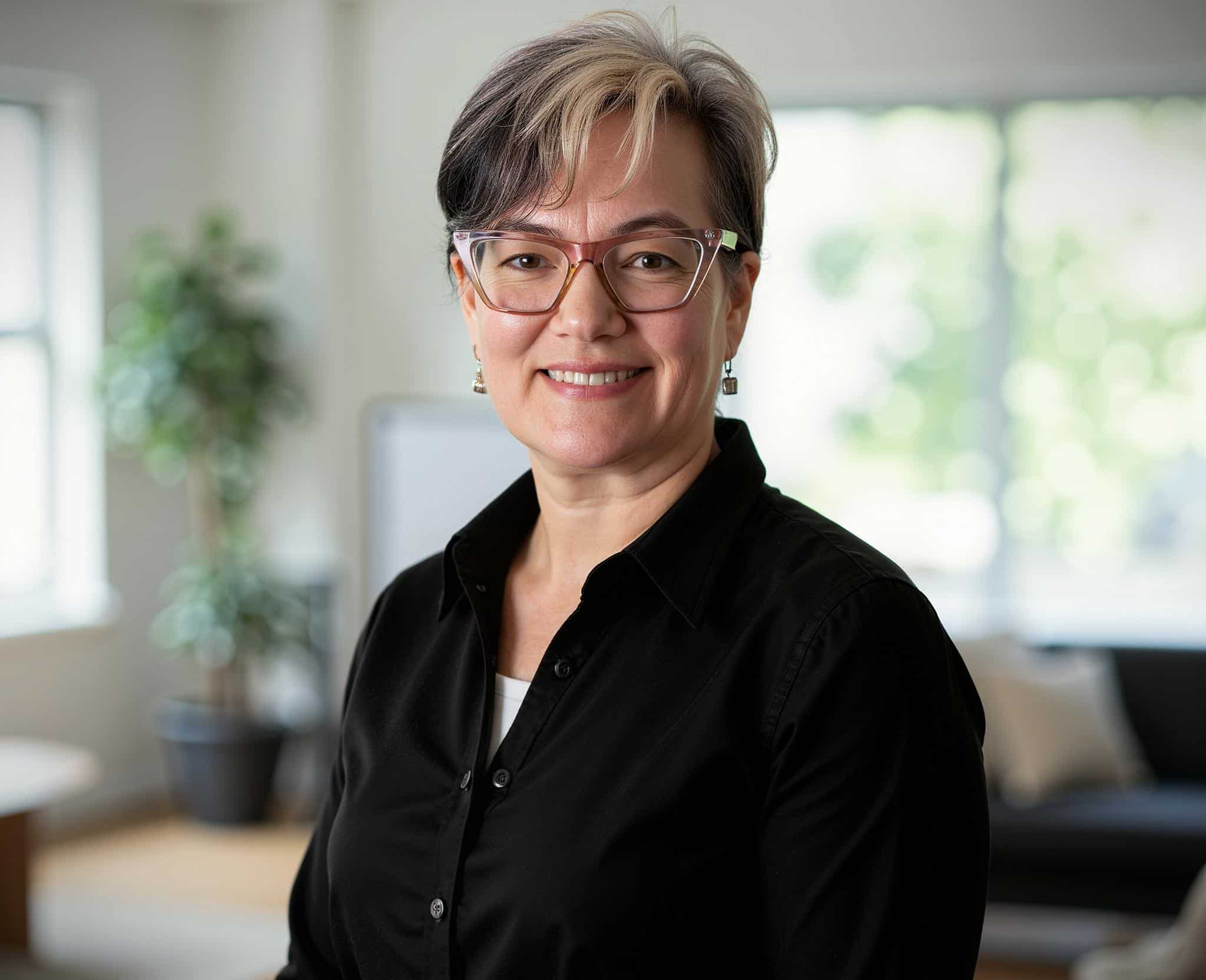
Along the way, people shaped me. Gail Heidenhain, then president of the Accelerated Learning Association, a German language instructor working across corporate contexts, modeled a kind of joyful precision I still admire.Thiagi’s spirit of short, playful, relevant activities stacked nicely with what I was doing and made it stronger. I also experienced first hand the power of experiential simulations, working with my long time colleague and friend, Keith Lewis, who was at the time an Eagle’s Flight instructor. This kind of learning really resonated deeply for me: gathering people, holding space, designing the container, and trusting what happens inside it.
From Handouts to Whole Humans
As my curiosity deepened, I shifted from “teaching content” into “designing experiences.” It started small. Instead of lecturing, I built hands-on exercises. I let music do some of the lifting. I rearranged rooms. I asked real questions and waited long enough to let people answer. I paid attention to the environment: light, color, pacing, props. And I realized people didn’t resist learning, they resisted being talked at. Give them something alive to do, and they’ll meet you there.
Accelerated learning gave me a permission slip I didn’t know I needed. I tried weird things because they were human things. If someone learns by building, we’d build. If someone learns by listening, we’d invite silence. If someone learns by moving, we would get out of our chairs. It pulled learning out of the binder and into people’s bodies. In retrospect, some of those early experiments in corporate spaces were a little outrageous. They also stood out, and they worked.
Around that same time, I watched masters at their craft. Thiagi showed me how to pack impact into short bursts. Gail showed me the logistics behind the magic, how environment, sequence, and timing can amplify the learning you’re trying to surface. I started to see a throughline: design the container with care, and what happens between people will do most of the work. I didn’t have to be the star of the show. In fact, the moment I stopped trying to be, the work got much better.
Eventually, I followed the work to larger systems. DA Consulting, my little family firm, went public and ballooned to a thousand people. The shift was dramatic. It stopped being fun. Around the same time, I lost a coworker unexpectedly. It shook me awake. Life is short. So when someone at Shell invited me into a learning role, I said yes. I spent three years inside Shell’s massive machine in the late 90s and realized quickly that the sheer scale wasn’t for me. When they offered me my same role as a contractor shortly after, I grabbed the flexibility and never looked back.
Choosing My Jolt
For two decades, I consulted broadly, Chevron, Marathon, Home Depot, lots of energy sector work. Then, in 2020, Shell asked me to support a global team building digital capability in exploration. I came in for adult learning. What they truly needed was process facilitation, helping teams make decisions, solve problems, and collaborate across borders. We committed early to all-virtual sessions across time zones using Teams and Mural (and fought the ongoing battle to keep our whiteboards). I fell in love with holding the container: inclusivity, safety, creativity. The work felt like magic again.
But somewhere between the pandemic pivots and a particularly brutal reorganization project, I started to drift, feeling like I was just going through the motions.
That’s my signal, when I start sleepwalking through my work. I lose the flow, the sense of being fully in it. I wanted to quit and do something totally different. But I’ve learned my cycle. Every 18–24 months, I need something to wake me up. A conference, a new method, a community. I needed a jolt.
I’d heard about Voltage Control through friends, Keith Lewis and Pixie Raina are both in my circle, and I’d poked around the site before. This time, I was looking with intention. My first impulse was to go straight to the Master Facilitation Certification (thirty years in will do that to your ego). After some honest reflection, I decided to start with Foundations. I wanted to reset, sharpen my language, and re-anchor my practice. The minute I decided, I signed up. No drama, just clarity. It felt like oxygen.
The Rooms Where It Happened
Foundations did exactly what I hoped: it woke me up. The readings alone were a waterfall of new thinking and reminders I didn’t know I needed. I’d read something in the morning and try it with a client that afternoon. It was that immediate. The portfolio deliverable, something I’d never stopped to compile as an independent, forced me to gather my work and name it. It sounds simple, but codifying how I talk about my practice changed how I show up with stakeholders and participants.
The cohort was its own ecosystem. During the asynchronous weeks, a handful of us set up optional weekly touchpoints. I needed those anchors. We traded use cases across wildly different contexts, arts, NGOs, oil and gas, and somehow it all resonated. I coached someone in Foundations who lived in the Middle East. Different landscape, shared language. Those conversations were energizing in a way that’s hard to explain. It’s like finding your people in a sea of calendars and budget approvals.
When I moved into the Master Facilitation Certification, I chose a website rebuild as my project. Blank screens overwhelm me, late-in-life ADD diagnosis has helped me understand that better, but give me a few prompts and I’m off. ChatGPT became a drafting partner. SessionLab helped me design clearly. The act of writing about my work forced me to integrate parts of myself I’d kept separate. I didn’t realize I’d been compartmentalizing the “corporate me” and the “ceremony maker” me until I saw it on the page.
There were moments I can point to that changed me. One was a conversation with Eric, and feedback from Renita and Chris. I’d been describing myself in two lanes: corporate facilitator and ceremony maker. Eric reflected back the phrase that now sits at the center of my website and my practice: bridging structure and heart. It was like hearing a chord resolve. I could be both. I am both. The bridge is the work.
What I Brought Back With Me
Since certification, I use the phrase bridging structure and heart as a design question. What are the rituals this team needs to feel like a team? Where do we bring in celebration, appreciation, and grief? What tools create enough scaffolding so we can be brave? It sounds lofty, but it shows up in really practical ways. I use pipe cleaners in almost every session as fidgets; people make art while they listen and talk. Photos of that art are all over my site. It’s silly and it’s serious at the same time, the kind of serious that connects us.
I’m clearer about facilitative leadership now, too. Before, I carried this quiet belief that my role was to deliver something to a group. Now I see my job as guiding people back to the wisdom already in the room. With meeting owners, I coach them on facilitative leadership, how to set conditions, mirror the purpose, and share ownership, so that when I step away, they still have the muscles. The certification reframed my craft not as a niche but as a leadership posture anyone can learn.
On a concrete level, I’ve become more fluent with tools that remove friction. ChatGPT helps me past the blank page. SessionLab gives me visual clarity and a shared artifact with clients. I still prefer Mural for virtual collaboration (despite the ongoing economizing pressures to move us into Whiteboard). Those aren’t just technical choices; they’re equity and inclusion choices. They open doors for the quiet thinkers, the visual processors, the second-language speakers, the folks joining at midnight from another continent. That matters.
There’s also the pride of putting something into the world that feels like me. On Foundation Day, sharing my portfolio felt like a personal milestone. Launching my website felt bigger. I asked for help instead of trying to do it all myself, another growth edge. My college-age kid, who’s turning into a baby facilitator, partnered with me on language, images, and the tedious bits, and it transformed our relationship. We collaborated. We argued about adjectives. We celebrated hitting publish. And then I reached back out to couples whose weddings I’d officiated and clients from years past for testimonials and permissions. The feedback I got, “This feels like you”, was the best kind.
The Courage to Bring It All
The biggest capability I gained wasn’t tactical. It was courage. For years I’d kept my more spiritual, ritualistic side in a separate bucket, my “flakier aspects,” as I half-joked, and saved them for weddings, birthdays, and personal milestones. Corporate was over here. Ceremony was over there. Through the master program, I realized I don’t want to live split like that. It’s all the same muscle: marking transitions, inviting meaning, designing moments that connect us. I can do that in a boardroom and in a forest. I can build structure and tend heart.
This shift changed how I say yes and no. That reorg project taught me valuable things about “standing in the fire,” and the book by that title gave me language to stay centered when the room gets hot. But it also showed me what I don’t want: work that prioritizes speed and cost over people’s lives. If I’m going to step into conflict-heavy spaces again, it’ll be for a cause that feeds me and aligns with my values. Boundaries are a capability, too.
Finally, I came back to the “container” with new reverence. When I’m holding a space that’s inclusive, safe, and creative, groups do astonishing things. Siloed teams create together. “Robotic” work becomes meaningful. People see each other. It doesn’t always land perfectly, but when it does, it’s unmistakable. That magic is why I started and why I’m staying.
A Season in the Woods
What’s next surprised me. Because of Dutch labor laws, Shell requires I take a six-month hiatus. My first reaction was dread, momentum! teams! all that scaffolding we built!, and then I realized I don’t care enough to fight it. They’ll reorg again. The machine will machine. And I haven’t had more than a month off since I started working. So I’m taking the hint. I’m giving myself a true sabbatical.
I’m channeling that time into something I’ve wanted to do for years: a practical, heart-forward workshop in the woods. We’re going to gather for a few days and finish the adulting we postpone, last wills, medical directives, powers of attorney, while also eating well, walking among trees, and making a ceremony out of the courage it takes to face those choices. It’s part life planning, part communal ritual, and very much facilitation. We’ll likely run it the last week of April or first week of May. After that, I can see a path where my facilitation centers more around life milestones and rites of passage, places where structure supports heart and heart transforms structure.
I don’t know if my title will always say “facilitator,” or if it will shift to something like “ceremony maker,” or both. What I do know is the skill set travels. Whether it’s a cross-disciplinary team in exploration or a circle of people contemplating legacy under a canopy of oaks, the work is the bridge. I’ll keep building it.
When I think about the future of work, I keep coming back to ritual. We don’t pause enough to mark beginnings and endings. We don’t grieve together when projects sunset or teams change shape. We rarely stop to say, “We did that,” and let the pride land. I want to change that in the rooms I touch. Small practices, a shared breath, a gratitude round, a song, a story, change the temperature of a space. They make more possible. That’s where I’m heading.
I used to believe the value I brought was the content I could deliver. Today, I believe it’s the way I invite people toward each other, and toward what matters. That feels like a pretty good north star to follow into whatever comes next.
I’ll leave you with this: if you’re considering certification, jump in. Then really jump. Commit to the readings that spark you at 6 a.m., the cohort calls that keep you accountable, the experiments you’ll try the same afternoon. Let the program jolt you awake. It will, if you let it. And when you’re awake, use that energy. Build the portfolio, launch the website, rewrite your story, say the brave no, take the brave yes. Bring all of you to the rooms you lead. The world needs that.
If you do, you just might find, as I did, that the bridge you’ve been looking for has been inside your practice all along. Structure and heart aren’t opposites. They’re partners. Voltage Control helped me remember that. And I can’t wait to see what you’ll remember, and what you’ll make, when you give yourself to the work.