Dan Walker’s Exploration of Facilitation, Patience, and Collective Brilliance at the 2026 Facilitation Lab Summit
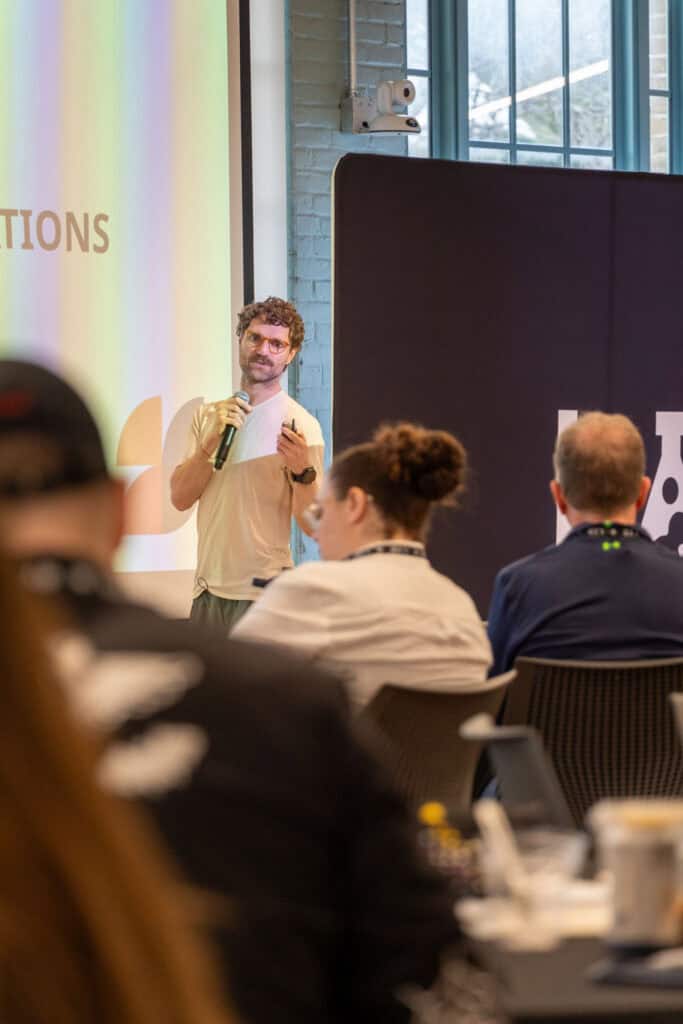
At the 2026 Facilitation Lab Summit, Dan Walker led a session titled “Unlocking Collective Wisdom,” guiding a room full of facilitators through a rich exploration of why collective work matters, how to stay grounded amid societal turbulence, and what it truly takes to navigate difficult moments in a facilitated space. Dan, a facilitator and community builder from the Coast Salish territory of the Musqueam, Squamish, and Tsleil-Waututh peoples—colonially known as Vancouver, Canada—opened with characteristic candor, acknowledging his own imposter syndrome at the summit before centering the very philosophy he was there to teach: our ideas are better than my ideas.
The Case for Collective Brilliance
Dan anchored his session in a foundational belief: the smartest person in the room is the room. He invited participants to sit with the question of why we should embrace the brilliance of the collective—and then gave them time to actually do it, building in space for personal reflection before pairing participants to share emerging themes.
What surfaced was striking. Participants observed that collective creation fosters a sense of ownership that top-down direction never can. They pointed to the value of the journey itself—the making of meaning together—as distinct from whatever outcome is eventually reached. One participant offered that holding space for multiple truths is an act of resistance, a challenge to systems that prefer singular, authoritative answers. And in a moment that drew audible appreciation from the room, another reached for something more poetic: “To hear the song of our highest possibility that no one knows they have access to, and to empower them to be the place where it happens.”
Dan reflected that he once believed facilitation was simply about finding better answers. What the room reminded him—and what he returned to throughout the session—is that the collective process itself is where the real value lives: the relationships formed, the meaning made together, the shared recognition of a common human experience.
Patience and the Long Game
One of the session’s most resonant moments came through a personal story. Dan described his time leading social impact work at outdoor brand Arc’teryx—years of building toward change, only to find himself completely burnt out, frustrated that progress felt impossibly slow. During a walk with an indigenous elder on the island, he shared his frustration. She stopped, looked him in the eyes, and offered one word: “Patience.” The land beneath their feet, she told him, had been under negotiation since 1963.
This story opened a rich, wide-ranging conversation about one of facilitation’s most persistent tensions: the urgent need of now versus the patience required for generational change. A participant offered a concept that resonated immediately—”manufactured urgency”—the idea that urgency is often wielded as a form of avoidance, an excuse not to do the harder, slower, more honest work. Another framed the tension like a rubber band: tension is the point, not the problem, and the question is whether we can make space to hear each other’s values within it.
Dan held all of these perspectives without rushing toward resolution, which was itself the point. Different people come to this tension from different places—some lean toward speed, others toward patience—and the work of facilitation is to bring those expressions into the same conversation rather than declare one of them correct.
Finding Joy When the World Is at an Edge
As the session turned to the current moment in society, Dan created space for something facilitators rarely name out loud: the challenge of sustaining wellness—and even finding joy—when the world feels like it’s at an edge. The room responded openly. One participant spoke about reclaiming analog experiences and slowing down enough to feel human again. Another raised the importance of privacy as a precondition for genuine play and personal growth. A third quoted something she’d been holding close: “I know that there is kindness in the world because I exist in the world.”
Dan connected these reflections to something he’d learned from years of mentoring young climate activists: burnout is the single biggest barrier to long-term change work. You are only as useful to the movement as long as you stay in it. His invitation was both gentle and serious—give yourself permission to find joy, tend to your own sustainability, and trust that doing so isn’t a departure from the work. It’s what makes the work possible.
Navigating Turbulence as a Facilitator
The session’s final arc brought everything back to the practice of facilitation itself. When a single comment shifts the energy of an entire room—what do we do in those moments? Participants offered grounded, practical wisdom. Slow down, one suggested, and let the turbulence be the wisdom that wants to be heard. Set the container before anyone walks in, because it is far harder to establish safety after something has gone sideways. Design sessions like stories, with a clear narrative arc that makes space for disagreement, tension, and resolution. Actively invite the counterpoint—what Dan described, drawing on the Lewis Deep Democracy method, as “finding the no”—so that dissonance becomes part of the process rather than a disruption to it.
One insight that lingered long after it was offered: take 15 minutes with each participant before the session begins, because what the client thinks is the challenge is often not what participants are actually carrying. And as another participant put it simply: discomfort is not danger. Giving a group that frame, and trusting them within it, can change everything about how they move through difficulty together.
Dan closed the session with a song by Fred again—a piece about light, dark, and light again. It was a fitting end to a session that held both the weight of turbulent times and an abiding belief that collective wisdom, given the right conditions, will always find its way through.
Watch the full video below:
Transcript of Dan’s Session:
Dan Walker (00:03):
It’s a pleasure to be with you all. I kind of want to go around and just say hello to everybody. I won’t do that. To begin with, I don’t know, is anybody sick of the word edges so far? Is that feeling like we’ve said it too many times? I don’t think we have as of yet, but we’re getting closer. What I would say this morning, like when I think about edges, an edge by its very definition is that space distant from the comfortable space at the heart of us. There’s very much comfortable, familiarity, safety in who we are. The edge is pushing into those spaces beyond. They’re challenging in so many ways. One of those pieces being a clarity of vision. Where am I going? What does it look like on the other side? It’s these new spaces that we’ve not stepped into previously. And more than that, there’s this area, once we do know where we’re going, this challenge of how am I going to move to action?
(00:54):
The imposter syndrome that comes up of what right do I have to do this? Am I capable of doing that? Should somebody else be doing that? It even resonates with me right now. I sat this morning and I looked at the summit agenda, the facilitation lineup. And I saw as I was looking, every other facilitator has done the master certification. I have not. That stands out. And it’s like, okay, well, what right do I have? What am I missing? What’s the opportunity there as well? But these spaces are critical to us. We have to move into those edges and move beyond. And I see that as challenging at the best of times, but profoundly so when the world itself feels like it’s at an edge. It feels like we’re very much living in an edge, in a society that’s living at an edge. How do we maintain doing that work collectively?
(01:42):
How do we find the courage to push through and unlock that self-brilliance, that collective brilliance that exists and is so heavily needed? So that’s the conversation that I want to look into today and kind of chat through. Tap into the collective wisdom in this room. I think that’s really what we have as it’s come through so strongly in these times. We’ll touch on three things. We’ll unpack facilitation, why facilitation? Why do we do this work? We’ll then step into really within the context of this moment, what are we navigating? What are we thinking through? What’s it revealing to us to be important? And how are we finding wellness in those times too? And then we’ll bring it home and we’ll come back to really in facilitation. Similarly, times of turbulence emerge. One comment can send the room in a completely different direction. How do we manage that and how do we work through it?
(02:33):
So that’s kind of what we’ll work through today. I’ll guide us all along the way. Click through. I’m coming here from Coast Salish territory of the Musqueam, Squamish and Tsleil-Waututh peoples, colonially known as Vancouver, Canada. A big part of protocol there is to acknowledge the land on which we’re from. So I bring that into the space today to acknowledge with gratitude, the indigenous peoples of this land who have guardianed it since time immemorial. Similarly, it’s Black History Month this month too, and I’d invite us to reflect on that. So much of this work through times of turbulence and challenge, we’ve seen brilliance of black peoples, indigenous peoples to navigate that. And I’d invite us to think about that as we do this work today.
(03:14):
I often say, and I offered this at the intro, I just say I do things and I smile lots. That’s really who I am. I’m a human. I care. I smile all the time. I don’t know. I don’t like sharing my resume. You can probably find it on LinkedIn if you wish. But I think it’s more interesting, like what are the core values that we hold to be true? For me, this is central to what I believe. I genuinely believe our ideas are better than my ideas. The wisdom that’s in the room is always going to be higher than whatever I can muster. If we’re having a conversation on any complex topic, no single human has the answer. Instead, it sits in the middle and together we shape an ever better version of it. I’m seeing some nods which tells me I’m in the right room. I was like, “That’s a great sign that this resonates.” I think just a sense, this resonates with facilitators, this is great.
(04:05):
Similarly, I expressed a different way. I actually picked this up last year at the summit. Danny, I don’t know if he’s here from San Francisco, maybe not this year, but he brought this into the space. The smartest person in the room is the room. Similarly, a similar belief. And I shared this last week actually. I was doing some work with a group doing amazing work around refugee settlement and said the same thing. One plus one equals three. And the gentleman in the front row looked at me incredulously and was like, “That does not work for me. I studied mathematics at university. That does not make any sense.” If this doesn’t serve you, disregard it. But really the belief, the belief is this. The belief is in the brilliance of the collective. That’s what we’re trying to unlock and that’s what I believe as facilitators is our work. How do we think about that? How do we support that? How do we move through? And that’s what we’ll do today. And we’ll see that repeated time and time again.
(05:00):
To click in, I want to touch on these sort of agreements that we’ll look at. I’m going to try and move the room. The room’s massive, so I’ll try and shift up and down. These are the agreements that I would encourage us to sit with today. So the first one being we act with respect. I say this as respect for ourselves. If you need time to nip to the washroom, if you need to go and get refreshments, if you need to find Liquid Death, feel free to do that. But yeah, move with respect. Be kind to each other. We need that more than ever in this moment too. The smartest person in the room is the room. I’ve said that at the start. That’s true. How do we unlock that wisdom? I’m not giving away prizes or dollars for the smartest human. That’s not on offer. Instead, how do we unlock that collective wisdom that exists?
(05:45):
The next piece is just to advance our collective learning too. So that’s always the goal. If we bump into challenges, those pieces, how do we learn through it together? And the final one I think is really important to me. We’re often entering into spaces that are uncomfortable, unfamiliar. It’s okay to be raggedy. Even more than that, it’s a gift to be raggedy. It allows others of us to express our ideas. So if we’ve got ideas that we’re like, “I’m not entirely certain this is where we are,” feel free to share it. It’s likely that that’s the idea that resonates with us too. So those are the three pieces that I’d encourage. Oh, that’s looking good. It’s looking good and different.
(06:23):
So yeah, we want to start with an activity. So I think we often touch on this. We often get into facilitation, but why do we facilitate? Really what’s at the heart of that? Why do we think there’s power in doing this? So the question that I want us to sit with, and we’ll take some time to personally reflect on it, is why should we embrace the brilliance of the collective? What is the reason behind that? Why do we come to believe in this? Why do we facilitate because of that? The way we’ll structure it is we’ll have time for personal reflection. I often find this in society, we don’t give ourselves that time just to stop and compose our thoughts. We immediately jump into action. So we’ll start there. We’ll have personal time and then we’ll pair up. So pick a partner beside you and then we’ll unpack that question. So we’ll take another four minutes to go through that. And then we’ll come back into the room and we’d invite some opinions that have emerged, themes that have come up.
(07:31):
I’d love to invite into the space just what came up. Yeah, what were some of the themes that emerged? Anybody want to share?
Speaker 2 (07:37):
Oh, I have a mic. Look at that. Jackson and our group was talking about the strength of a sort of collective creation. And so people are bought into ideas when they come to them together rather than somebody sort of bringing it in and requiring it from the top.
Dan Walker (07:54):
So good. It’s huge, right? The difference between us building it together and feeling that sense of ownership versus us being told by the leader, “This is what we’re doing.” Yeah, thanks for sharing.
(08:04):
Yeah. Who else has other things to contribute? Yeah, I can jump.
Speaker 3 (08:07):
Yeah, I’ll just say something my new … I’ll just say here, something my new friend brought up here is there’s also immense value in the journey to come to that collective decision.
Dan Walker (08:19):
So good. So good.
Speaker 3 (08:20):
And just the journey itself shouldn’t be discounted for whatever you get to.
Dan Walker (08:24):
Really great. Yeah. The value of the journey, the making meaning together. That is a big part of this work, right? It’s like how do we actually make meaning? Some of these challenges that we’re working through are immensely complex, but how do we collectively process it and learn together?
(08:38):
Yeah, maybe one or two more. Yeah, we can go to the back. Thank you.
Speaker 5 (08:41):
I hope this isn’t too intense, but if we leave room for multiple truths, for just sitting with ambiguity, mistakes, then that is one of the best ways to challenge authority, fascism, things like that.
Dan Walker (08:54):
So great. So great. So great. It’s not going too far. It’s great. I love that you share that too. I appreciate you bringing that into the space too. It does. It challenges the way we run systems, right? It re-imagines this possibility of the collective brilliance that we’re trying to unlock that systems often pushes against. So yeah, huge thank you.
(09:11):
I’d love one more. Yeah, in the back.
Speaker 6 (09:15):
And to wrap us up in a bit of a poetic sense, my thought was to hear the song of our highest possibility that no one knows they have access to, and to empower them to be the place where it happens. It’s an extraordinary feeling.
Dan Walker (09:32):
Wow. It’s beautiful. Wow. Wow. Stunning. Yeah. So many pieces that came up in that conversation. So the journey, the power of that together, the power of the collective brilliance, our possibility of challenging systems, redefining the way we do it. So many of these ideas are brilliant and central to why we do this work. Just to click through, if I could get the slides back up, that would be awesome. If I can’t, that’s fine too. But really when I started out, I always thought this was the reason we did it. I always thought the reason we facilitated was to find a better answer. And I think it’s true. I think we do find a better answer when we work together, but I don’t actually think it’s the fullness. I think what we identified in the room is the reason. That collective process, that collective meaning making is where the value comes.
(10:17):
It’s probably for many of us, it’s hard to sell that to leaders at times. The belief in that the process is the value of itself, but you see it time and again, that conversation around the sense of ownership we feel when we’re going through that collective process, this realization of the shared human experience that we have, that’s really where the power is. I work a lot too in conflict spaces, and you’ve seen this shift in that work too. Historically, the space was known as conflict resolution. This idea of how we’re resolving the conflict. These are big complex issues. What’s the resolution to it? And you’ve started to see a shift into actually that being named as conflict engagement. So it’s not actually possible to resolve some of those pieces, but how do we engage with it better? And so that’s a big part of this work.
(11:04):
That’s a big part of facilitation and what we’re trying to do is engage better, make meaning together, build relationships, build bond, build resiliences that challenge systems and structures. So yeah, I love what came into the room naturally, and thank you for that. The next space I’ll touch on at some point is this piece. So I was burnt out. This is where we go back six years ago. I was at the outdoor brand, Arc’teryx. I was leading their social impact work. It was amazing in many ways, but the big challenge is as you do this work, you get ever closer to community need to understand what’s going on in community, the barriers that exist in terms of access to the outdoor industry and to nature in general. And you realize how distant we are from that. That’s profoundly challenging. You’ve then got to turn internally and try and build the CEO’s buy into that work and there’s a tension there.
(11:57):
And I was totally frustrated, totally burnt. I couldn’t move anymore. And so I was over on the island. I was actually over here and I was chatting to an indigenous elder and we went for a walk and she stopped me at one point and just looked me square in the eyes and was like, “Patience. Patience is what you need.” I’ve been doing this work for five years and I was like, “I need to move. It’s not moving. Why is it not going?” She said that the land we were on had been under negotiation since 1963 and that year the agreement on it might have been signed. It’s this long-term view that we often don’t bring into the spaces. So I think there’s often this reality within that, it’s the work of generations in which we sit. We’re slowly shifting systems, we’re solely shifting product design and all those pieces, but it’s long-term and we often sit in this urgent need of now at the expense of the long-term nature of the work.
(12:52):
What I would say is this tension is really this. The urgent need of now played against the patients of long-term change. It’s a thing we often don’t bring in, we often don’t talk about. They both exist at the same time and that’s challenging to hold. So that’s what I want to do for the next question is really within our work, whatever space that’s in, but how does this urgency play against this long-term game as well? How do we sit with that? So the question we’ll ask is that it’s like that. Yeah. How do you balance that tension between urgency? We need this now, we need this yesterday, we need it last week with actually the quality work takes time. How do you hold that tension? Maybe you can’t resolve it and that’s okay, but what comes up within that? So we’ll kind of do personal reflection time and then we’ll share back within the group. So yeah, start writing in your notes, whatever comes up for you.
(13:52):
What came up for people? What emerged? How do you balance this? How does urgency and … Yeah, please do. Yeah, thank you.
Speaker 7 (14:00):
I think where I used to find this tension is like everywhere. Especially I see myself as someone who leans a little bit more patience. Like I’m a little bit more slow with how I operate. So yeah, I would find that tension everywhere of people annoyed with me. But I think where I am now is I don’t think there is tension. The tension’s not actually there. It’s just perceived and we can choose to play with it or be in it or not. So yeah, I just don’t think there’s tension.
Dan Walker (14:34):
Wow. I’m just curious as a follow-up, how did you arrive at that place too? What was the journey to arrive there?
Speaker 7 (14:42):
That’s a good question. I don’t know. I think I just woke up one day and was like, “There is no tension.”
Dan Walker (14:48):
And epiphany’s always a good solution. So have an epiphany is the …
(14:52):
Yeah, maybe one at the front and then we can go to the back would be great. I can give you this. Thank you.
Speaker 4 (14:58):
This is one of my favorite topics.
Dan Walker (15:00):
Oh, great. Here we go.
Speaker 4 (15:01):
So I’ve coined this phrase manufactured urgency.
Dan Walker (15:04):
Love it. Love it.
Speaker 4 (15:05):
And so I think you need to be intentional about when urgency actually matters and not have it as a default position.
Dan Walker (15:14):
Sounds great. Wow.
Speaker 4 (15:14):
And one of the things that I’ve concluded is oftentimes people use urgency. It’s a form of apathy to me because it’s an excuse not to do the hard work.
Dan Walker (15:22):
That’s good. Whoa. Whoa.
Speaker 4 (15:25):
And so I try to combat it now.
Dan Walker (15:26):
That’s good. That’s really good.
Speaker 4 (15:27):
Part of the way that I maintain credibility on those positions is sometimes urgency does matter. And if you can really explain why it matters, then sometimes time is the most important element, but time is very rarely the only measure of outcome.
Dan Walker (15:40):
So good. So good. And how have you found that? I mean, I love so much in what you just shared. How have you found that ability to then explain manufactured … Yeah.
Speaker 4 (15:49):
I find it’s an extremely polarizing topic because there are people who think speed and velocity is the only thing that matters.
Dan Walker (15:49):
So good.
Speaker 4 (15:56):
And then I think there’s kind of the other side where you’re kind of looking at the whole.
Dan Walker (16:00):
So good.
Speaker 4 (16:00):
And I use analogies all the time like, “Well, do you want your omelet cooked quickly or you want it cooked right?” And so there are things in life that just require the right amount of time and there are things in life that you can do quickly and you have to just be able to make the judgment between the two.
Dan Walker (16:17):
So good. Intentional when we are urgent and intentional when we take the time. Yeah, I love that.
(16:22):
We can go to the back. Thank you very much.
Speaker 8 (16:23):
Yeah. Both of those gentlemen sound very patient and I love that for y’all.
Dan Walker (16:30):
Let’s get urgent.
Speaker 8 (16:31):
I am a very impatient person, always have been. So for me, this is like a very big struggle because I am somebody who I think I usually work very much towards the urgency piece. And I kind of, I don’t know, I flatter myself by thinking, oh, I can get it done urgently and right. And we know that that doesn’t always work. So I think that for me, the biggest part is when I have to slow down and be patient and let things play out organically, it’s hard for me because it means I have to acknowledge the fact that I’m not in control of every outcome and I have to acknowledge the fact that I may not know the correct answer and that is very hard for me giving up that control. So I think that the personal journey, what’s made it easier for me is acknowledging the fact that I don’t have all the answers and if I have to give up control, that’s all right. And then the patience kind of comes naturally from that. But it’s hard. Yes.
Dan Walker (17:35):
It’s so good. So good. I mean, it’s the work, right? I’ll go to the back with one more and then, yeah, we can come back in. But I think that piece, right? It’s like this personal work, it sits within us. We often gravitate by our lived experience, by where we are to different expectums. Some of us want to move fast, some of us want to go slow and patient. That’s beautiful. But how do we acknowledge that? How do we hold it? How do we hold that we all have different expressions of that? And how do we bring that into the conversation too? Yeah, I love what you shared.
(18:01):
We can go to the back too. Yeah.
Speaker 9 (18:02):
Hi.
Dan Walker (18:03):
Hi.
Speaker 9 (18:03):
So when I look at this, I think of the fact that urgency and this idea of slowing down and thinking of a long-term goal actually work hand in hand and it’s a tension that exists and needs to exist. And so a way to think about it is a rubber band. A rubber band is effective when you actually have tension and you’re holding and you’re tying something together. And that’s essentially an organization maybe versus an individual. In my perspective, it’s not a right or wrong, it’s what do we value? So what am I valuing versus what are you valuing? And can we make space to hear each other and figure out what is going to work?
Dan Walker (18:45):
So good. So good. I think that’s beautiful in what you said too that can we make space to hear each other? We all have these different expressions and that’s a beautiful thing. This tension isn’t, we should always answer it urgent, we should answer it slow, but actually how do we resolve it together and how do we have it as a conversation rather than it is just this way or is just this way? Yeah. Thank you for everybody you shared. I would love to carry on longer, but I should probably keep moving.
(19:09):
Kind of in the next piece that I want to touch on, really the lessons that I strive to learn are these two, the importance of the collective, the importance of that work together. This repeats time and again. We’ve heard about that, the sense of ownership that comes, the sense of meaning making that comes through that. It’s all there. The importance of the collective is everything. And then two, bringing in this conversation around the generational nature of the work too, and how do we resolve that with the urgent need of now? How do we have that as a conversation and a dimension of the work too? So those are the two pieces.
(19:41):
We’ll move kind of into the next section. Really, this conversation is always framed around it. How might we maintain this ever upward spiral towards a more just and joyful society is a question I often sit with. I think it’s collective work that we hold, that we sit together. How do we advance it? I think coming here … I’m based in Canada and we see the conversation that’s live. We see what’s happening in the world right now. There is a massive shift. There are massive changes at play and it feels wrong not to create space to have that conversation. We’ve got a room full of people. How do we process this moment together? So that’s what I want to do.
(20:20):
I want to focus in two ways. Really the first piece, as moments of turbulence arise in our lives, in society, there’s too much going on. I’m overwhelmed. How do I focus my time and energy? These are conversations that rise, but what does it reveal to be important? I think this is almost the strange gift of this. Amidst that noise, you start to see, actually, it’s this. Actually, it’s my family. It’s my community. It’s whatever that may be. I’m not going to answer it, but this is the question that I want us to sit with. So now we’ll kind of take some time on our own again just to go through what’s the moment revealing to be important to you.
(21:05):
It’s feeling important to people. Yeah, we’ve got one at the back.
Speaker 10 (21:19):
What’s revealing to me is that we’re like seeking, at least from my truth, is that I’m seeking analog experiences and not necessarily optimizing for efficiency and profit and creating for the sake of creating. And I do think that with the age of AI, the pendulum will swing and that we’re going to have this creative renaissance again.
Dan Walker (21:20):
So cool.
Speaker 10 (21:39):
And so for me, I think we’re tapping into what makes us inherently human, which is like, how do we build things that tap into our senses that remind us that we’re alive?
Dan Walker (21:49):
Wow. Wow. And just as a follow-up, I mean, it’s beautiful. That piece of tapping into who we are and our humanity and how we express and how we share ideas, how’s it feeling for you? I’m just curious to you like … Mark, maybe we can get the mic? Yeah.
Speaker 10 (22:02):
Sorry, repeat that again.
Dan Walker (22:03):
Yeah. How’s it feeling for you to do that? To be centered … Yeah, to be focusing on that.
Speaker 10 (22:07):
Oh, it’s changed my relationship to my work, which is like, one of my affirmations when I show up every day is like, my soul’s not in a rush and that I’m doing whatever-
Dan Walker (22:07):
So good.
Speaker 10 (22:17):
… I need to do for this collective.
Dan Walker (22:19):
So good.
Speaker 10 (22:20):
And that may be a small piece of this much bigger puzzle, but we’ll figure it out.
Dan Walker (22:25):
So cool. Yeah, my soul’s not in a rush. It’s beautiful. That’s all right. Yeah. Amazing. Welcome to the front. Yeah.
Speaker 11 (22:31):
Yeah. For me, privacy is something I’m trying to really hold onto right now. I think often privacy is framed in this sense of like, “Well, if you’re not doing anything wrong, who cares if you’re being continually surveilled?” But I think privacy, the conversation about how privacy enables play and personal growth is undertalked about, I think. And so the example I came into my mind was just yesterday, I was going to rake leaves in my front yard and I put on some headphones, got some country music going, and in my mind I was going to go practice two-step in, dance in while I was raking the leaves. But as soon as I got outside, I noticed my neighbor had her Tesla parked in her driveway and a nest camera on her doorstep. And I just couldn’t shake the feeling that I was being watched and I could not feel comfortable dancing and raking leaves because I just felt like I was being watched by this camera. And that’s just a shame. We’re going to lose all of our private spaces.
Dan Walker (23:36):
Wow. Yeah. And that piece of the inability to express who we are and what we want to do. And imagine if we could, imagine if that’s possible that you can go and dance whilst raking leaves in the garden. Awesome. So good.
(23:50):
Yeah, can we come here? Do you want me to go? Erase me.
Speaker 12 (23:58):
So this came up for me that you cannot fully progress as a collective unless you fully acknowledge and atone for mistakes of the past.
Dan Walker (24:09):
Wow.
Speaker 12 (24:09):
And that’s what I’m feeling viscerally in this moment right now.
Dan Walker (24:14):
Yeah. Yeah. The acknowledgement of what’s the reality, the mistakes that have been made, the mistakes that are ongoing, the challenges, the harm that’s resulted in that. It’s true, right? Thank you. Yeah, thank you. Yeah, thank you.
Speaker 13 (24:28):
Thanks. I’ve been thinking a lot about risk and this moment and watching a lot of truly incompetent people be really confident.
Dan Walker (24:38):
I don’t know who you’re talking about.
Speaker 13 (24:44):
So why not me? So why not us? We are the people we’ve been waiting for. So when I see all these folks kind of confidently stepping into places and doing terrible and ill-mannered and otherwise bad things, and here we all are working on ourselves trying to be better and better we shouldn’t be reserved. We shouldn’t hold back. We should take the risk. We should step into the unfamiliar place and we should shine.
Dan Walker (25:15):
So good. Yeah. Be brilliant ourselves. Yeah. So yeah, round of applause, definitely. So good. So beautiful to express the fullness of who we are, the brilliance that we each hold. I think that’s what we have, right? Whether it’s the creative expression, whether it’s dancing to leaves in the front garden. Be us and be brilliant us and unapologetically us. Yeah, thank you. Maybe one more. I can come here too.
Speaker 14 (25:39):
I’m going to combine two answers.
Dan Walker (25:41):
Oh, this is great. This is great. You’re doing my work.
Speaker 14 (25:43):
Between the creativity and the leaning in, because I can imagine that probably everybody in this room is creative. Everybody’s creative, but I imagine this group is maybe a little elevated in the creativity. So taking that creativity, because I think when you lean into those things, it does contribute to whatever professional work you are doing. But I’ve also really been leaning into those uncomfortable creative spaces, like learning guitar with my son, and I’ve never done anything musical in my life. And I’m an aspiring standup comedian. And speaking of people that have competence and no talent, go to an open mic mic in Hartford, Connecticut. And so you think, “I’m terrible, but they’re worse, so I can get up there.” So I’m really pushing myself into those spaces where it’s uncomfortable and I can grow maybe with no purpose. I don’t know why, but I’m just going to do it.
Dan Walker (26:33):
So good. Yeah, like pushing us in … Yeah, so good. So, so good. Growing in those uncomfortable spaces in different aspects too. We’ll go to one at the back and then, yeah, we’ll go to the next section. Thank you.
Speaker 15 (26:44):
One more thing that came up for me is the need to go back to a conversation about values and human values because I feel like with the world getting so polarized right now, our ideology can get in the way and we cannot see eye to eye with people. But if we bring it back to values, then maybe we can find common ground. Maybe I’m hopeful we can find common ground. And even if we can’t, I personally feel the need to go back to that conversation.
Dan Walker (27:14):
So great. So great. Yeah. I mean, shared values, really. How are we having that conversation? I think I see this all the time. So I’m originally from the UK. I’m from near Manchester is home. We don’t have a shared vision for what England’s doing. We don’t have a shared vision for what Canada is. I see the same in the States. We don’t name what is that shared value. I think when we click it up, our shared values are probably closer than we realize. We care about good health for ourselves, our family, our loved ones, fair opportunity, a roof over our heads, food on the table. We’re pretty aligned in that, but we put this polarization in place and we sit miles apart. And so how are we creating those spaces to have conversations around values? Yeah, thank you to everybody who shared as well. We’ll move through in the interest of time.
(28:01):
The second piece, and this is kind of wisdom that’s often shared in justice movements. It’s shared with me when I started out, you’re only good to the movement as long as you’re a part of the movement. If you’re burnt out, you leave, the work’s not moving. So the key is like, how do you push with all that you’ve got, but not push beyond that you then leave. It’s the thing that I see. I mentor a lot of youth in the climate movement. I was on a mentorship call probably four years back now it would be, and they asked this group of 50 youth, what’s the one biggest barrier to positive climate action in the future? And by a million miles burnout was number one. It stuck with me, right? It’s this piece of like how do we push when we care, our values exist, but we don’t push beyond.
(28:48):
So this is what I want to kind of focus on. I want to take us into the next conversation, which is really here. How are you seeking to maintain wellness and find joy in this moment? We’ve heard pockets of it too, which is beautiful. And I think how do we tap that up? It feels challenging. For some, it might feel jarring to say, I’m actually finding joy in this moment when there’s so much pain and harm existing at the same time, but I think it’s important. So we’ll take some time here on our own. We’ll get into conversation later, but yeah, take five minutes. What is this moment? Yeah, how are you finding joy and wellness amidst it?
(29:23):
Okay, everybody in taking another minute now, just the final minute to come together. I’m curious, what came up? Yeah, I’d love to hear some thoughts in the room so we can go to the back, please.
Speaker 16 (29:45):
The first part was being willing to give permission for wellness and permission to find joy and recognizing that when I take care of myself, it builds capacity for me to take care of other people. And when I have capacity for joy, I have capacity for heartbreak and rage and everything else.
Dan Walker (30:03):
Wow. Yeah. Huge. Huge. Yeah. Taking the permission, giving that permission for yourself to hold it all. And that’s wonderful. Thank you. Yeah, we could go back here as well.
Speaker 17 (30:15):
I just wanted to give a very specific example of something I tried a few years ago and then I’ve kind of upped it. So a couple years ago I was in Milwaukee for work and I realized a friend of mine used to live there and so I texted her and said, or lives there and I said, text her. I was like, “Hey, do you want to get together?” I haven’t seen her since high school. And she happened to be in jury duty. She checked her messages during the break and said, “Absolutely, I’m there.” And we went out for dinner and three hours later it was like time never passed. So ever since then I’ve been trying to do it. And I was just telling my partner Kelly here that I, a couple months ago I was in San Diego and looked up another friend and I was like, “Oh, Chuck, he’s still in San Diego. Where in San Diego? Oh, 45 minute walk. I’m just going to walk to his house and I’m just going to knock on the door.”
Dan Walker (31:01):
Wow.
Speaker 17 (31:02):
And at worst, I’ll leave a message on his phone or in the Ring camera. And he was there and he’s like, “Oh my God, I haven’t seen you since college.” And we spent three hours just connecting and being human.
Dan Walker (31:11):
So huge.
Speaker 17 (31:11):
And so being in that moment just brought me so much joy and him so much joy. So I’ve told that story a couple times now because I’m like, it brought me to the moment and I want other people to feel like they have those moments too.
Dan Walker (31:24):
So huge. So huge. Thank you. Thank you for sharing. I think you heard it too in the space, like the joy that was shared when you were sharing that story of connecting with old friends. You hear the giggles, the laughter, the amusement too. So thank you. Yeah, we can go here.
Speaker 18 (31:39):
I just got something to say. Okay. This is also kind of speaking to last question as well. So I really took this question more practically, but mutual aid and resistance. Gathering is a way of fighting the, or gathering well is a way of fighting the idea that we should all be angry at and scared of each other. And so how I’ve been managing it personally is journaling. It’s been really easy with a fountain pen. That’s been nice. Adding novelty to our lives because we get in the routines. That’s so important, especially for your brain. I meet a group of girls every two weeks for facilitated conversation and we all chose to be there, which is great. And finally, I saw this quote and I think it’s helpful for all of us. I know that there is kindness in the world because I exist in the world.
Dan Walker (32:39):
Ah, wow. Yeah. Wow.
Speaker 18 (32:41):
And there’s got to be more.
Dan Walker (32:43):
Wow. Wow.
Speaker 18 (32:44):
And finally, it’s not just going to happen on its own. It’s a conscious decision to not let the rot consume you.
Dan Walker (32:53):
Wow. Wow.
Speaker 18 (32:54):
And someone else has something to say after.
Dan Walker (32:56):
That knowing that kindness exists, because we can put it into the world. We can control. We have agency over that, right? How we show up and how we bring that into the world, the processing together, processing individually in the journal, whether we do that, whether we process together in groups and how do we intentionally work through it. Yeah. Thanks so much. That’s awesome. I’ll go this end and then yeah, over that side too. Yep. Great.
Speaker 19 (33:16):
So Tony and I were talking about disconnecting, which we’ve already talked about a couple times, but I was discussing how I’m really trying to enjoy the minutia of life. I used to wash the dishes and listen to a podcast or listen to an audiobook. And now I’m just trying to be so present in the moment and be more mindful and try to enjoy, stop rushing and just be like, “Oh, it’s a Tuesday and I have to wash the dishes and I’m just going to do that or I’m going to drive in silence.” And I think that’s so important to ground you and also go outside. Just also go outside.
Dan Walker (33:51):
So good. Thank you. I mean that, I mean, time outside, I’d second that any day. Time in nature, it’s there. It’s magical. It’s wonderful spaces to be in. But just having presence in those moments slowing down. My Spotify playlist was problematic this year. The wrapped days, I had 179 days literally of like 24 hour, 179. It’s too many. I live with music all the time. I love music, but I’m not intentionally listening to it. What is the crutch that I’m holding onto and how might I have presence instead? Yeah, thank you.
(34:21):
We had one over this way and then I’d come in the … Yeah. Come to you. We can go here and then we can go to the back. We’re good. Yeah, we can go. I’ll come to you.
Speaker 20 (34:30):
So Phil and I had some similarity in ours that we’re finding joy and wellness in putting ourselves in places where youth are, because it’s just hard for everything else that’s looming to continue to loom when you see joy and hope in the young people that are around us.
Dan Walker (34:50):
Yeah, that’s amazing. Yes, finding that energy in others too. There’s one at the back too, if we could go to this … Yeah, there’s someone here. Oh, Mark has got it, I think, behind you.
Speaker 21 (35:00):
I have found finding rhythms helps with wellness. And so making sure that every day there’s space every week, there’s a couple of nights and a day, like a day a week, and then rhythms kind of annually where you’re just getting away. In terms of joy, I left Toronto yesterday with four feet of snow and I landed here in Austin and experienced a great deal of joy.
Dan Walker (35:25):
I echo that coming from Vancouver where it’s much colder than it is here. So jumping in Barton Springs was a delight yesterday. It’s beautiful. It’s these little pieces, right? It’s the space and the presence that we apply, but making space for that and the time to connect, the time to find youth as well and see that joy that’s rising.
(35:42):
Maybe one more. Does anybody else have anything to share? Yeah, over this backside.
Speaker 22 (35:48):
You’re doing a great job, Dan. Thanks.
Dan Walker (35:49):
Thanks.
Speaker 22 (35:53):
For me, there’s a lot of talk right now about the importance of storytelling as a core competency for business, but stories are the technology that we have developed to share the tools for persistence and survival. And all of us are here because our ancestors persisted and survived and they had a story to tell. So I work a lot in addiction and recovery and trauma, and there is so much healing in sharing stories.
Dan Walker (36:26):
Wow. Wow. Yeah. The power in stories. And we’ve heard that through time and again, the human experience, the shared connection that we have too, and that’s what we have. We each have those stories. We each have that lineage. And how do we connect and share that and find the joy that exists? Thank you everybody. Yeah, it was amazing. So we’ll kind of move into the next section. So starting to bring it back into facilitation. These parallels apply. Really this work around the importance of the collective, this human identification, this shared narrative that we have, these shared experiences, the ancestry that we’re bringing forward, the stories that we’re carrying into the future, that applies too in facilitation. It’s exactly the same. And similarly, this embrace of the long-term nature of the work, I think that touching on the ancestry just then, that’s part of it, right?
(37:12):
We sit in this long line of work that’s moving forward. So that’s what I want to turn to now and start to bring back. How do we come in to this work of facilitation with this mindset as well? So the question I want to sit us with is how might you best navigate moments of turbulence that arise in facilitation practices? So when we’re facilitating and that one conversation, that one comment comes up in the room and it changes the entire energy, what do we do in those moments? What are these stories around the human experience, these connections that we have? How can we learn from that too? So we’ll take time on our own and then we’ll come back into the main room as well. So yeah, if we take five minutes ourselves just to reflect, how do we apply these lessons within facilitation?
(37:56):
Okay. And I’d love to get some thoughts in the room. What came up? How do we start to apply these conversations we’ve had within the context of facilitation? When turbulence arises in a facilitated practice, what do we do? How are we approaching that? Would love to hear some thoughts.
Speaker 23 (38:24):
This is where I come the most alive, so I’m going to slow down.
Dan Walker (38:28):
That’s great. You go. You go.
Speaker 23 (38:30):
I think the best way to navigate these moments is to slow down.
Dan Walker (38:33):
That’s so good.
Speaker 23 (38:35):
And to let that turbulence be the wisdom that just wants to be seen and heard in service to the conversation that’s wanting to emerge.
Dan Walker (38:48):
So good. So good. So good. So slowing down to allow that turbulence to allow the conversation to emerge. Yeah, it’s huge. And hard too, right? Yeah. Thank you. Thank you so much. We’d love to come … Yeah. Mark, just down at the front.
Speaker 24 (39:07):
This is probably something that comes up in every facilitation lab we’ve ever had in New York City that a lot of the work happens before anyone gets in the room or what you did at the beginning where you’ve been intentional, you’ve set norms, agreements of how you’re going to navigate the space, because it’s so much harder to respond to something after it happens if you haven’t already laid those groundworks. And it makes me think of Priya Parker’s generous authority, where you have to set the boundaries and hold those boundaries because then that’s what creates the freedom and the space and the safety within to say we can navigate and wrestle with the discomfort and the disagreement and let the wisdom emerge within the boundaries that we’ve all agreed to. Without the boundaries, then it becomes much more difficult.
Dan Walker (39:48):
Yeah. So good. Setting the container is huge, right? That’s what we’re doing. We’re creating this container for this conversation to exist. Huge thank you. Anybody else get a similar theme to that of setting the container and how … Yeah, go ahead.
Speaker 25 (40:01):
It’s facing it immediately at the beginning of a session. So giving people the space, I call it a lot of times the brain dump after going through the purpose and the goals and realizing that everybody might not be on the same page, giving space and time to discuss what is not aligned, what issues there are, what questions need to be addressed. And that kind of lets the air out of the balloon of the turbulence and the pressure that they’re feeling. And you’re able to then design it in a way where you can address issues and redesign a session as you go to answer those questions. So instead of waiting for the turbulence to happen, you address it and then design it into your session.
Dan Walker (40:46):
So good.
Speaker 25 (40:46):
And then another thing is acknowledging the resource of time and energy and even emotional capacity that people have. Something that’s really great here and it’s awesome, but almost is a little overwhelming is how open everybody is. And how in tune everybody is. Most people aren’t like that. Most people don’t have the time. So being able to acknowledge that and design for that is really important to help people feel comfortable and respected.
Dan Walker (41:16):
It’s huge. And just on a practical level, how do you make space for that in that conversation of like bringing up what is actually in the room? What are we bringing in? Yeah, how on a practical level of your ideas of how you approach that as well?
Speaker 25 (41:28):
Practical on …
Dan Walker (41:30):
In how you structure your sessions of what you’re doing to bring that in the space.
Speaker 25 (41:32):
Oh, I can talk all day about how the practicality of the structuring sessions. But I mean, in the most practical tactical terms, it comes in treating it like a story. I think somebody mentioned storytelling and the importance of stories. Structuring sessions like a story where you have a beginning, middle and end, you address, you set the rules for the entire session in the first place. You set the idea that everybody can show themselves and their needs. You establish the characters, everybody giving everybody a chance to talk in the first place, setting the scene, letting the growth happen in the middle, having a resolution in the end. And if you don’t have a beginning or an end, you’re not going to have a good story that people could walk away with and sort of this narrative of growth or discovery or a solution without that.
Dan Walker (42:21):
So good. Yeah. Thank you. I mean, this narrative arc we’re taking and how are we processing that within the context of this container, this space that we’ve made. I think there’s maybe one in the front. You put your hand down so you can …
Speaker 26 (42:37):
The real microphone at the front. Okay. Yeah. I just had a thought based on what you were just sharing, which is I also like to navigate turbulence by actively inviting disagreement. When I feel that we’ve reached consensus, I like to call out this is what I’m hearing, but also like, what’s missing? Who disagrees? Where is this? What corner haven’t we explored? To maybe try to invite in, to use the turbulence metaphor, the strong winds before they become turbulent, right? So that people feel like they aren’t pushing against the direction we’re moving, but it’s actually part of the process to begin with.
Dan Walker (43:26):
Thank you. Yeah, I’d be curious for others too. I do work with the Lewis Deep Democracy method and they say this. They say, “Find the no.” Within each of us, I think if you look at that piece of the urgent need of now and the patience of generational change, we hold them both. I might lean one way, but I also hold the other side too. And so how do we bring that into the space? And it allows us to see the fullness. None of us are completely one thing or the other, we’re all of it. So I love that too. Yeah. Any other … Okay. Yeah, you go. Thank you.
Speaker 27 (43:57):
So in this room, we have a lot of creative individuals and part of being creative is all the grace you give yourself. It’s you give yourself the ability to try things and develop opinions and then try other things. And that’s kind of the creative process as we know. And there’s a lot of safety in that, but it’s all safety you give to yourself. So if you’re trying to facilitate a group and you want everyone to be able to engage in a creative process as a group, then you have to figure out how the group is going to have grace for the group. So creativity involves a lot of self-love and forgiveness to be successful. So how is the group going to develop some belief about themselves that creates that love for all the peers within the group? So just very like, not abstractly things like, “We’re an amazing team.
(45:04):
We’re like raccoons. You give us any kind of like weird container and we’ll figure out how to open it and get at that peanut butter.” All of those positive things that the team can iterate to themselves and tell themselves and create the story about themselves helps with the turbulence part because then whenever there’s a point at which people’s personal egos are in conflict with the identity and goal of the team, then you can do what you do for yourself as an individual, but as a group and say, “Okay, well, let’s just try that. Let’s try and see.” And then also as a facilitator, sometimes your own ego gets in the way and you don’t agree with the people in the room and what they want to do. So then you can try to have that same group level grace and be like, “Okay, let’s just try that. Let’s try and see.”
Dan Walker (45:56):
So good. So good. Yeah. The building the dynamics within the group that we are in this together, how do we build that cohesion, that trust, that safe space where we can misstep? Things will come up inevitably. We’re never going to be perfect. No one’s ever perfect. That doesn’t exist. And so how do we have trust within each other that we can go through those moments? Would love, yeah, anybody else, anything else? I’d be curious too, if you go to the back.
Speaker 7 (46:27):
Something I’ve been exploring, but it’s not necessarily tactical or practical and it actually is kind of painful sometimes, but I’ve been looking to explore the turbulence that I experience externally as really a reflection of the turbulence I feel internally and using it as a mirror, which is hard. It’s not easy. But yeah, that’s kind of where I’m at right now.
Dan Walker (46:54):
It’s amazing. I think because that’s the piece too, right? There’s this work in the space, but there’s the work outside the space too. There’s so much of like, who are we coming in? What am I bringing into this space today? What am I activated by? What have I read? I think a big one too is our media intake. We see that all the time and we see ever more challenging stories emerging. Yeah, what’s our relationship to that? Do we want to bring that in? Do we not want to bring that in? How do we manage it?
(47:18):
Just maybe a couple more. Yeah, any thoughts on what’s happening prior to the session as well, what people are doing prior to the session? If not, that’s okay too. Yeah, we can go. Yeah.
Speaker 28 (47:35):
Something that’s been part of my practice for a couple of years now is to the extent that I’m able, I try to have as many, just like 15-minute conversations with as many participants as I can beforehand because what the person who’s like hired me to do this considers the challenge is often not reflected in what other people have to say. And recently I had engagement where everybody said how much tension there was and also everyone was coming with a very similar perspective and desire for getting through that tension. And in reality, they were not that far apart and they just couldn’t see past this idea of we feel uncomfortable, therefore something must be wrong. And it’s like, no, you’re uncomfortable because this is really hard and that’s okay. And like giving space for discomfort is not danger and that’s like your growth edge there.
Dan Walker (48:31):
Yeah. Such beautiful framing that discomfort is not danger. That’s huge. And that time to intentionally, kind of as we were saying with building connections with our teams, the same way with participants too. That’s part of this team that we’re having. How do we support together? How do we build those relationships? Yeah, huge thank you. So we’ll kind of come towards the close of the session. This is a new feature. So Douglas has developed this, but really starting to get feedback on the next question of really what are we taking away? What’s that next step? So if everybody wants to grab their devices, wherever they may be, take down the QR code.
(49:10):
And on this, I’m not entirely sure how this is going to work, so we’ll see. But in response to that question, we’d love to get your thoughts. So what are those tiny actions that you’re going to take out of this session? Make it small. Yeah. What is really the smallest thing that you can do leaving this session? Participate, discuss connecting with others, networking, community, family. These are themes that came up repeatedly. Find the no. Yeah, find the no. I love that too. Discomfort is not danger. I think that came up in the conversation and is really powerful too, that that discomfort will emerge. We don’t view it as danger. How do we embrace and run through it?
(49:56):
Invite novelty too. How do we move into these different spaces? So we’ll keep watching a few more of these come in and then we’ll move to a close. Get out of the comfort zone. Practice patience. Be present. Presence keep coming up too. Listen aggressively. I like that. Listen aggressively is great. Okay. So I’d encourage us to keep reflecting on these and bring these outside of the space as well. I’d love to continue the conversation with anybody with interest in those spaces too. So yeah, feel free to connect, reach out, come and chat to me. If any of the questions came up, I’m more than happy to discuss. Keep chatting through. Spend time with each of you on these two, so feel free to connect. As we did, as we were talking, this session is so well produced, so well-structured, so intentional in everything. You even get to select your own walk on and walk off music.
(50:55):
I was very tempted to get some musical comedy and meet low for Tom Jones, but I resisted. I resisted the urge. Instead, I think this song Fred again has produced that speaks to this beautifully, this idea of light, dark, light again. There are challenging moments that we go through, whether in society, whether in facilitated sessions, but on the other side of it always exists the lightness. And I encourage us to sit with that, to have those conversations, to find the humanity exists between us, to find those shared experiences, to tell our stories, to listen to stories. And that’s all that’s come up in this space today. So with that, I’d say a deep thank you and enjoy the rest of the conference. Thank you.