How Cunningham’s Law Unlocks Team AI
Table of contents
- How Cunningham’s Law Unlocks Team AI
- Cunningham’s Law, thirty years later
- What happened in Dallas
- Why public correction works when private deliberation stalls
- What this produces that private AI cannot
- The metric most organizations are missing
- Design principles for running this move
- What is at stake
- Frequently Asked Questions
- Try the move at your next meeting
How Cunningham’s Law Unlocks Team AI
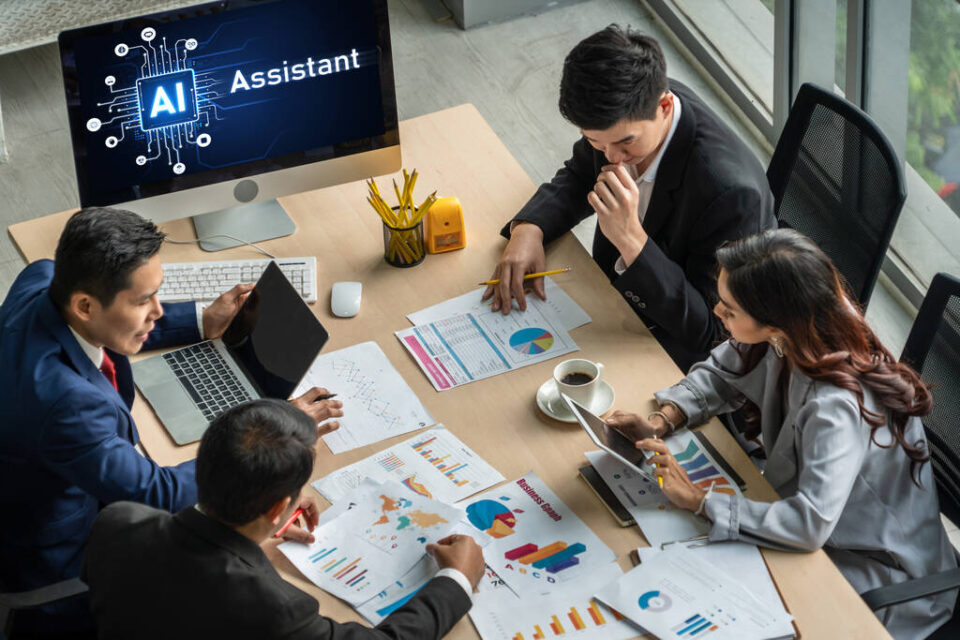
Almost every conversation about AI and teams starts with agents. Multi-agent orchestration. Agent fleets. Agent handoffs. The assumption is that the future of AI on a team means many AIs working together on behalf of humans. That is not where the leverage is. The leverage is one level below. One AI. One team. One shared surface they can all see at once. We have started calling this configuration an AI toolmate, because that is what it actually behaves like in the room. Not a tool one person uses on their own time. Not a fleet of agents the team consumes outputs from. A teammate in the meeting, on the canvas, with everyone looking at the same output at the same time. When that configuration clicks, something happens that private AI usage cannot produce. The room converges on a shared answer faster than anyone expected, and the dynamic that makes it work has nothing to do with the model. It has to do with a thirty-year-old observation about how people argue.
Cunningham’s Law, thirty years later
Ward Cunningham built the first wiki in 1995\. Somewhere along the way, he noticed that the fastest route to a correct answer online was not to ask a careful question. It was to post a wrong answer and wait. Someone would show up, usually within minutes, to correct you. That observation became Cunningham’s Law. The popular version is glib. The fastest way to a right answer on the internet is to post a wrong one. The deeper version is about group dynamics. People have far more energy for correction than for construction. Give them a target and they will sharpen it. Give them a blank page and they will circle it for an hour. Cunningham’s Law describes a social mechanism, not a technology quirk. It has always been true in meetings. Nobody wants to offer the first proposal because the first proposal is the one that gets torn apart. Once a proposal exists, suddenly everyone has opinions. The floor that felt impossible to open up a minute ago opens up instantly. Now add an AI.
What happened in Dallas
In early April I hosted a dinner in Dallas with nine enterprise leaders. HPE, ServiceNow, Truist Financial, PepsiCo, Sabre, Databricks, AT\&T, Bell Flight, FieldPulse. Martin Vicente from Miro was co-hosting as the sponsor. Midway through the conversation he did something simple that stopped the table. The team had spent twenty minutes populating a shared Miro canvas with the messy inputs of a decision. Stickies, context, half-formed ideas, a few links. Martin dropped an AI block onto the canvas, pointed it at the cluster, and asked it to synthesize a point of view. The output appeared on the board. Everyone saw it at the same time. Within ten seconds someone said “that’s not right.” Within thirty seconds three other people had added to that. Within two minutes the team had sharpened the output into something better than any of them had brought into the room. Nobody was defensive. Nobody was negotiating whose idea had been watered down. They were all correcting the AI, together, on a shared surface, with no one holding a grudge about whose first draft got dismantled. The way I framed it to the table, and I will use the same words here: “we’re not trying to be nice and not offend anybody. We can get to a more solid decision with more clarity way faster.” That is what an AI teammate looks like in practice. Not a fleet of agents. One AI in the room, wrong on purpose, and a team willing to improve it together.
Why public correction works when private deliberation stalls
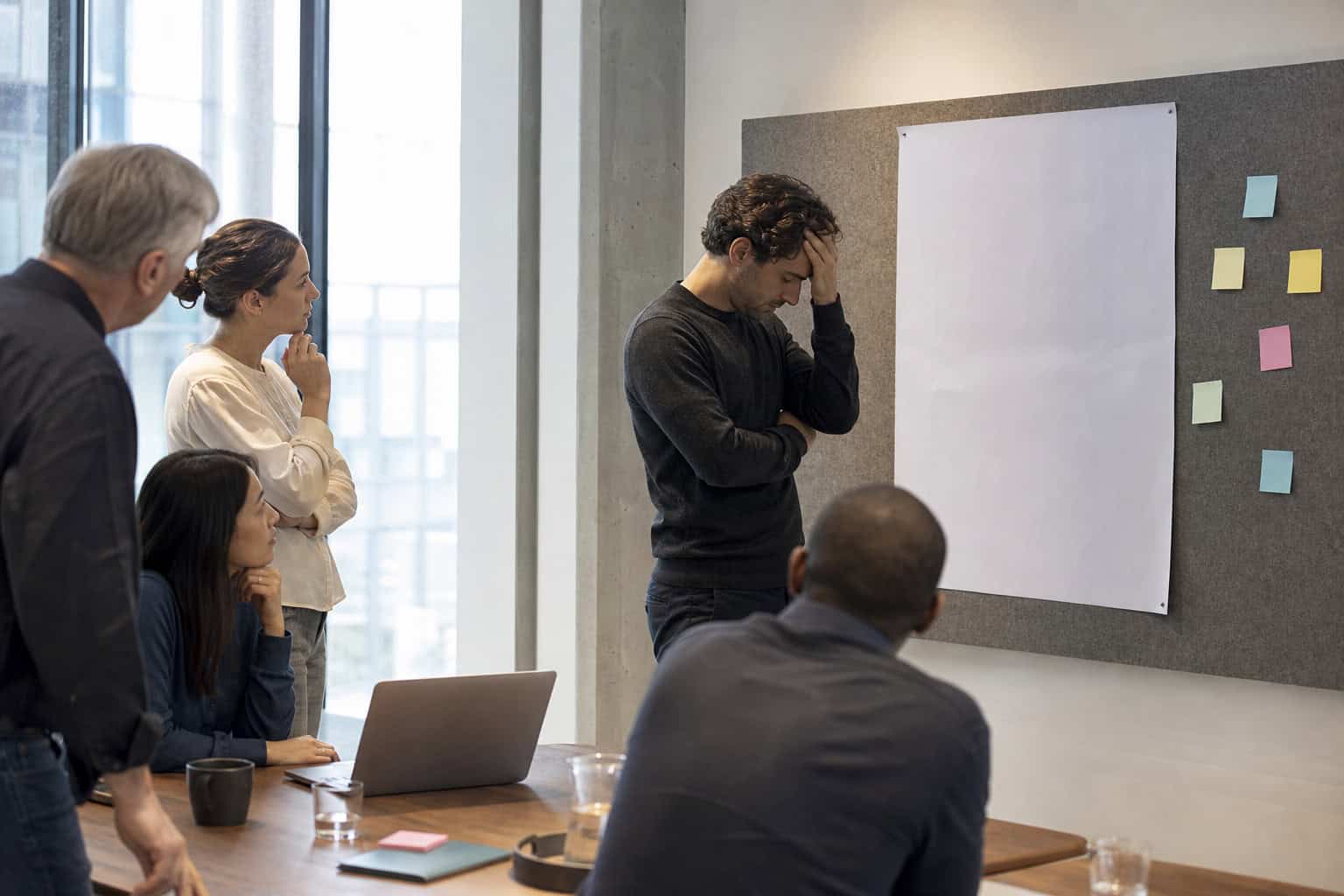
The standard way teams make decisions involves a painful asymmetry. Somebody has to go first. The person who goes first carries the interpersonal cost of being the first version anyone criticized. The people who go second watch that cost land and recalibrate their risk. By the time you reach the person with the strongest opinion, that opinion has been filtered through three layers of social accommodation, and the group has landed on the answer with the smallest number of objections, not the best one. Put an AI in the first position and that asymmetry dissolves. The AI is the first version. Everyone else becomes the second, third, and fourth voice, and there is no interpersonal cost to any of them for saying “that’s wrong.” Nobody is attacking anybody. They are attacking a synthesis. There is a further effect that is harder to see in the moment. Teams correct AI more readily than they correct each other. The norms that govern how direct we can be with a colleague do not apply to the model. You can use sharper language. You can say “this is actually misleading” without softening it with “I think maybe” or “this is great, but.” The AI is not a colleague whose relationship you have to preserve. What that unlocks is the disagreement the team already had but was not going to voice. The strongest opinion in the room gets to speak without having to fight for the floor. The AI took the social cost on its behalf.
What this produces that private AI cannot
The first thing that changes is shared meaning. Most team decisions stall not because people disagree on the answer but because they disagree on what the question actually is, and they have not noticed yet. A synthesized starting point forces that misalignment to the surface in the first two minutes. You learn whether your team is aligned before you invest an hour debating a point you were not really disagreeing about. The second change is speed of convergence. Once everyone is correcting the same artifact, the corrections compound. Each person’s edit gives the next person something more specific to push against. The canvas moves from vague to precise in minutes, not meetings. Teams who learn this report the same thing to me: they leave the room with a decision, not a follow-up calendar invite. The third change is a decision trail that writes itself. Because the wrong answer and the corrections are visible on the shared surface, the history of the decision is right there on the canvas. Why did we rule that out? Because the second version of the synthesis said X, and two people pushed back with specific reasons, and that changed the third version. The artifact becomes its own meeting notes. You no longer need a separate step to reconstruct the logic of what the team chose and why. None of these three effects emerge when the same people use the same AI privately on their own time. Private AI produces individual outputs that have to be reconciled in a second meeting. Public AI produces one output that the team has already reconciled.
The metric most organizations are missing
The industry is measuring AI adoption wrong. The dominant metrics are individual. Tokens consumed. Prompts per user. Hours saved per seat. Those numbers assume that AI value is the sum of individual productivity gains. It is not. Forrester Consulting, commissioned by Miro, found that seventy-five percent of decision-makers believe current AI tools focus too much on individual rather than team productivity, and thirty-nine percent said the individual emphasis is actively dragging down their AI returns. The gains are real at the seat level. They are not adding up at the team level because the bottleneck has moved. When everyone is faster at producing drafts, the scarce resource becomes shared understanding of which draft to act on. Cunningham’s Law in a shared AI room is the intervention for that bottleneck. It is the opposite of individual productivity. It is the team becoming collectively faster at producing a correct answer, because the correction dynamic no longer has to negotiate who owns the wrong first draft. Any organization measuring AI ROI only through seat-level usage will miss this entirely. The leverage is not in how much AI each person uses. It is in what the team can do when the AI is on the table between them.
Design principles for running this move
This is not a workshop gimmick. It is a design pattern for any meeting where a team needs to land on a shared artifact. A handful of principles make it work. Use the AI to produce the first version, not the final one. The whole mechanism depends on the output being wrong in instructive ways. If you try to prompt your way to a polished final answer, you lose the correction dynamic and the learning that comes with it. The first artifact should be good enough to engage with and wrong enough to push against. Keep the surface shared and visible. This does not work if the AI output shows up in one person’s chat window and gets screen-shared as a slide. It works when the output lands on an artifact everyone can edit together at the same time. The canvas matters. The technology that lets multiple people touch the artifact at once matters. Passive viewing is not the same as joint editing, and the correction dynamic will not fire without joint editing. Prompt the AI with what the team already built.
The best inputs for this pattern are the stickies, fragments, and context the team produced before the AI was invoked. The AI is synthesizing the team’s own thinking back to it, not replacing it with a generic answer pulled from somewhere else. When people see their own inputs come back transformed, the corrections become concrete rather than abstract. Treat the wrong answer as a feature. The first output is not a draft to polish. It is a claim to push back against. The facilitator’s job is to protect the move from “that’s wrong, let’s ask the AI again” to “that’s wrong, and here is specifically why, and here is what closer to right looks like.” The group does the work. The AI only holds the target. Use it most aggressively on the decisions your team has been avoiding. The patterns that benefit most from Cunningham’s Law are the ones where the team has been circling for weeks because nobody wants to be the first person to name the elephant. Let the AI name it, badly. The team will sharpen what it said, and the silence that was protecting the elephant will end.
What is at stake
AI is relocating where friction lives in organizations. The work of producing drafts, summaries, and first-pass analyses is collapsing toward zero. The work of aligning a team on what to do with those drafts is becoming the binding constraint on how fast the organization can move. Teams that learn to think together with AI in the room will outpace teams whose members think faster alone. The gap will not look like a productivity difference at first. It will look like a decision-speed difference, and that compounds. One team ships a strategic pivot in a week. The other spends a month circulating documents. Over a quarter, the distance between them is enormous. The multiplayer move is not a technology problem.
The technology is ready. The facilitation is the hard part. Putting an AI into a meeting, letting it be wrong on purpose, and holding the room steady while the team corrects it together is a skill. It is the highest-leverage AI skill most leaders have not built yet, and the organizations that build it first will not advertise that they have. If your team has been circling a decision for two weeks, try the move at your next meeting. Put the messy inputs on a shared canvas. Ask an AI to synthesize a point of view on them. Say nothing for the first ten seconds after the output appears. Watch what the room does. Cunningham was right about wikis in 1995\. He is more right about AI in 2026\. The fastest way to a good answer is still to put a bad one where everyone can see it.
Frequently Asked Questions
What is Cunningham’s Law and how does it apply to teams?
Cunningham’s Law is the observation, attributed to Ward Cunningham (the inventor of the wiki), that the fastest way to get a correct answer online is to post a wrong one. People have more energy for correction than construction. Inside a team, the same dynamic shows up whenever someone has to make the first proposal. Posting a synthesized wrong answer to a shared surface gives the team a target to sharpen, which is faster than asking them to build one from a blank page.
How does AI improve team accountability?
AI does not improve accountability by tracking who did what. It improves it by lowering the social cost of disagreement. When an AI produces the first draft of a team’s thinking, anyone can correct it without attacking a colleague. The strongest opinion in the room gets to speak without having to fight for the floor, and the team owns the corrected answer together.
Why do wrong answers speed up team alignment?
Blank pages stall teams. People circle them because the first contribution carries the interpersonal cost of being the first version anyone criticized. A wrong answer removes that cost. It gives the team a concrete artifact to push against, and corrections compound faster than original ideas. Each push gives the next person something more specific to engage with, and the canvas moves from vague to precise in minutes.
What is an AI teammate, and how is it different from a traditional AI agent?
An AI agent is a system that does work on behalf of a human, often with other agents in an orchestrated chain. An AI teammate is one AI inside a team, on a shared surface everyone can see and edit at the same time. The leverage is not in agent fleets. It is in the human team converging faster because the AI absorbed the social cost of going first. Same model class; completely different deployment pattern.
Is “AI teammate” the same as multiplayer AI?
Multiplayer AI is the broader category: any configuration where one AI is helping a team work on something together rather than helping individuals work alone. AI teammate is the specific pattern inside that category where the AI behaves the way a teammate would, by holding the first draft in front of the room and absorbing the corrections. Cunningham’s Law is the social mechanism that makes the AI teammate pattern work. How can teams use AI to build consensus faster? Get the team’s messy inputs onto a shared canvas first. Ask an AI to synthesize a point of view on those inputs. Let the output land in front of everyone at once and resist the urge to fix it yourself. The room will start correcting it within seconds, and within minutes the corrected version will be sharper than any individual could have brought in cold. The facilitator’s job is to hold the room steady while the corrections compound.
Try the move at your next meeting
Putting an AI teammate into a real meeting is not waiting on better models. The technology is ready. What is missing is the facilitation skill to put the AI into the room on purpose, let it be wrong, and let the team do the rest. If your team has been circling a decision, try it. Put the messy inputs on a shared canvas. Ask an AI to synthesize. Say nothing for ten seconds. Watch what the room does. If you want to go further, explore the New Friction pillar or talk to us about facilitation work for your team.