Why Your AI Deliverables Aren’t Creating Alignment
Table of contents

Why Your AI Deliverables Aren’t Creating Alignment
A year ago, a strategy deck took a week to build. A journey map took a workshop, a synthesis sprint, and a designer with strong opinions about Post-its. Today an AI tool can produce a passable version of either in minutes. That should be good news. It is, and it isn’t. When the artifact gets cheap, the artifact stops being the point. What was scarce, the deliverable, is now abundant. What was always scarce, the shared understanding that made the deliverable worth having, is exactly as scarce as it ever was. Jim Kalbach saw this coming from the customer experience side, not the AI side. In the third edition of Mapping Experiences, out this July, he writes that “AI-driven workflows and agents should give us more time to be more human.” He arrives at the same conclusion Voltage Control has been building toward all year: when execution time collapses toward zero, the constraint that matters is no longer producing the work. It’s aligning the people who have to act on it. Picture the scene that plays out in a hundred conference rooms this quarter. A transformation lead needs a customer journey map for a steering committee meeting. Two years ago that meant a week of interviews, a synthesis session, and a designer laying it out in Figma. Today it means a prompt and a coffee break. The map that comes back looks credible. It has swimlanes, pain points, emotional highs and lows, the works. It goes into the deck. The meeting happens. Everyone nods. Nothing changes, because nobody in that room actually built the thing together, and building it together was the part that mattered.
The gap AI just made worse
Long before AI touched a single Miro board, journey mapping had a credibility problem. Kalbach cites Gartner analyst Cassandra Nordlund’s finding that 82 percent of organizations had created a customer journey map, but only 47 percent were using it effectively (Gartner, cited in Mapping Experiences, 3rd ed.). Call it the 82/47 gap: most companies can produce the artifact. Fewer than half know what to do with it once it exists. That gap did not close because AI showed up. It widened, because AI made the easy 82 percent even easier. A team that used to need two days to draft a journey map can now get a first pass in an afternoon. The habit of stopping there, of mistaking a finished-looking document for a finished conversation, gets reinforced instead of interrupted. Polished is not the same as validated, and AI is very good at polished. This is the same trap showing up across every AI transformation program we see, not just customer experience work. Strategy decks, technical architecture diagrams, org redesign proposals, onboarding plans. All of it can now be generated fast enough that “we have a draft” stops meaning “we’ve thought this through together” and starts meaning “the model produced something plausible.” The organizations getting into trouble are not the ones using AI to draft things. They are the ones who stopped noticing the difference between a draft and a decision. Kalbach names the failure mode bluntly. Teams build “wall maps with butterflies and unicorns” that “failed because no one facilitated conversations around them, they were documentation, not dialogue.” That line was true before generative AI existed. It is more dangerous now, because the documentation has never been easier to produce and never looked more finished doing it.
It’s not the map, it’s the mapping
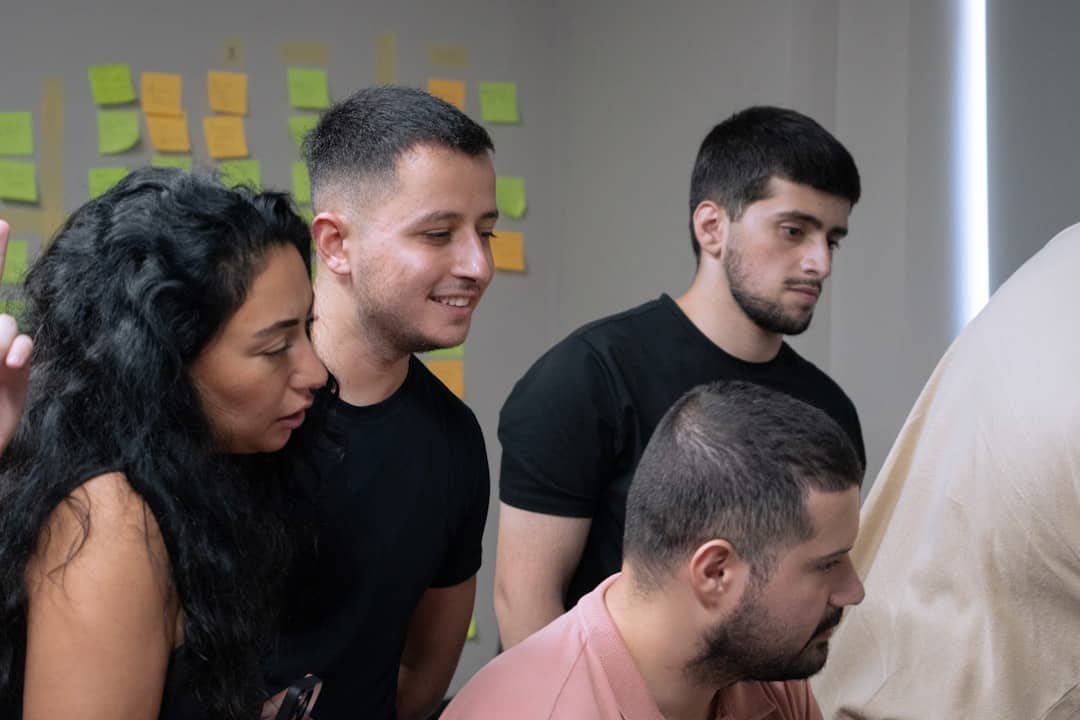
Kalbach’s reframe for the third edition is the sharpest sentence in the book: “it’s not the map, it’s the mapping.” The artifact was never supposed to be the deliverable. It was supposed to be the byproduct of a room full of people building shared understanding together, out loud, in front of each other. This is not a new idea inside Voltage Control. It’s the same argument underneath our own past writing on facilitation, and it’s flattering, if a little strange, to see it reflected back from a different discipline entirely. Kalbach’s book cites our 2024 piece on journey mapping directly, calling Voltage Control “a leading facilitation consultancy” and quoting our line that “this alignment of cross-functional teams around a shared understanding of the user experience is a catalyst for change.” Two people who never coordinated landed on the same conclusion from opposite starting points. That kind of convergence is worth taking seriously. Here’s what makes this interesting for the AI moment specifically. For twenty years, the map and the mapping were bundled. You could not get one without doing the other, because producing a decent map required weeks of interviews, synthesis, and cross-functional buy-in. The bundling did the alignment work almost by accident. Now AI unbundles them. You can have the map in ten minutes and skip the mapping entirely. The organizations that keep winning will be the ones that notice the unbundling and deliberately rebuild the mapping. The rest will ship more polished artifacts to teams that are no more aligned than before, and wonder why nothing changed. Rebuilding the mapping does not require throwing out the AI-generated draft and starting over by hand. It requires changing what the draft is for. Instead of walking into a steering committee meeting with a finished map and asking for sign-off, a facilitator puts the AI-generated draft on the wall at the start of a working session and asks the room to argue with it. Where is this wrong? What did the model miss because it wasn’t in the room for last quarter’s customer complaints? Where does this map contradict what sales just heard on three calls? The AI draft becomes the provocation that gets a cross-functional group talking to each other, not the artifact they file away. The mapping happens in the disagreement, not in the generation.
What IBM already knew
Enterprise Design Thinking, IBM’s internal transformation effort, ran into a version of this problem at massive scale, and Kalbach’s account of it is instructive. IBM did not try to change culture by getting people to believe something different. They changed what people did every day: playbacks, sponsor users, hills as a way to frame outcomes instead of features. The mechanism, not the mindset, is what moved. “You don’t change culture by changing what people believe,” Kalbach writes of IBM’s Enterprise Design Thinking effort. “You change culture by changing what people do.” That is a hard thing to hear if your instinct is to fix AI adoption with a better all-hands or a sharper vision statement. It is a much more useful thing to hear if you’re trying to figure out what to actually change on Monday. Applied to the mapping problem, the fix is not a policy that says “always facilitate a session before finalizing a deliverable.” Policies get skipped under deadline pressure, especially when the AI-generated draft already looks done. The fix is a changed default in how the work gets built. The AI-generated map becomes the opening move in a session, not the closing one. The habit that has to change is what a team does the moment the first draft appears on screen. That is a small design change with a large consequence. It moves the moment of AI use earlier in the process, before the deliverable is treated as settled, instead of later, as a stand-in for the settling. Teams that make this shift stop asking “did we generate a map” and start asking “did the room leave with the same understanding it walked in without.” Those are very different questions, and only one of them AI can answer for you.
The mapmaker becomes the facilitator
Kalbach makes one more claim that lands squarely in Voltage Control’s territory: the person who used to be called a researcher or a designer “needs to become a facilitator,” because “good facilitation feels invisible.” The skill that used to be a specialty is becoming a baseline expectation for anyone who produces shared artifacts for a living. That shift is not limited to UX teams. It is happening to strategists building AI transformation roadmaps, to product managers synthesizing customer feedback, to anyone whose job used to end when the deck was finished. AI collapsed the time it takes to build the deck. It did not collapse the time it takes to get a room of stakeholders to actually agree on what the deck means. That gap has to be filled by someone, and increasingly it is being filled by whoever happens to be holding the AI-generated draft when the meeting starts, whether or not they ever trained for it. “Good facilitation feels invisible” is a harder standard than it sounds. It means noticing who has gone quiet in a session and pulling them back in before the loudest voice in the room becomes the map’s point of view. It means treating disagreement about the AI-generated draft as the useful part of the meeting, not an interruption to get through before lunch. It means knowing when to let the room sit with a hard question instead of rushing to the next slide. None of that shows up in a prompt. All of it determines whether the map that comes out the other side reflects what the business actually knows, or just what one person typed into a chat window at ten the night before. This is the real implication of “it’s not the map, it’s the mapping” for an AI-native organization. The scarce skill was never cartography. It was convening. AI just made that fact impossible to hide behind a good-looking deliverable. The friction this creates is real, and it is worth naming plainly. Most knowledge workers were never trained to run a session. They were trained to produce an output and hand it off. AI just handed them a faster way to produce the output, without handing them the skill of getting a room to actually use it. That mismatch, a workforce equipped to generate and unequipped to convene, is exactly the kind of gap that determines whether an AI transformation program sticks or stalls. It shows up as meetings that end in polite agreement and no behavior change, as roadmaps that get rewritten every quarter because nobody actually committed to the last one, as decks that get more beautiful while decisions get slower.
The scarce skill isn’t creation, it’s convening
None of this argues against using AI to draft the map, the deck, or the plan. Draft it. Draft it fast. The mistake is treating the draft as an ending instead of an opening. A journey map that never gets argued over in a room is not a finished artifact, it’s an unfinished conversation with a nice layout. The organizations that internalize this will start every AI-generated deliverable the same way: as raw material for a facilitated session, not as a substitute for one. They will staff for facilitation the same way they staff for AI tooling, because the two are now inseparable parts of the same workflow. They will train the strategist who used to just build the deck to also run the room where the deck gets argued over, because that skill is no longer optional once the deck itself is nearly free. The organizations that don’t will keep producing beautiful, unused artifacts, and keep being surprised that alignment didn’t follow. That is the actual choice AI transformation programs are making right now, whether they realize it or not. Every budget line that goes toward another generation tool and none toward the capability to convene people around what that tool produces is a bet that the 82/47 gap will somehow close itself. It won’t. It has had years of journey-mapping practice and now generative AI to close on its own, and instead it widened. The 82/47 gap was always a facilitation gap wearing a documentation costume. AI didn’t create that problem. It just removed every excuse for not seeing it clearly. The map was never the deliverable. The mapping still is, and now it’s the only part of the work an AI can’t do for you.