A conversation with Terrence Metz, Managing Director of MG RUSH Facilitation Training and Coaching
How can a company successfully oversee their internal ideas? It’s a fascinating question in the era of innovation. Terrence Metz, Managing Director of MG RUSH Facilitation Training and Coaching, is a good guy to ask this gnarly question because he once helped a major division of 3M create a method for managing ideas.
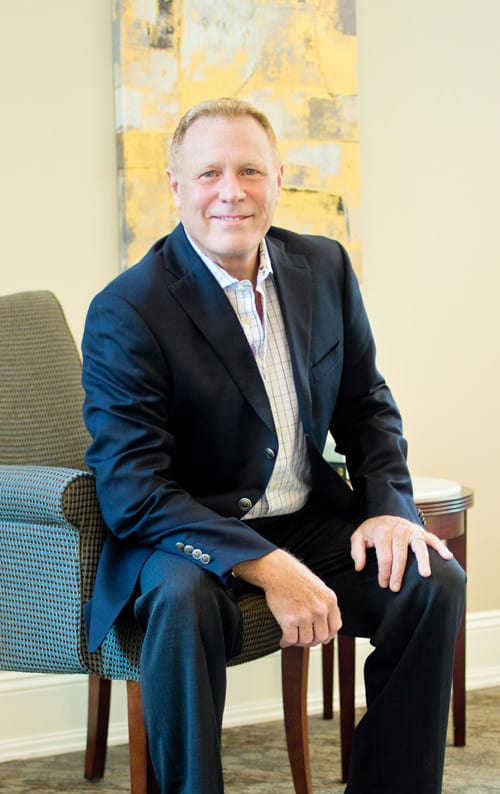
Terrence is a leader in facilitation training who consults, coaches, and trains businesses worldwide. He’s taught over four hundred facilitation classes and three thousand students on five continents. His clients include Agilists, Scrum teams, program and project managers, and senior officers among numerous private and public companies and global corporations. He also writes a blog with articles on facilitation skills to help people lead faster, more productive meetings and workshops.
Terrence and I recently spoke and, since we share a passion for facilitation, I loved hearing his viewpoint. Read on for highlights from our conversation.
Defining Ideas
A division of 3M came to Terrence’s organization when they discovered they didn’t have enough new product ideas and it was causing them to fall behind. Consequently, Terrence helped them build a “Product Concept Management” process. In other words, they defined how to manage indefinite or unformed concepts or “fragments of ideas.”
He discovered that part of the problem of managing ideas is in definitions. What exactly constitutes a valid idea to pursue? If the team doesn’t agree on what an “idea” is, how can you vet them? As a group, they needed to have common language. They decided that “notions” are ideas in a more embryonic state, while concepts are “the conversion or confirmation of a fully articulated, qualified idea.”
Terrence shared: “The group came to say, ‘No, you don’t have an idea if you’re taking a shower. You have a notion.’ You have something that could become an idea, but it’s certainly not an idea while you’re drying off. It’s simply a notion.”
“Our thesis,” he explained, “was that ideas/notions and concepts need to be managed differently. You may have problem descriptions floating out there, and they needed to be analyzed relative to potential solutions. Fragments of ideas simply needed to be managed to a different fashion than a completely solid idea.”
“We strongly urge an idea management process to never end. Even ‘bad’ ideas may yield value at some point in the future… We don’t kill any ideas.”

When? Not If
As I do in all my interviews, I asked Terrence about wrong-headed things he’s seen in organizational innovation programs and he said: “The thought that ‘It can’t be done.’ From a future view, it’s not if, only when.” He went on to share a story that illustrated his point: “I was working with research folks from Motorola when the first iPhone was rumored. But, they discounted the ‘rumor’ because their engineering group had looked at some of the touted features and had already determined that it could not be done.”
“If it can be imagined it can be built. You have to relax typical constraints; you have to relax time; you have to relax budget. Then go back and evaluate if it’s worthwhile…”
For him, it’s important for companies to build solutions without any constraints: “If it can be imagined it can be built. You have to relax typical constraints; you have to relax time; you have to relax budget. Then go back and evaluate if it’s worthwhile or what components do we have to remove, substitute, or replace to make it practical.”
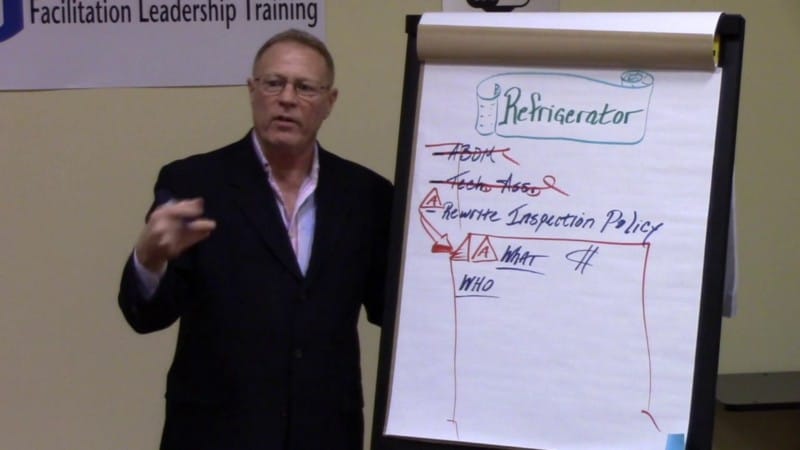
He also talked about the importance of focus in order to inspire a “can do” or “blue sky” attitude: “If you have the right people in the room, you can do anything—if you can get them to focus on the same thing at the same time. The hardest thing to do with a group of smart people is to get them to focus.”
“You have to have such a well-established methodology so there’s no time for their thoughts to drift.”
This is where his experience as a facilitator comes in: “You can’t get people to focus by telling them to focus, it doesn’t work. First, you need to remove and be alert for possible distractions. Second, you have to have a well-established methodology so there’s no time for their thoughts to drift.”
Innovation is a mindset
To Terrence, innovation is an attitude or mindset: “Innovation, much like Agile, should permeate every aspect of a business, especially those dependent on new sources of revenue. Innovation captures an attitude that ought to be pervasive within an organization, providing an ongoing commitment to newness.”
“Innovation might be viewed as a set of values that signifies a belief in seeing beyond present conditions…”
He described how he sees innovation defined at different levels of a company: “At the organizational level, it implies structural and cultural change. At the process level, it implies efficiency and effectiveness. At the product level, it implies new or changed technology, packaging, etc.”
“If we don’t aspire for what’s new, we’re going to be somebody else’s lunch.”
Terrence also stresses that innovation relies on a commitment to change: “We know our competitors are changing. My commitment [to change] is based on this idea that the greatest motivator in life is death, and if we don’t change we will die. To avoid death we need what’s new. We’ve got to be in a constantly changing, evolving process. If we don’t aspire for what’s new, we’re going to be somebody else’s lunch.”
“My commitment [to change] is based on this idea that the greatest motivator in life is death, and if we don’t change we will die.”
Ingredients of innovation
Terrence views the “Voice of the Market” as his innovation silver bullet. He doesn’t believe in only listening to the Voice of the Customer because he doesn’t think customers alone are the predictors of future needs.
Another important ingredient for innovation is people who “embrace diversity and stir up the pot.” He looks for people who, “don’t see obstacles, only opportunities. Those who have an attitude of embracing ‘newness’ are getting it both wrong and right. And since they persevere, they are getting it more right, and more frequently right, than others. Some say ‘fail fast.’ I prefer, ‘fail with a bow’ (i.e. fail with dignity).”
We also talked about measuring innovation. For Terrence, that can vary: “Typically they include time and money. Edison measured his quantity of failures. 3M uses revenue from SKUs released in the past five years. I doubt there is a universal measurement… Regardless of the appropriate measures for an organization or industry, the trend line may be more critical than the discrete performance of any given period.”

Do we need agreement?
As a facilitator, Terrence often brings people together to work on, and (hopefully) agree upon, a plan for the future. But he doesn’t believe in getting everyone to simply agree: “Agreement is everybody thinking the same. Agreement would be as if we all play the same notes on a piano. We’re not seeking agreement, that’s boring. What we’re seeking is harmony, and that’s where we’re able to play different instruments, we’re able to play different notes, but we’re able to pull together in the form of a composition that surpasses anything one individual can do.”
“What we’re seeking is harmony, and that’s where we’re able to play different instruments… but we’re able to pull together in the form of a composition that surpasses anything one individual can do.”
Instead of blanket agreement, Terrence looks for general consensus: “…find something robust, strong, and clear enough that everybody in the room can get behind it and support it. It may not be anybody’s favorite, but as a group, it becomes our favorite. Consensus also means you’re not going to lose any sleep over it. If you say one thing in this room, but you get home tonight and you toss and you turn, we really don’t have consensus.”
And, if a group truly cannot come to a consensus or resolve a major argument, Terrence sees termination as an option. “When all fails, which can happen, what we need to do is terminate. We need to leave the room, but not with everything hanging in the aether. We need to document clearly the nature of the argument, the reasons for contrasting positions and we need to get some help…”
Facilitative leadership
According to Terrence: “Facilitative leadership is perhaps one of the most important skills in the next 50 years.” With today’s complex work environments, no one person can know all the answers. “Why do we have so much wasted meeting time if we have smart subject matter experts? If they have the knowledge and they have the energy, then why is the meeting failing?”
He went on: “Why are we failing to come up with the right stuff? The answer is they don’t know how…The old command-and-control is dead. If you’ve got an answer, don’t have a meeting. If you need answers, if you need consensual solutions that entire groups can support and get behind, then what you need is not an “answer man,” you need a facilitative leader.”
“If you need consensual solutions that entire groups can support and get behind, then what you need is…a facilitative leader.”
Of course, Terrence notes his bias toward facilitation since he trains people in it. However, even without official training, people need facilitation skills: “What are those skills? Those skills are not public speaking. They’re not skills of style; they’re skills of substance. It’s not knowing the answer, it’s knowing the question. It’s a skill of being a good listener, not a good persuasive charismatic speaker.”
If you want to read my other articles about innovation experts and practitioners, please check them all out here.