Most enterprise AI efforts produce knowledge, not change. This guide is for leaders ready to move past pilots and certificates — and embed AI into the workflows, rituals, and decisions that actually drive operational results.
595 results found.
Most enterprise AI efforts produce knowledge, not change. This guide is for leaders ready to move past pilots and certificates — and embed AI into the workflows, rituals, and decisions that actually drive operational results.
Generative AI has cleared the pilot stage at most large organizations. The harder question—how to turn early experiments into consistent, responsible, enterprise-wide practice—is where most AI adoption efforts run aground. Scaling generative AI is less a technology problem than a ways-of-working one.

Move beyond disconnected AI pilots with a practical framework for building an enterprise-ready agentic AI strategy. Learn how the Delegation Ladder helps leadership teams progress from AI assistance to autonomous orchestration while strengthening governance, accountability, and organizational readiness. This guide explores why successful AI transformation depends less on technology and more on decision authority, workflow design, change management, and clear ownership. Discover the five-question readiness diagnostic, common implementation pitfalls, and a proven roadmap for scaling agentic AI with confidence across your organization.

If you are wondering whether a facilitation certification is worth the investment, this guide breaks down the real value beyond the credential itself. Learn what top facilitation certification programs actually teach, including meeting design, group dynamics, psychological safety, decision-making frameworks, and facilitator presence. Explore the true costs in time and money, who benefits most from certification, and when pursuing a credential may not be the right move. Designed for internal facilitators, L&D professionals, managers, and collaborative leaders, this article helps you evaluate the career impact, leadership growth, and practical skills gained through formal facilitation training and certification programs.

The rise of Artificial Intelligence (AI) is transforming business operations, driving innovation, and enhancing decision-making with data-driven insights. By 2030, AI could add $13 trillion to the global economy. However, successful AI integration requires more than adopting technology—it demands strategic change management. This guide covers the essential elements of AI change management, from building an AI-ready culture and engaging employees to aligning AI initiatives with business goals, ensuring both technological and human factors are addressed for a seamless AI transition.

Change management is critical in the fast-evolving healthcare industry, ensuring seamless adaptation to new technologies and protocols for better patient care. In this article, we explore how healthcare professionals, especially nurses, can lead successful change initiatives, highlighting strategies to improve patient outcomes, foster employee engagement, and overcome challenges. From implementing electronic health records to adopting patient-centered care models, effective change management supports sustained growth and quality care in healthcare organizations. Learn best practices for navigating change and ensuring long-term success.

Applied generative AI for digital transformation succeeds when organizations focus on adoption, not just deployment. This practical guide explores how to move from evaluating AI tools to creating measurable business outcomes through workflow redesign, organizational readiness, and effective change management. Learn the three-layer AI Transformation Stack, discover a six-question readiness diagnostic, avoid the most common implementation pitfalls, and build an AI product roadmap that drives lasting behavior change. Ideal for transformation leaders, facilitators, and executives looking to turn AI investments into sustainable organizational impact.

According to statistics, 79% of companies agree that design thinking improves the ideation process, and 71% have enjoyed a significant shift in their work culture after adopting design thinking. While it does contain the word design, design thinking and it’s iterative approach to creative ideas is not only for design teams, in fact, any team can benefit from this human-centered design process.

Discover the power of journey mapping in design thinking through our comprehensive guide. Journey mapping is an essential tool that provides a vivid narrative of a user's experience, capturing every interaction, emotion, and decision from the user's perspective. It helps designers and stakeholders understand the 'why' behind user behaviors, promoting innovative solutions tailored to real needs. Our guide delves into the best practices for creating effective journey maps and explores four key types—Current State, Day in the Life, Future State, and Service Blueprint. Each type offers unique insights, aiding everything from ongoing improvements to strategic planning. We also highlight the significant impact of customer experience on business success, with findings from a Forrester study linking superior CX to higher financial returns. Practical advice on starting with clear objectives, gathering comprehensive data, involving diverse stakeholders, and visualizing the entire user journey is provided to ensure your mapping efforts are successful.
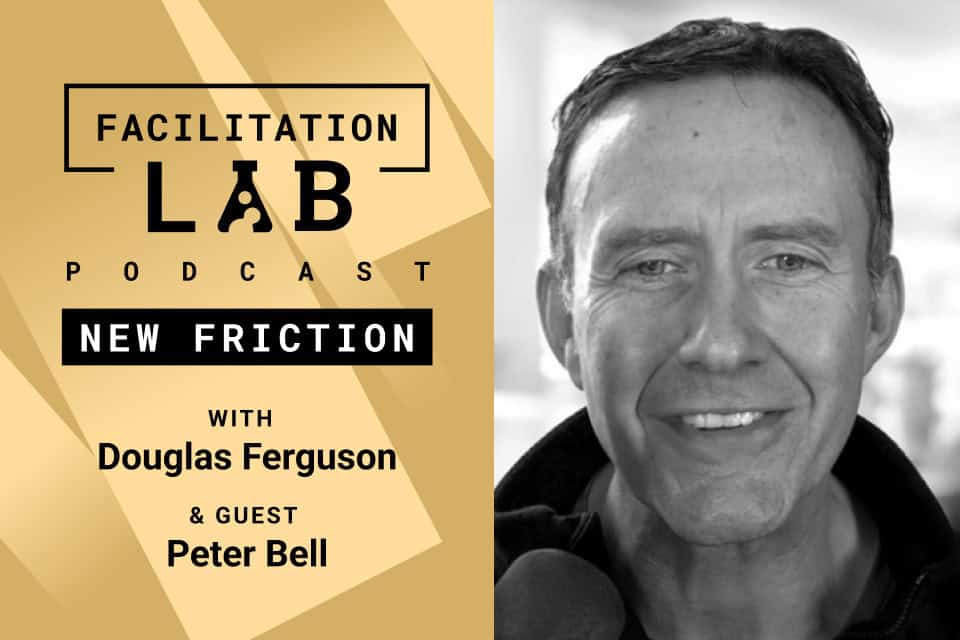
In this episode of the New Friction podcast, host Douglas Ferguson speaks with Peter Bell, founder of Gather.dev and author of the forthcoming O’Reilly book Scaling AI Adoption in Engineering. Bell draws on his work running invite-only peer communities for senior engineering leaders to diagnose why most organizations stall out in AI pilot mode rather than achieving meaningful transformation. The conversation maps three distinct patterns of engineer resistance—skeptics burned by early models, craft-focused developers who resist the shift toward managing agents, and those with principled objections to AI—and offers concrete tactics for reaching each group. Bell and Ferguson explore how AI amplifies existing organizational health: strong DevOps practices compound upward while process debt scales its dysfunction. They examine the mandate trap, measurement via token usage as a diagnostic rather than a performance metric, and the non-negotiable role of psychological safety in any serious adoption effort. The episode closes with Bell’s call for engineering leaders to build hands-on with current models, arguing that firsthand intuition—not secondhand reports from a VP of AI—is what this transition demands.

