A practical template for teams navigating AI transformation.
Table of contents
- What a Change Management Plan Template Actually Needs to Do
- Core Components Every Change Management Plan Template Should Include
- How AI Transformation Changes What You Put in the Template
- Adapting the Template to Your Organization’s Size and Structure
- Where Standard Templates Fall Short During AI Rollouts
- Using the Template Across Each Phase of an AI Initiative
- Build Your Change Management Plan with Support from Voltage Control
Most change management plan templates look complete on paper and collapse the moment they meet a real organization. The document exists, the stakeholders are listed, the communication plan is drafted, and then nothing actually changes at the pace or depth the initiative required. The problem is rarely the template itself. It is what the template is being asked to do, and whether it is built around the right questions.
What a Change Management Plan Template Actually Needs to Do
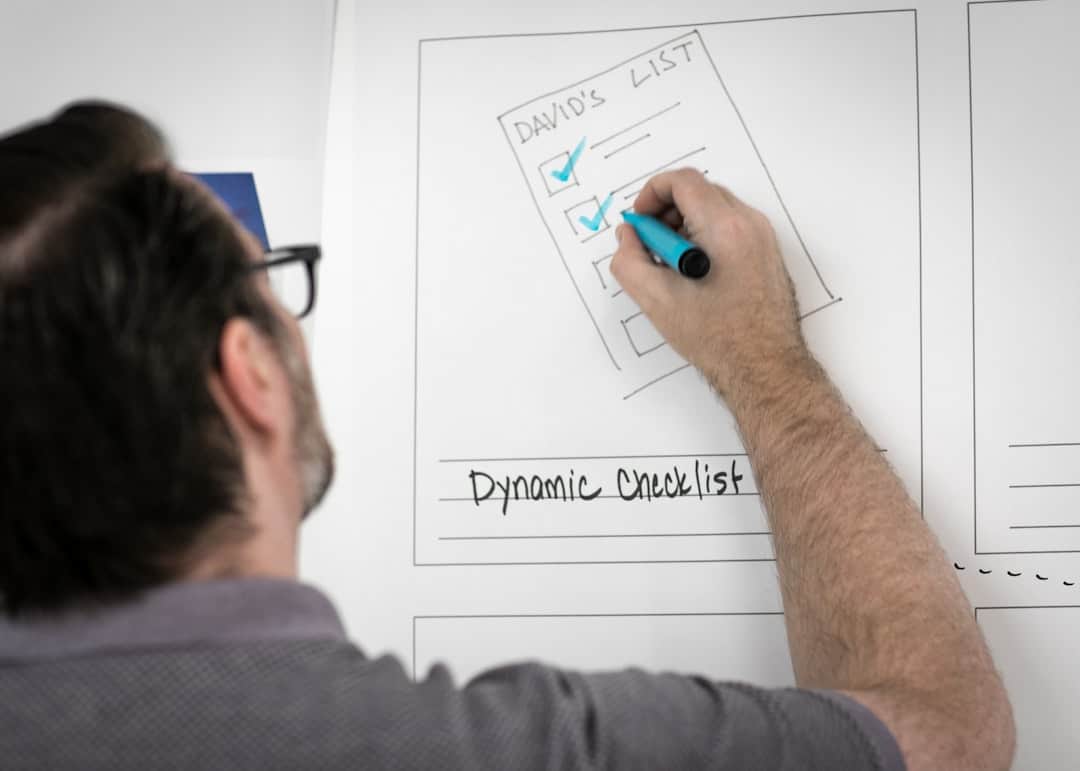
A change management plan template is not a project plan with softer language. The two are frequently confused, and that confusion is where most change initiatives start to fail. A project plan tracks work: tasks, owners, timelines, dependencies. A change management plan tracks something harder to measure, the movement of human behavior, organizational norms, and institutional trust. The job of a change management plan is to reduce ambiguity about what is changing, why it matters, who is affected and when, and what success looks like at the human level, not just the technical one. This distinction matters especially right now. Organizations rolling out AI tools in 2024 and 2025 have discovered that a technically successful deployment can produce close to zero actual adoption. The software is live. Training happened. And then 60% of the workforce quietly keeps doing things the old way. That gap between deployment and behavior change is what we call the Adoption Gap, and a well-built change management plan is specifically designed to close it. The Adoption Gap Framework describes the three phases where change plans typically break down:
- Technical Readiness – the system works and access is granted
- Process Integration – workflows have been redesigned around the new capability
- Behavioral Adoption – people have changed how they actually work day to day
Most standard templates address the first layer reasonably well. They start to thin out at the second. And they almost universally fail at the third, treating it as a training problem when it is actually a culture and incentive problem. Revisiting the Adoption Gap Framework throughout your planning process helps ensure your template is covering all three layers, not just the visible one.
Core Components Every Change Management Plan Template Should Include
A template that covers the right ground includes six elements. Each one serves a distinct function, and removing any of them creates a predictable failure point.
Stakeholder Map with Influence and Impact Ratings
Most stakeholder maps list people. A useful one rates them. Two dimensions matter most: how much this change affects someone’s day-to-day work (impact) and how much influence they have over whether others adopt it (influence). The people with high influence and moderate impact are your most important change agents. The people with high impact and low influence carry the highest support burden. A good template forces you to make that distinction explicit.
Communication Calendar by Audience Segment
A single announcement to everyone at once is not a communication plan. Different stakeholders need different messages at different points in the process. A director needs to understand the strategic rationale before a launch call. A frontline manager needs to understand what is changing for their team before they hear it from their direct reports. The template should map message timing to where each audience group sits in the change curve, not just when content is ready to send.
Training and Readiness Milestones
Training milestones in a change plan are not the same as training completion percentages in a project plan. The question is not whether people attended a session. The question is whether they are ready to work differently. Readiness milestones should include pre- and post-training assessments, early adoption signals, and manager check-in cadences that surface resistance before it hardens.
Risk and Resistance Register
Every change generates resistance. Some of it is rational (the new process genuinely creates more work for a specific team), some of it is political (a senior leader feels their domain is being encroached on), and some of it is procedural (the change conflicts with a compliance requirement no one surfaced). A template without a risk and resistance register treats resistance as a surprise when it arrives. It is not a surprise. Build the register early and revisit it at each major milestone.
Decision Rights Framework
When the change hits turbulence, who can pause it? Who can accelerate? Who can modify scope? Without documented decision rights, change initiatives stall in committee or get pushed forward by momentum when they should pause. The template should include a simple decision rights table specific to the change initiative, not just the project governance.
Success Metrics at the Human Level
Business outcome metrics belong in the business case, not the change plan. The change plan needs human-level metrics: adoption rates, sentiment pulse surveys, manager confidence scores, number of escalations, time to proficiency. These are the leading indicators that tell you whether the change is landing before the lagging business metrics can confirm it.
How AI Transformation Changes What You Put in the Template
A change management template built for an ERP migration or a process redesign does not map cleanly onto an AI transformation initiative. The differences are significant enough to warrant their own section of the plan. The first difference is pace. AI tool capabilities are changing on a monthly cadence. Organizations that deployed GitHub Copilot or Microsoft 365 Copilot in early 2024 found that the tool they trained people on in Q1 was materially different by Q3. A change plan built for a static deployment needs to be rewritten for a moving target. That means building a continuous learning loop into the plan itself, not just a one-time training calendar. The second difference is the skill gap profile. Traditional software rollouts create a gap between current skill and required skill, and that gap is relatively uniform across a workforce. AI tools create an uneven gap: some people can get value from them immediately, while others hit a ceiling around prompting literacy, workflow redesign, or critical evaluation of AI output. A flat training approach misses this. The template needs audience segmentation that accounts for AI readiness, not just job function. The third difference is the cultural charge. Employees are not neutral about AI. Some are enthusiastic. Many are anxious. A significant portion are actively skeptical, often for reasons that are legitimate (job security, accuracy concerns, accountability questions). A change plan that treats AI tool adoption as equivalent to a CRM switch will miss the emotional and cultural work required. The resistance register in an AI initiative needs a dedicated section for values-level concerns, not just operational ones.
Adapting the Template to Your Organization’s Size and Structure
A 60-person professional services firm and a 6,000-person healthcare system are not running the same change management process. The template should scale.
In Smaller Organizations
In organizations under 200 people, the stakeholder map is often short enough to know by name. The risk is over-engineering a process that adds friction without adding value. Smaller organizations should compress the template into its essential six components and add a governance rhythm (weekly check-in, clear escalation path) rather than investing in elaborate documentation. The communication calendar can be lighter, but it still needs to exist. The most common failure in small organizations is assuming that leadership visibility and informal conversation substitute for a real plan.
In Healthcare and Education Settings
Change management in healthcare and change management in education share a common challenge: highly credentialed workforces with strong professional identities and significant autonomy over their own work practices. A physician does not adopt a new clinical workflow because an administrator communicated it clearly. A teacher does not change classroom practice because the district sent a memo. In these contexts, the stakeholder map needs to surface peer influence networks, not just formal authority structures. The change agents who will actually move adoption are often not in leadership roles. They are respected peers who have been given the time and support to become genuine practitioners of the new approach. The template should include a section specifically for identifying, recruiting, and supporting these informal champions.
In Project Management Contexts
In project management contexts, change management is often treated as a workstream rather than a parallel process. The risk is that it gets resourced and sequenced like any other workstream, when in reality it needs to run ahead of technical delivery, not alongside it. The template should be introduced at project kickoff, not at the point when the system is ready to launch. By the time a system is live, it is too late to start stakeholder alignment.
Where Standard Templates Fall Short During AI Rollouts
Here is a position worth stating plainly: the most complete change management templates are often the least useful ones. Templates with fifty line items, twelve tabs, and elaborate governance frameworks create a compliance mindset. Teams spend energy filling in the template rather than doing the change management work. The template becomes the artifact, and the human work gets crowded out. What makes a template useful is not comprehensiveness. It is the quality of the decisions it forces. A good template asks hard questions: Who are the three people most likely to resist this change, and what specifically do they need to hear? What is the single thing that will cause adoption to stall if the team gets it wrong? What does success look like at 90 days, not just at launch? When we run change planning workshops for enterprise teams, what we consistently see is that the organizations with the most elaborate templates have the least clarity on those questions. They have documented stakeholders, communication plans, and risk registers, and then cannot answer “what happens if your two most influential skeptics go public with their concerns at the all-hands?” A leaner template with harder questions outperforms a comprehensive template with soft ones every time. This is especially true during AI rollouts. The Adoption Gap Framework shows why: the behavioral adoption layer is where AI change management fails, and it is the layer that no standard template adequately covers. Standard templates were built for technical change. AI transformation is cultural change wrapped in technical delivery, and the template needs to reflect that.
Using the Template Across Each Phase of an AI Initiative
Before running your change management plan, use this diagnostic to assess whether it is actually ready for an AI rollout. If you cannot answer “yes” to seven or more of these questions, the plan needs more work before you begin.
Change Management Plan Readiness Diagnostic
| Question | Yes / No |
|---|---|
| 1) Have you mapped stakeholders by both impact and influence, not just role or title? | |
| 2) Does your communication calendar have distinct tracks for at least three audience segments? | |
| 3) Have you identified at least two peer-level change agents who are not formal leaders? | |
| 4) Does your resistance register include values-level concerns about AI, not just operational ones? | |
| 5) Have you defined what “behavioral adoption” looks like at 60 and 90 days post-launch? | |
| 6) Do you have a mechanism to update training content as the AI tool evolves post-launch? | |
| 7) Does the plan include a manager-readiness check before the employee rollout begins? | |
| 8) Have you documented who can pause or modify the rollout if adoption signals turn negative? | |
| 9) Is there a structured feedback loop from frontline users back to the implementation team? | |
| 10) Have you addressed the Adoption Gap Framework’s third layer (behavioral adoption) explicitly? |
Score of 7-10: The plan is ready to run.
Score of 4-6: Revisit the gaps before launch.
Score below 4: The plan needs a structural rework, not just a revision.
Returning to the Adoption Gap Framework one final time: a high score on this diagnostic is not a guarantee of success. It is evidence that the plan has covered the layers where AI change management most commonly fails. The actual work of moving people through change is relational, iterative, and often unpredictable. What the plan does is create the conditions for that work to happen.
Build Your Change Management Plan with Support from Voltage Control
Building a change management plan that holds under pressure, especially during an AI transformation initiative, is harder than filling out a template. It requires clear-eyed stakeholder analysis, honest resistance mapping, and the facilitation skill to move a leadership team through hard conversations before the rollout begins. Voltage Control works with organizations navigating exactly this kind of change. The facilitation team designs and runs the working sessions that turn a template into a working plan and supports the human side of AI adoption from kickoff through behavioral change. Book a free intro call with our facilitation team to talk through where your current plan has gaps and what it would take to close them.