A practical look at what still works, what’s changing, and what facilitators need to unlearn.
Table of contents
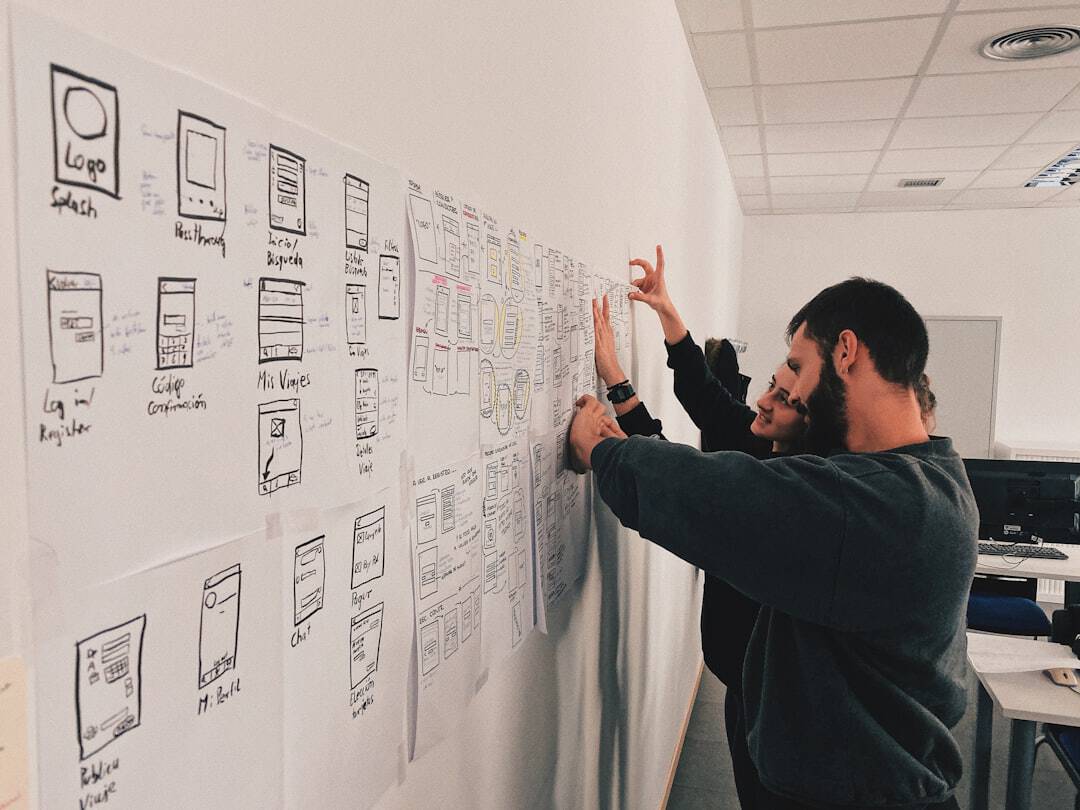
A practical look at what still works, what’s changing, and what facilitators need to unlearn.
Design thinking is not dead. It only looks that way if a team is still running the exact five-stage process from a decade ago while a large language model quietly does half the work in the room. The real question a lot of directors and VPs are asking right now is narrower and more useful: what actually changes about design thinking when a team has AI in the workflow, and what stays exactly the same. Here is the plain-language answer first. Design thinking is a structured way of solving problems for people, built on three fixed commitments: understand the person before proposing a fix, frame the right problem before generating solutions, and test the solution against real users before scaling it. AI changes how fast a team can move through each of those commitments. It does not remove the need for any of them, and teams that treat AI as a shortcut past empathy or testing usually ship something fast that solves the wrong problem faster than they used to.
What design thinking still gets right
Three parts of the classic process hold up without modification, even with AI generating options, drafts, and prototypes inside the workflow.
Empathy work still has to happen with humans, in the room
AI can summarize interview transcripts, cluster themes, and draft a persona in minutes. It cannot sit across from a frustrated customer and notice the hesitation before the complaint, or the offhand joke that reveals what actually annoys someone about a product. Design thinking’s empathy stage was never really about collecting data. It was about a facilitator or a team building enough shared, first-hand understanding of a real person’s experience that the whole team argues from the same starting point later. AI speeds up the documentation of that understanding. It cannot build the understanding itself, and a team that skips the conversation and starts from a generated summary is designing for a guess.
Framing the right problem is still the highest-leverage step
The oldest failure mode in design thinking predates AI by decades: a team solves an interesting problem instead of the real one, because nobody spent enough time on the “how might we” framing before jumping to ideas. AI makes this worse if a team lets it, because a model will happily generate twenty plausible solutions to a badly framed problem in the time it used to take a workshop to generate two. More options do not fix a bad frame. If anything, AI raises the cost of skipping the framing conversation, because the volume of downstream work built on a wrong frame goes up along with the speed.
Testing with real users is still the only way to know if it worked
A generated prototype is not validated just because it exists and looks finished. Teams that let AI produce a working mockup or a draft flow sometimes skip the step where a real person tries to use it, because the artifact already looks like a shippable product. It isn’t, until someone outside the team has struggled with it and said so. Design thinking’s insistence on testing with actual users, not stakeholders, not the team itself, remains the check that catches a plausible-looking idea that doesn’t actually work for the person it was built for.
What actually changes with AI in the loop
Four things about the day-to-day practice of design thinking are genuinely different now, and pretending otherwise wastes a team’s time.
Ideation compresses from days to minutes. A brainstorm that used to take a full workshop session to generate thirty rough ideas can now produce two hundred in the time it takes to write a good prompt. The bottleneck in the process moves. It used to be idea generation. Now it is judgment: deciding which handful of ideas are worth a team’s limited time to prototype and test, out of a pile ten times larger than design thinking’s methodology was originally built to handle.
Facilitation shifts from generating to curating. A facilitator’s job in an AI-assisted ideation session looks less like extracting ideas from a quiet room and more like helping a group evaluate, combine, and cut a large pile of AI-generated options down to something workable. That is a different skill than running a brainstorm, and it is the one most teams have not practiced, because most facilitation training was built for a world where generating ideas was the hard part.
Prototyping speed changes what “fail fast” actually means. Design thinking always preached failing fast and cheap. AI makes the cheap part almost free: a rough interactive prototype that used to take a designer two days can come together in an afternoon. That does not mean teams should skip straight to a polished-looking output. A prototype that looks finished invites less honest feedback than one that visibly still needs work, because reviewers assume something that looks done has already been thought through.
The facilitator’s role expands to include AI literacy. A facilitator running a design thinking process now needs a working sense of what a model is good at generating, like variations, drafts, and summaries, and bad at generating, like genuine novelty, judgment about which idea matters most, or reading what a room actually needs in the moment. Teams without that literacy tend to either over-trust AI output or dismiss it outright, and both habits cost time.
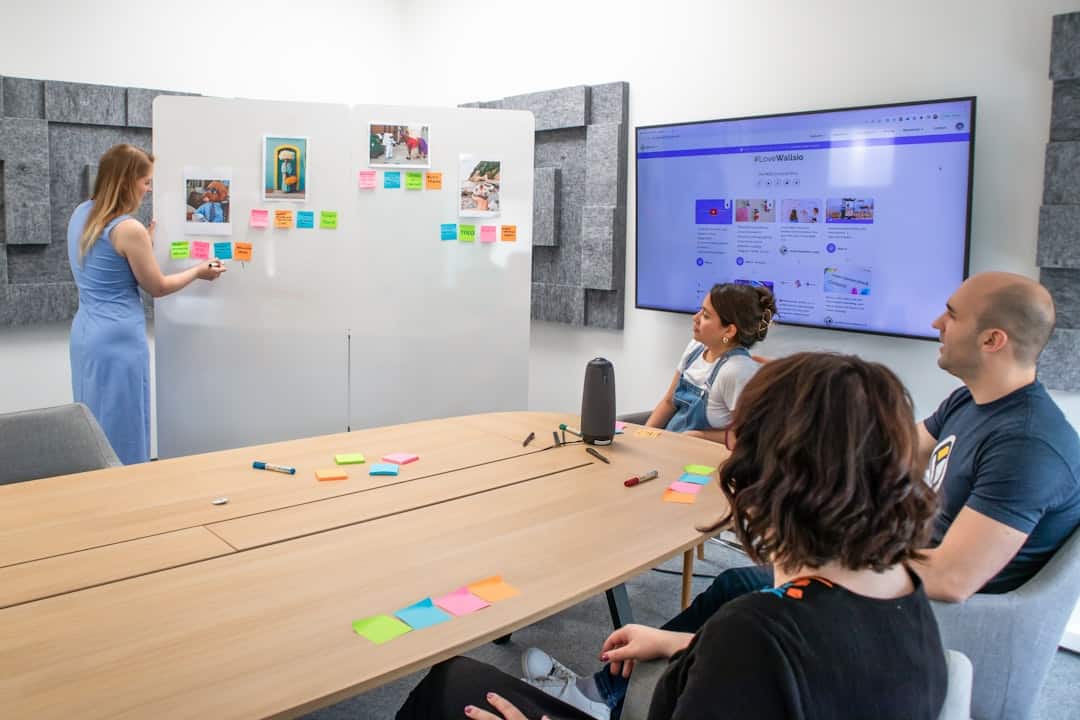
Where teams get this wrong
Three patterns show up repeatedly in organizations that bolt AI onto an existing design thinking practice without rethinking the process itself.
Skipping empathy and starting from a generated persona. A model can draft a plausible-sounding user persona in seconds, complete with a name, a job title, and a set of frustrations. Teams under time pressure sometimes start a project there instead of talking to an actual user, and end up designing for a composite that doesn’t correspond to anyone real. The persona reads well in a deck. It doesn’t hold up in a usability session.
Treating volume of ideas as a proxy for quality. More generated options is not the same as better options. A team that generates two hundred ideas and has no better filtering method than it had for twenty just spends longer sorting through noise, and often defaults to picking whatever idea sounds most familiar rather than whatever idea best fits the problem frame.
Mistaking a good-looking prototype for a validated one. AI-assisted design tools can produce something that looks like a finished product before anyone has confirmed a real user wants it or can use it. The polish creates false confidence, and false confidence is expensive once a team has already committed engineering time to building the thing.
How a leader gets a team started
For a director or VP updating a team’s practice, the change is less about adopting new tools and more about redesigning three specific moments in the process where the old checks quietly stop firing.
Step 1: Protect the empathy stage from being shortcut. Require that any persona or user insight used to frame a project traces back to an actual conversation, not a generated summary of one. This is the single easiest place for a team to quietly cut a corner, because a generated persona is available immediately and a real interview takes scheduling. S
tep 2: Add an explicit filtering step after AI-assisted ideation. If a team is going to generate a large volume of ideas quickly, build in dedicated time to narrow that volume down using the same criteria that used to constrain a much smaller set: feasibility, alignment with the problem frame, and a clear owner who will carry the idea forward. Skipping this step is how two hundred ideas become an unmanageable backlog instead of a shortlist.
Step 3: Keep testing with real users non-negotiable, especially when the prototype looks finished. Treat a polished-looking AI-generated prototype with the same scrutiny a team would give a rough sketch. Ask a real user to try to use it before anyone on the team calls it validated, and watch where they hesitate rather than asking whether they like it.
Step 4: Build AI literacy into facilitation training, not just tool training. Teaching a team to use an AI tool is different from teaching a facilitator how to run a session where a room full of people are evaluating and combining AI-generated options together. The second skill is the one that is actually scarce right now, and it is the one that determines whether a faster process produces a better outcome or just a faster path to the wrong one. In Voltage Control’s facilitation cert program, candidates routinely spend more time practicing how to run a curation and filtering session than how to prompt a model, because the prompting turns out to be the easy part. The hard part, now as before, is helping a room of people agree on which idea is actually worth building.
Quick answers
Does AI replace the facilitator? No. It replaces some of the manual work of generating drafts and options. The judgment calls about which problem to solve and which idea to build still need a human facilitator guiding the room.
Should a team slow down ideation to compensate for AI’s speed? Not the ideation step itself. The fix is adding a deliberate filtering step after ideation, sized to the larger volume of options AI produces, rather than slowing generation back down to match an old process.
Is a design thinking process without AI still valid? Yes. The three commitments, empathy, framing, and testing, don’t require AI to work. AI is an accelerant for the mechanical parts of the process, not a replacement for the method.
What’s the fastest way to tell if a team is doing this well? Look at where the team’s time goes. A team using AI well spends more time filtering, framing, and testing than it used to, because the mechanical work got cheaper and the judgment work absorbed the difference. A team using AI poorly spends about the same amount of time it always did, just producing more raw material that nobody has the bandwidth to properly evaluate.
The practice is evolving, not disappearing
Design thinking’s core commitments, understanding a real person’s problem, framing it correctly, and testing a solution against reality, are not steps that get replaced by a faster generation engine. They are the judgment layer that decides what to do with everything a faster generation engine produces. Teams that treat AI as a replacement for that judgment move fast toward the wrong answer. Teams that treat it as an accelerant for the parts of the process that were always mechanical, drafting, summarizing, producing variations, get the speed without losing what made the process work in the first place. If your team is trying to figure out where AI actually helps your design thinking practice and where it’s quietly eroding it, Voltage Control’s facilitation team runs sessions built for exactly this transition. Book a free intro call to talk through where your process needs to change and where it doesn’t.