Table of contents
- Context as a Shared Signal, Not a Prompt
- Theory of Mind AI and Collective Intent
- From Conceptual Understanding to Practical Execution
- Memory, Privacy, and Governance at Scale
- Multi-Agent Systems and Coordination
- Why Human-AI Interaction Is a Facilitation Challenge
- Conclusion: Designing Human-AI Interaction for Shared Work
- FAQs
What actually changes when AI stops being a personal tool and starts showing up in shared work?
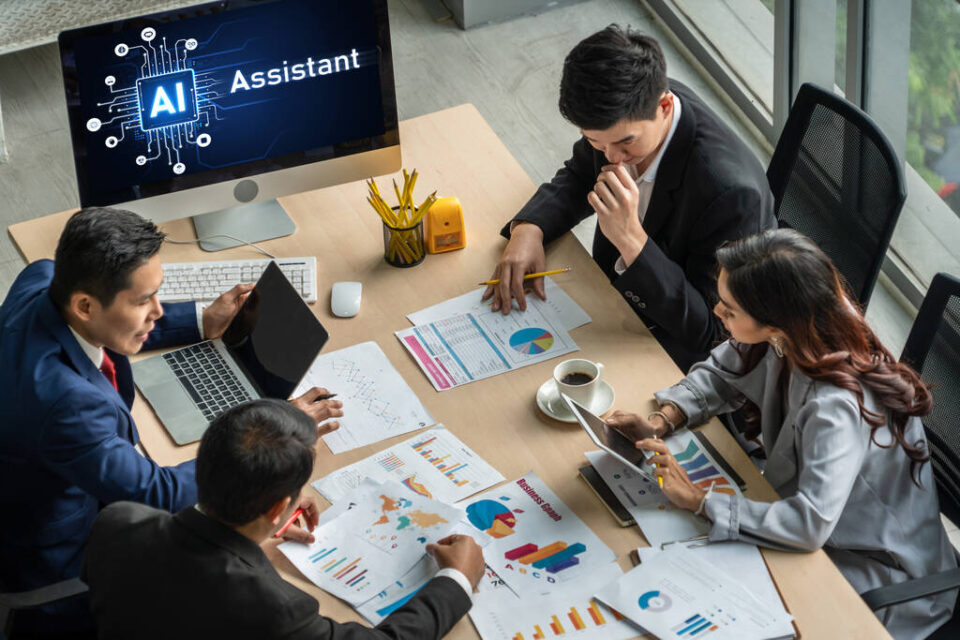
As artificial intelligence becomes embedded in workshops, planning sessions, and cross-functional decision-making, teams are discovering that effective human-AI interaction depends on far more than good prompts. Context, intent, and social cues now shape how AI participates alongside people—sometimes clarifying group thinking, sometimes complicating it.
This shift is already reflected in the market; according to a 2024 Work Trend Index, 75% of knowledge workers globally are now using AI at work, yet many report that the lack of organizational coordination remains a primary hurdle to realizing its full value.
Understanding how AI interprets shared context and develops something like a theory of mind is becoming essential for teams that want AI to support coordination rather than disrupt it.
This article explores how human-AI interaction really works inside collaborative environments—and what leaders and facilitators need to design for next.
Context as a Shared Signal, Not a Prompt
Context in human-AI interaction is no longer limited to a single request. In collaborative settings, context accumulates through shared artifacts, evolving decisions, and collective language. Large Language Models rely on Natural language processing to interpret these signals, but refinement determines relevance.
AI contextual refinement medium describes how systems filter, weight, and update context across shared workflows. This includes:
- Conversational Memory that tracks dialogue across sessions
- Persistent Memory Architecture that carries knowledge forward
- Episodic Memory that captures moments tied to decisions or outcomes.
Together, these Memory Systems allow AI to participate in group sensemaking rather than react to fragmented input. When context is treated as collective, AI becomes responsive to how teams think—not just what they type.
Theory of Mind AI and Collective Intent
Theory of mind AI refers to systems that infer beliefs, expectations, and intent. In team settings, this capability supports alignment rather than prediction. AI observes how groups frame problems, respond to ambiguity, and adjust direction across interactions.
Over time, AI builds a conceptual understanding of shared intent—recognizing patterns such as hesitation, convergence, or unresolved disagreement. This enables AI assistants to support facilitation by surfacing prompts, risks, or gaps at the right moment.
Theory of mind AI does not imply emotional awareness. It reflects pattern recognition across human interaction, grounded in behavior rather than sentiment. Used carefully, it helps AI contribute to coordination instead of interrupting it.
From Conceptual Understanding to Practical Execution
Many organizations understand the human-AI interaction conceptually yet struggle with practical execution. The gap often appears when AI systems move from demos into real collaboration. Evaluation workflows must account for how AI behaves inside group work, not just individual tasks.
This includes:
- Measuring inference time during live sessions
- Testing architectural patterns across multiple teams
- Observing how agent architecture scales during real coordination.
The demand for this expertise is skyrocketing; AI job listings have increased by over 2,000% since early 2023, with a specific focus on roles that bridge the gap between technical ML and organizational psychology. ML jobs and AI job listings increasingly reflect this shift, prioritizing experience with multi-agent reinforcement learning and systems that operate across workflows. Production use requires AI that behaves reliably under social and operational pressure.
Memory, Privacy, and Governance at Scale
As AI retains context, privacy concerns expand. Conversational Memory and saved searches may include personal data, sensitive discussions, or operational decisions. User data privacy becomes a structural requirement rather than a policy checkbox.
Teams must account for:
- How personal data is stored, recalled, and discarded
- Controls around user preferences across tools
- Boundaries for Persistent Memory Architecture in regulated environments.
Without governance, memory systems can reinforce biased algorithms or expose information during online attacks. Enterprise environments increasingly pair AI-powered tools with a defined security solution or security service, especially in workflows tied to fraud detection or compliance.
Multi-Agent Systems and Coordination
Single-agent AI systems struggle in complex collaboration. Multi-Agent Reinforcement Learning allows AI systems to distribute responsibility, negotiate priorities, and adapt together. This mirrors how teams already operate.
Tooling such as an AI Agents Toolkit supports this approach, enabling organizations to build AI agents that work across roles and workflows. These agents coordinate through shared memory, align via architectural patterns, and adapt to evolving context.
Access to source code and architectural transparency matter here. Teams need visibility into how agents reason, share data, and escalate uncertainty.
Why Human-AI Interaction Is a Facilitation Challenge
Human-AI interaction is not primarily a technical issue. It is a facilitation challenge. AI shapes how teams explore options, handle disagreement, and move toward decisions.
Poorly designed systems disrupt flow and fragment attention. Well-designed systems support alignment, timing, and shared understanding. The difference lies in whether AI is treated as a private tool or a participant in shared work.
Conclusion: Designing Human-AI Interaction for Shared Work
If AI is already shaping how teams think together, the question becomes how intentionally it is designed. Human-AI interaction succeeds when systems support coordination, memory, and intent across people—not when they optimize isolated productivity.
Voltage Control helps organizations design and facilitate team-level AI collaboration—moving from single-player tools to shared systems that support alignment and decision-making.
If your teams are experimenting with AI but struggling to integrate it into real work, it may be time to rethink interaction as a collective practice. Explore how Voltage Control helps teams orchestrate AI where collaboration actually happens.
FAQs
- What is human-AI interaction in team environments?
Human-AI interaction describes how artificial intelligence participates in shared workflows, interpreting collective signals, supporting coordination, and responding during collaboration rather than after it.
- How does the AI contextual refinement medium work?
AI contextual refinement medium refers to how systems filter and update context across Conversational Memory, Episodic Memory, and Persistent Memory Architecture to support group work.
- What is the theory of mind AI?
Theory of mind AI focuses on inferring intent and expectations from interaction patterns, helping AI assistants adapt to group behavior during collaboration.
- How do Large Language Models handle context?
Large Language Models use Natural language processing to interpret text, but rely on memory systems and architectural patterns to retain and prioritize context across sessions.
- What privacy concerns exist with AI memory systems?
Memory systems may store personal data or sensitive information, requiring AI Governance, user data privacy controls, and safeguards against online attacks.
- Why are multi-agent systems important?
Multi-agent systems allow AI-powered tools to coordinate tasks, adapt collectively, and support complex collaboration through Multi-Agent Reinforcement Learning.
- How does this impact enterprise production use?
Effective human-AI interaction improves evaluation workflows, supports secure deployment, and allows AI to move from experiments into reliable production use.