How to choose a credential that holds up in practice.
Table of contents
- How to choose a credential that holds up in practice.
- What Certification in Change Management Actually Covers
- Why Directors and VPs Are Pursuing Change Management Certification Now
- How AI Transformation Is Reshaping What Change Management Skills You Need
- Comparing the Most Recognized Change Management Certifications
- What to Expect From the Certification Process as a Senior Leader
- Is Certification in Change Management Worth It for Your Role
- Next Steps: Choosing the Right Program for Your Organization
How to choose a credential that holds up in practice.
When organizations start investing in AI transformation, one question keeps surfacing in HR meetings and leadership offsites: should we require a certification in change management for the people running this work? The honest answer is more nuanced than yes or no. Not because the question is complicated, but because the credential market hasn’t caught up with what AI transformation actually demands.
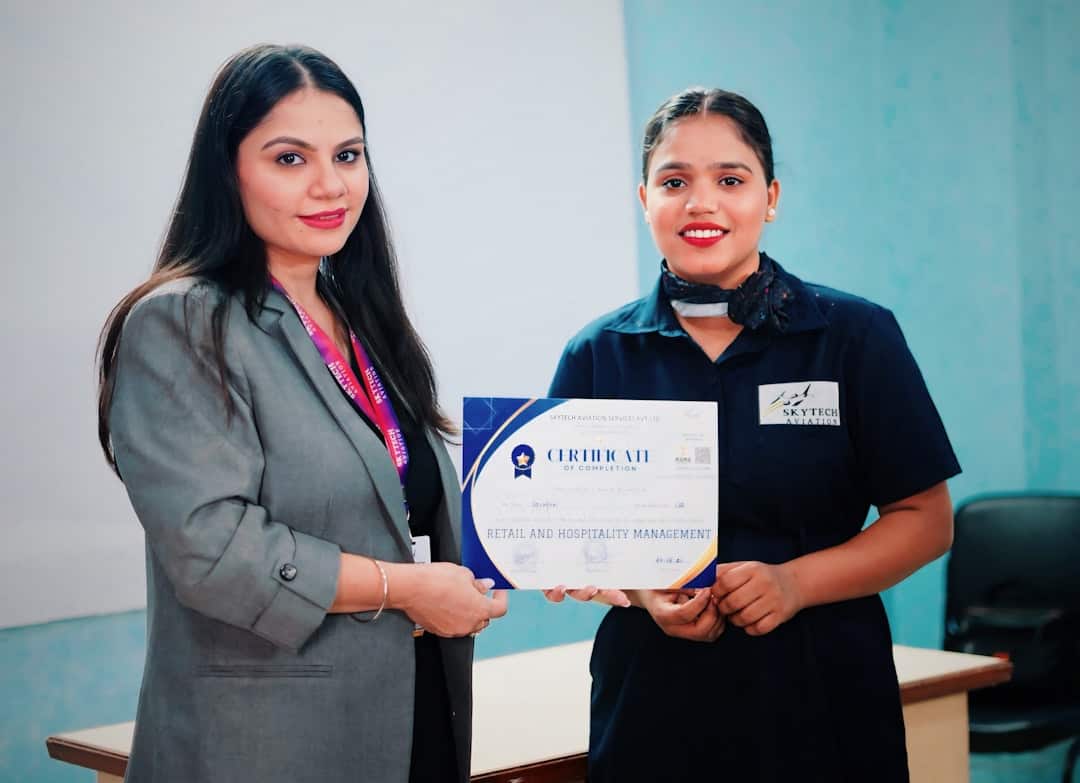
What Certification in Change Management Actually Covers
Most change management certifications teach a structured methodology for guiding organizations through transitions. Core content is consistent across programs: stakeholder mapping, communication planning, resistance management, and reinforcement strategies. The frameworks differ, but the underlying assumption is shared. There is a current state, a desired future state, and a path from one to the other that can be planned and managed. That assumption works for a lot of organizational change. ERP implementations, compliance-driven process shifts, facility consolidations. The change has a defined scope, a go-live date, and a predictable resistance profile. What most certification curricula don’t address is ambiguous change. The kind where the technology is still evolving, the use case is still being developed, and the definition of “done” shifts every quarter. That describes most AI transformation programs in 2025 and 2026\. The most widely recognized credentials are Prosci’s ADKAR-based certification, the CCMP from the Association of Change Management Professionals, APMG International’s Change Management certification, and the CMI offerings from the Change Management Institute. Each has a different mix of theoretical depth, application focus, and geographic reach. None was designed for AI transformation specifically.
Why Directors and VPs Are Pursuing Change Management Certification Now
Between 2023 and 2025, enrollment in change management professional development accelerated significantly. The driver is not a sudden interest in organizational theory. It’s the pressure organizations are facing to implement AI tools at scale, without the change capacity to do it well. What’s notable about the current cohort pursuing certification is who they are. Directors and VPs of Operations, IT, and HR are sitting in programs alongside younger practitioners. They’re not there for a career pivot. They’re there because they’ve been handed an AI transformation mandate and told to make it work, and they want a framework they can use. When we work with senior leaders preparing to run large-scale AI implementations at Voltage Control, what we consistently see is a gap between the methodology they learned in certification and what the work requires in practice. The credential covered communication cascades. The actual work required real-time negotiation with skeptical engineers, live adjustment to adoption approaches when the tool changed mid-program, and facilitated alignment sessions across functions with fundamentally different incentives. The certification gave them a vocabulary. The work required judgment that vocabulary alone couldn’t supply.
How AI Transformation Is Reshaping What Change Management Skills You Need
The core skills required for change work have shifted because the nature of organizational change has shifted. This is what we at Voltage Control call the Adaptive Friction Model: the recognition that the friction in modern change isn’t primarily people resisting something they don’t understand. It’s people trying to navigate something that isn’t stable enough to fully understand yet. Traditional change management is designed to reduce resistance to a defined destination. The Adaptive Friction Model requires building organizational capacity for ongoing adaptation, where the destination keeps moving and the change practitioner’s job is to help the organization stay oriented and functional throughout. In practice, the Adaptive Friction Model changes three things:
Stakeholder mapping becomes dynamic, not static. You’re not documenting who supports and who opposes the change at the start of a program. You’re building a system for tracking how positions shift as the change reveals itself, because the person most resistant in month one may become your strongest advocate by month six when they see what the tool actually does.
Communication planning moves from announcement-based to dialogue-based. The traditional model is: leadership decides, communicates, manages response. That sequence breaks down when leadership is also figuring it out in real time. The more useful pattern is structured forums where the unknowns are named explicitly, questions are documented, and responses evolve as the program does.
Success metrics shift from adoption to capability. Did people install the tool and use it three times? Less meaningful. Did they develop the judgment to use it well, adapt it to their context, and identify where it falls short? That is what you’re actually building toward, and it takes longer and requires different interventions. Most change management certifications don’t teach to these requirements. That’s not a reason to skip certification. It’s a reason to be clear about what you’re getting and what you’ll need to supplement.

Comparing the Most Recognized Change Management Certifications
Prosci and the ADKAR Model
The most recognized credential in North America. The ADKAR framework (Awareness, Desire, Knowledge, Ability, Reinforcement) is clean, teachable, and widely understood. It’s strongest for structured technology rollouts where the scope is defined and the change timeline is predictable. For change management in project management contexts, Prosci is often the reference standard because it integrates well with formal project governance. Its limitation for AI work: ADKAR is linear. Each stage builds on the prior one. AI transformation programs rarely run that way. Adoption dips, loops back, and accelerates in unpredictable patterns. Prosci gives practitioners a shared language, which has real value. It does not give them a model built for ambiguity.
CCMP from the Association of Change Management Professionals
More theoretically rigorous than Prosci and more methodology-agnostic. The CCMP maps to the Standard for Change Management, which covers the discipline across frameworks rather than teaching one approach. It requires documented change management experience before certification, which limits accessibility for senior leaders entering the field but adds credibility for practitioners who’ve done the work. For Directors and VPs already running programs, the experience requirement is often already met. The CCMP is worth considering for anyone who wants a credential that travels across methodologies and demonstrates breadth rather than fluency in a single framework.
APMG Change Management
More common in Europe and the public sector. APMG offers Foundation and Practitioner levels, drawing on Kotter, Prosci, and systems thinking. It’s strong for organizations operating in regulated environments, which explains its presence in healthcare and education contexts. For change management in healthcare and change management in education specifically, APMG’s structured approach to human factors and regulatory complexity often fits better than frameworks built for commercial settings.
CMI Credentials from the Change Management Institute
The CMI offers Foundation, Specialist, and Master levels. Better known in Australia and the UK than in North America. The Master credential requires a portfolio and peer review, giving it credibility among practitioners with deep experience. Less recognized by US hiring managers, which is a practical consideration if the credential needs to be legible outside your organization.
The honest comparison: no single credential is purpose-built for AI transformation work. The field hasn’t produced one yet. Prosci is the most recognized, useful for establishing shared language across a team. CCMP offers more breadth and is worth the investment for practitioners who will lead multiple programs over time. APMG and CMI are strong for specific sector contexts. What matters more than any of these is whether the practitioner has applied the methodology under conditions of genuine ambiguity, not just structured rollouts.
What to Expect From the Certification Process as a Senior Leader
Most programs can be completed in three to five days of intensive instruction, or spread across several months of asynchronous learning. Prosci’s standard path is a three-day program followed by an assessment. CCMP requires documented experience and then an exam. APMG runs as two discrete exam levels. The practical challenge for a Director or VP running an active transformation is time. Most leaders in this role are not looking for a career reset. They want applicable frameworks fast. What the certification process produces that has real value beyond the credential itself is shared vocabulary. When your change team has gone through the same program, you stop spending meeting time on terminology alignment and start moving faster. That’s the compounding benefit that’s harder to quantify but often more valuable than the credential itself. Management interview questions in change-focused leadership roles now skew heavily toward AI work. How have you managed resistance to AI adoption specifically? How have you run change management in a project management context where the scope was evolving? Those questions don’t have textbook answers. They require experience, and certification prep doesn’t build it. What it does is give you a framework for organizing what you’ve already learned.
Is Certification in Change Management Worth It for Your Role
The right way to evaluate this is what we call the Practitioner Credibility Stack: three questions to assess whether a certification will add real value in your specific context.
Will the credential be recognized by the people whose credibility you need? If your stakeholders are in HR and L\&D, Prosci is the reference point and the credential will land. If you’re working across healthcare or public sector teams, APMG may carry more weight. If you’re presenting to a board or executive team, no certification substitutes for documented results. Know your audience before investing.
Does the curriculum address the type of change you’re running? Evaluate the program against the Adaptive Friction Model dimensions: is it built for defined change, or does it engage with ambiguous change? Most are built for defined change, and that’s not disqualifying. It means you need to supplement with practice in facilitation and live decision-making under uncertainty. A certification that gives you a framework for structured change work plus your own experience with ambiguous AI work is often a stronger foundation than any single credential alone.
Does the time investment produce transferable skills or just a credential? A certification that gives your team shared language and a structured methodology you will actually use is worth it. A credential you earn and never apply is a sunk cost. The question isn’t whether certification is worthwhile in the abstract. It’s whether you will build the habit of using the framework in the actual work. The opinionated take: for AI transformation work specifically, if you can only invest in one thing, choose Prosci for the credential and the shared vocabulary, and invest an equal or greater amount of time in facilitation skill-building. The gap in most change programs isn’t knowledge. It’s the ability to hold live conversations across resistant, skeptical, or disengaged stakeholders and move those rooms toward clarity and commitment. That skill doesn’t come from certification. It comes from practice, and it is the thing most change practitioners trained only on frameworks are missing.
Next Steps: Choosing the Right Program for Your Organization
Before committing to a certification, answer three questions directly: What does the work you’re running actually look like in practice? What frameworks are already in use among your peers and stakeholders, and does your credential need to be legible to them? And what is the real outcome you need, whether that’s credibility with a specific audience, a shared methodology for your change team, or your own skill development? For change management in schools, healthcare organizations, or project-intensive environments, a sector-specific credential (APMG or CMI) often adds value that a general credential doesn’t. For cross-industry work or for practitioners moving between programs and sectors, the CCMP’s methodology-agnostic breadth is worth the experience requirement. For North American organizations doing AI transformation with a mixed team, Prosci’s recognition advantage often outweighs its structural limitations. If you’re leading an AI transformation program and want support building the facilitation and change capacity your team actually needs, book a free intro call with our facilitation team at Voltage Control. We work with Directors, VPs, and organizational leaders who are running complex transformations and need frameworks that hold up in conditions no certification prepared them for.