
Winter 2027 Facilitation Certification Deadline January 1st

Douglas Ferguson is an entrepreneur, facilitator, and former CTO who helps organizations navigate the human side of AI transformation. He is the founder and president of Voltage Control, where he works with enterprise leaders to build the alignment, capability, and momentum their teams need to actually move on AI, not just talk about it. His path from engineering leader to facilitator gives him something most consultants lack: the ability to speak both languages. He has led transformation work with teams at Nike, Google, Apple, Adobe, Tesla, Liberty Mutual, Humana, Fidelity, Gap, Dropbox, Vrbo, SAIC, the Air Force, and U.S. SOCOM. Before Voltage Control, Douglas held CTO positions at several Austin startups, where he led product and engineering teams using agile, lean, and human-centered design principles. That technical foundation shapes how he approaches organizational change: start with the people in the room, not the tools on the roadmap. Douglas is the author of four books: Magical Meetings, Beyond the Prototype, How to Remix Anything, and Start Within. His work has been featured in Forbes, Fast Company, and Innovation Leader. He hosts the Facilitation Lab Podcast and writes regularly about leadership, AI adoption, collaboration, and the evolving role of facilitation in a world where execution is no longer the bottleneck, but alignment is.

post image
AI | October 9, 2026

Build an AI governance framework that supports responsible adoption and helps teams move faster. Learn how to govern AI tools and agents like new hires, with least-privilege access, clearly defined roles, named human accountability, and review processes that match the stakes. Explore why blanket restrictions encourage shadow AI, how an AI driver's license can help employees earn access through practical skills, and why involving people in policy design builds trust and ownership. Voltage Control shares concrete steps to assess agent permissions, write AI job descriptions, strengthen review rituals, and create governance your organization can understand and follow.

post image
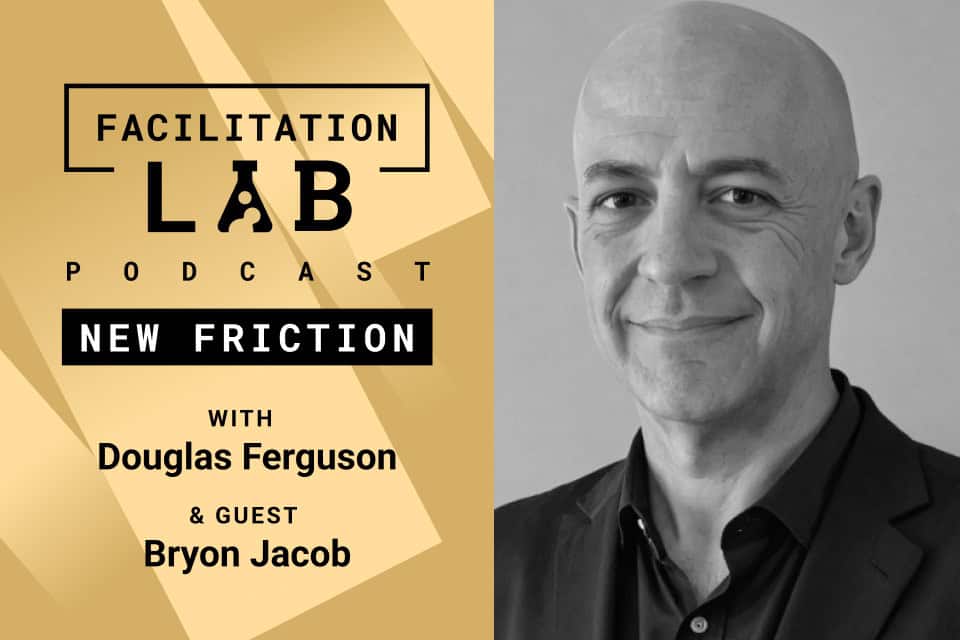
New Friction | October 7, 2026

In this episode of the New Friction podcast, host Douglas Ferguson interviews Bryon Jacob, a technology advisor and AI strategist who previously co-founded data.world as CTO and spent a decade at HomeAway. Jacob argues that the teams succeeding with AI-assisted software development share one thing in common: rigorous governance — including near-100% automated test coverage, strictly enforced architectural standards, and code bases deliberately organized for agentic development. He explains why zero tech debt has shifted from aspirational to economically necessary, since AI amplifies good patterns and railroads bad ones, making clean, well-documented, thoroughly tested code the prerequisite for real productivity gains. The conversation examines how leaders are rethinking code review, prototyping, and the entire software development lifecycle, including why a CEO drafting a pull request in Claude Code is a fundamentally better spec than any design brief. Jacob closes by drawing the arc from assembly language to compilers to natural language programming, framing today's moment as the natural next step in a decades-long evolution — and a preview of the governance-driven transformation already coming for legal and every other structured profession.

post image
AI | October 2, 2026

Why are legal teams adopting AI faster than engineering? This article explores a surprising trend emerging across regulated enterprises: legal professionals are embracing AI not because they are more confident, but because they feel the greatest urgency to adapt. Drawing on insights from leaders at Endava, LinkedIn, and Gartner research, it examines how fear, leadership, and organizational psychology shape successful AI transformation. Learn why governance should empower rather than restrain high-stakes teams, and discover practical strategies for helping legal, compliance, and other regulated functions become active designers of AI adoption instead of passive reviewers.

post image
AI | September 25, 2026

Why do so many AI retraining programs fail to create lasting workforce change? This article explores why individual skills and credentials are not the real bottleneck in AI adoption, and why team operating models matter more. Learn how organizations can move beyond classroom-based AI training by embedding AI into real work, redesigning roles and decision-making, and building judgment through practice, feedback, and reflection. Discover why successful AI workforce transformation requires team-level capability building, new working agreements, and organizational change that helps people work differently with AI, not simply learn new tools.

post image
AI | September 18, 2026

Cutting headcount may create short-term budget room, but it does not guarantee stronger returns from AI. Research on autonomous business shows that organizations seeing the greatest ROI are investing not just in technology, but in the people, skills, roles, and operating models needed to guide and govern it. This article explores why cost cutting alone fails as an AI investment strategy, how automation can quietly erode the development of human judgment, and what organizations can do differently. Learn why redesigning roles, preserving developmental work, and treating human capability as infrastructure are essential to building an autonomous business that can scale and succeed.

post image
AI | September 11, 2026

AI can now create strategy decks, journey maps, and other polished deliverables in minutes, but faster execution does not automatically create alignment. As AI makes artifacts cheaper and more abundant, the real value shifts to the shared understanding behind the work. Explore why AI-generated deliverables often fail to drive meaningful action, how collaborative processes build the context and commitment teams need, and why facilitation, conversation, and human alignment are becoming even more critical as AI accelerates organizational workflows.

post image
AI | September 9, 2026

AI has made execution faster than ever, but speed is no longer the competitive advantage leaders think it is. When every organization can generate polished work in minutes, the metric that matters is alignment velocity: how quickly teams reach genuine consensus, commit to a direction, and make decisions that stick. Learn why traditional execution metrics fail in AI-accelerated organizations, how misalignment creates hidden rework and reversals, and how leaders can measure commitment lag, reversal rates, and the timing of dissent to build teams that move quickly in the right direction.

post image
AI | August 28, 2026

AI adoption doesn’t fail because employees need more mandates, training, or oversight. It fails when organizations deploy AI without involving the people whose work will be transformed by it. Explore why employee involvement, psychological safety, and trust are critical to successful AI transformation, and why shadow AI adoption may reveal more about your workforce than traditional adoption metrics. Learn how an involve-before-mandate approach can uncover real AI opportunities, reduce resistance, build trust, and create AI-enabled workflows that employees actually want to use.

post image
AI | August 21, 2026

AI transformation is often measured by how much friction it removes, but not every obstacle in the workplace is waste. Some friction creates opportunities for judgment, mentorship, collaboration, and the development of critical leadership skills. Explore why leaders need to look beyond speed and efficiency when redesigning work with AI, how removing too much productive friction can weaken teams over time, and what organizations can do to preserve the human interactions that build expertise, strengthen decision-making, and prepare the next generation of leaders in an AI-enabled workplace.

post image
AI | August 20, 2026

AI productivity gains may be creating a hidden talent crisis. As senior employees use AI to take on work once assigned to junior staff, organizations risk “experience starvation,” weakening the pathways that build judgment, discernment, and future leaders. Explore how shrinking entry-level opportunities, skills atrophy, and disrupted talent pipelines could create long-term capability gaps, and why leaders need to design developmental friction into AI transformation. Learn how organizations can capture AI’s speed and efficiency without sacrificing the hands-on experience people need to grow into tomorrow’s experts.