An introduction to my podcast interview with Etienne de Bruin of 7CTOs. Plus, the full transcript of our talk.
I recently appeared on The CTO Studio podcast produced by Etienne de Bruin of 7CTOs. 7CTOs is a CTO forum that is dedicated to training CTOs as effective leaders. They accomplish this by recruiting and building cohorts of approximately (you guessed it) seven CTOs. These cohorts meet regularly to discuss issues and obstacles they face as CTOs. This consistency and intimacy allow the forum members to become vulnerable which allows them to share and learn more deeply.
I first met Etienne, years ago when he was running a collection of local meetups and I attended the Austin CTO meetup. He disappeared from Austin for a few years and reappeared as the leader of 7CTOs where he is now running one of its forums. In addition, Etienne runs a series of conferences called 0111 Conference.
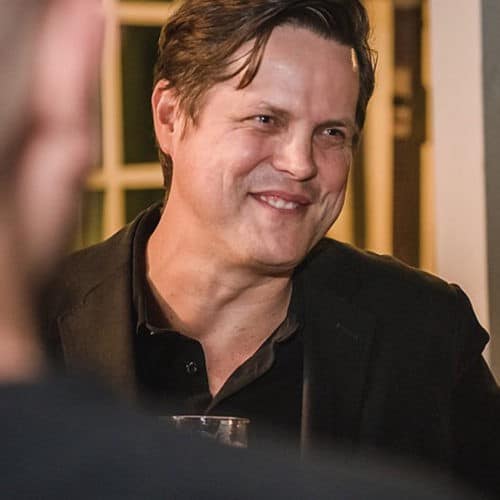
I gave my AI Readiness Canvas workshop at the most recent 0111 Conference in San Diego last November. While I was there, I was scheduled to record a session with Etienne, but San Diego traffic got the best of me. Instead, Etienne chauffeured me to the pre-conference dinner. Since we missed the recording, we reschedule it during his next visit to Austin. We recorded the session in my audio recording studio, which Etienne took great delight in. He kept saying “We are recording The CTO Studio in a studio!”
It was a ton of fun chatting. We talked about everything from creating emotion through music, complexity theory, Liberating Structures, and how decay affects the taste of food.
We started by discussing how, today, design is a way of thinking rather than just the visual practice it has been historically. Design thinking is about helping people make better decisions and then learning from those decisions.
I also shared my thoughts on the value of facilitation skills for CTOs in managing conversations so ideas aren’t sold to influence the outcome of a solution. Facilitation in conjunction with Google Venture’s Note-and-Vote technique helps companies to realize the power of a multidisciplinary team by preventing the loudest voice in the room from dominating brainstorming and allowing diverse ideas to make their way to the surface.
As we discussed complexity theory, I shared my thoughts on the power of diversity to transform complex problems into a simple, beautiful solution in a market environment that’s constantly changing. It’s not enough to focus on hiring many different kinds of people. Leaders also need to take measures to ensure those diverse people have a voice.
Then we discussed the impact of the rapid prototyping and learning cycle and how Jake Knapp experienced that during one of his first meetings at Google when the team was designing Google Glass.
I described to Etienne how using inverted thinking and Liberating Structures can help teams check their egos and push themselves to reveal their assumptions by purposefully coming up with solutions that might get them fired.
Finally, I shared my advice on CTOs coming together and how those conversations should be approached with a learning and curious mindset that embraces vulnerability.
Keep scrolling to read the full transcript from our talk:
Transcript from my conversation with Etienne de Bruin of 7CTOs:
Douglas: I have a wonderful electronic invention I want you to see. It looks something like this.
Etienne: Welcome to The CTO Studio. I’m your host, Etienne de Bruin. The CTO studio is where we chat with CTOs building amazing products with incredible teams. Have you chatted with a CTO lately?
Etienne: Douglas Ferguson said to me, “You should come to Austin and you should come hang with me in my studio so we can do the CTO Studio,” and my thoughts were, “Okay, I guess we could do it,” so I got in my Lyft ride and, at some point, I thought to myself, this looks like Texas Chainsaw Massacre territory, and I end up in this … you guys saw the synth and Randall and Elijah. This is the CTO Studio. Douglas, welcome.
Douglas: Thank you.
Etienne: When did you do this?
Douglas: Wow. It’s been a lifelong effort, but this particular room was built about ten years ago.
Etienne: Is it because you’re in pursuit of the perfect tone? What is the pursuit?
Douglas: I think the pursuit is lots of tones. I’m really fascinated by creating eclectic and different sounds and how you can juxtapose different things together.
Etienne: Something I read is that we, as children, our brains latch onto the music and the patterns and the tones that we love, and then we spend the rest of our adult life trying to find music that reminds us of those patterns or are actually those patterns. What do you think about that?
Douglas: You know, that’s interesting. I think there … I haven’t seen the research on that. It seems reasonable. For me, personally, it’s interesting because I think it’s tied to somewhat, my pursuits around learning. So, I’m always in pursuit of, “What’s someone created out there that’s interesting to hear and how is that going to unlock something inside me and make me think about things differently?”
Etienne: I wonder about music. As a musician, as well, I often wonder, “Are we just all doing G, C, D in many different ways?”
Douglas: You know, that’s … I certainly have deviated quite a bit from that with the ambient drone kind of experimental music that I do. A lot of it even becomes atonal.
Etienne: Atonal, yes, because it’s just … it’s like a Radioheadish noiseish filling sound.
Douglas: Yeah, and it can even get more noisy than what you might expect from a Radiohead.
Etienne: Now, what is atonal.
Douglas: Well, just that you’re not focused on the chromatic scale or any scale for that matter, so you’re not thinking about notes and melodies. It’s more about creating an experience. You could think about … I’m sure you’ve heard plenty of the stuff on soundtracks for movies, trying to create an emotion through the audio.
Etienne: So, have you experimented with doing soundtracks?
Douglas: I have done some soundtracks for movies: not for TV shows.
Etienne: When you say you’ve done it, are you saying you actually did it?
Douglas: Yeah, I’ve collaborated with filmmakers in the past, and the most recent one was a collaboration with two artists out of Engie, France.
Etienne: Oh, yes. You went to France for that, right?
Douglas: Yeah, exactly, yeah, and it was nice because it was a yearlong project where we were curating these files back and forth, and I got to include a lot of artists from Austin, both visual artists and audio artists, and we got accepted into a film festival and got to go present it.
Etienne: I think I remember you going. So, this is the CTO Studio, but, you know, we’re chitchatting. One thing I want to start doing — so, I don’t really gig anymore — is, I wanna start collaborating online with people. Are there platforms that I can use so I can lay down the bass tracks for artists who need bass tracks?
Douglas: You know, gosh, I haven’t looked at this in many years, and, a few have come and go over the years that are kind of these … we didn’t even have the word social network back then, but, yeah, the idea was that you could kind of connect with various musicians or producers, and, they had different models. Some of them were more along the lines of, “Here are these vetted studio musicians that you as a songwriter could get access to,” and then some of them are kind of more democratic, or just more community-based where anyone could kind of join and participate. But, I really don’t know who’s active in that space these days.
Etienne: I wonder. I think there’s a site called MySpace.
Douglas: Yeah, right? Yeah, that was a thing. What about … that’s kind of old school, right? Hasn’t Napster just come along and eat it for lunch?
Etienne: I don’t know, I think MySpace is going places.
Douglas: Okay, yeah, cool. Tom, right?
Etienne: Tom’s my friend. So, tell me: the thing I see a lot is that technical people are also either really into music or they tend to be musicians. Where do you think that comes from?
Douglas: Well, let me tell you a little story.
Etienne: “Glad you asked.” Randall, are you ready for the story? Good.
Douglas: I have this knack for hiring musicians, even when I don’t realize it. It could be influenced by the fact that Austin is so full of musicians. It’s hard to … sorry, I shouldn’t mess with that. It’s hard to throw a stick in this town and not hit a musician, so I’m sure that impacts it, but, so, there’s this running joke within a lot of the startups that I’ve founded where everyone’s been a musician, and so, then, I’ll hire someone and I’ll make a statement, “Oh, I finally hired someone who’s not a musician,” and then she’ll say, “I played the flute in high school.” I’m like, “Oh, of course you did.”
Etienne: “You’re fired!”
Douglas: Yeah, outta here.
Etienne: Do you play something?
Elijah: I played the recorder in fourth grade.
Etienne: I don’t think that counts, brah, seriously. Doesn’t everyone have to play it?
Elijah: Yeah, it’s a requirement in Texas.
Douglas: The recorder?
Elijah: I don’t think.
Etienne: So, I love the bass. From an early age, I was into the bass notes. I don’t like slapping. I’m not really a Victor Wooten kind of player, but, I absolutely love the John Paul Jones melodic bass lines as part of, like, three instruments, you know, the guitar, the drums and the bass, but I am fascinated that so many coders and tech people tend to be musicians, atonal.
Douglas: Yeah, and, you know, I like to think about it as structure, right? There’s a process. There’s a structure. There’s math to music, certainly, and so, I think folks that really get inside that and really embrace it, then their brain is naturally trained or inclined or kind of set up to be able to do this other kind of work as well, so they’re naturally, I don’t know, drawn to it.
Etienne: So, we met about … was it like, ten years, now?
Douglas: Maybe.
Etienne: No, 2009–10ish.
Douglas: Yeah, somewhere in there.
Etienne: So, I feel like you’ve reinvented yourself a bit in the sense that lead engineered, VP, CTO roles, and now you’re sort of into design thinking and design workshops. What is design thinking? Do you subscribe to the IDEO brothers design thinking stuff, or, when you talk about design workshops, are you talking more about product design as sort of a discipline? What draws you to this concept of design?
Douglas: Well, for one thing, I think we have to think about what design means, right? So, a lot of folks will hear the word design, and they immediately go to graphic design or UX design or UI design, these very visual types of design, but, I’m sure you’ll remember, this language has kind of left the vernacular, but we used to talk about having design meetings when we would make software. I don’t hear that so much anymore.
Etienne: You’re right. You don’t hear that so much anymore.
Douglas: But, you can design anything. And, in fact, when I meet designers that I really fall in love with, nine times out of ten, I find out they have an industrial design degree, and I’m really enamored with industrial design. I think it’s an amazing way to teach people how to think, and that’s the design that I’m really motivated and excited about, and, if you think about the path that I’ve been on, my life has been pretty much dedicated to creating solutions. I’m addicted to solving problems. As a young kid, I was fascinated by word problems. Not only do we learn these techniques, but we’re presented with this unique scenario and we have to kind of tease out how we approach it, and so, that’s, I think, the common thread that I see in my work. And, as I see new opportunities, I look at where the challenge lies, and: are we really being presented with challenges that can allow us to find unique solutions?
Etienne: And so, you’re guiding … through your workshops, you are guiding established teams through some sort of one- or two- or three-day process to kind of step out and then embrace the design side?
Douglas: Yeah, I think that sometimes, we’re not even leaning heavy on the word design in some of these workshops, but there’s definitely an element of that that we kind of, let’s say, tailor in or bake into the process, and, it’s always a group of people coming together to solve a problem or challenge, and, sometimes, these are newly formed teams and the workshops actually help them build a rapport and trust they need to get the work done. Sometimes, it’s an established team and we need to rebuild that rapport and trust, right, because maybe it’s on shaky ground.
Douglas: Ultimately, we’re helping people move past bad behaviors, make really good decisions and also not belabor the decisions. Maybe we’re thinking about, “What’s a good decision right now? Not a perfect decision, but something that at least we can put in in the ground and we can maneuver around it. We can look at it from this perspective, from that perspective, and then decide, “Are we comfortable with what?” versus just endless debate and circular conversation, and then we’re like, “Well, we’ll decide that next week. Let’s make a decision now, and then let’s respond to it.” And so, that’s a general archetype of most of these workshops is there’s some ideation, there’s some exploration where we’re gonna crack things open, unpack it, understand it better, and then make some rapid decisions and try to learn from them.
Etienne: And, do you think … how do you see CTOs … what role do they play, generally, from your experience, in those processes in those meetings?
Douglas: As you know, the CTO role can vary quite drastically. In some organizations, they’re the technical spokesperson. In some organizations, they’re actually writing code, and then there’s lots of … that spectrum is wide, and so there’s lots of different varieties along the way. At some larger companies, they might be the sponsor, you know, so they might realize … they might see the gap and the need in their team, and so they bring this work in.
Douglas: And, some opportunities or some situations, they might be the decider. They might actually be participating in the workshop and ultimately the one that’s gonna take this, whatever this work is, to life, afterwards. And then, in other situations, the CTO is the one that’s there for logistics, ’cause a lot of times we’re looking at desirability and imagining the art of the possible, but we also need to understand the limitations, the physical limitations of what’s even … the constraints, and so, making sure that someone is there from an operational standpoint or a logistic standpoint’s highly important, so, often the CTO is playing that role.
Etienne: Do you think that CTOs should be able to take their teams into any of these messy situations and facilitate that, facilitate the group out of that sticking point or impasse?
Douglas: Absolutely.
Etienne: Or, do you think that the CTO should just know people who know people?
Douglas: Well, I think yes to both, because there are going to be moments that just happen in the office and regular meetings, so I think that having some facilitation skills is really valuable as a CTO, and in fact, the design sprint has a really incredible process that I’m … I think it’s the biggest innovation that Jake created through the design sprint process. He calls it the Note & Vote, and it’s basically taking individual work and pairing it with group work.
Douglas: And so, I love to use this in staff meetings and in my fractional CTO work, which I still do a little bit of. I love to coach my teams or my clients to use this in regular meetings, and so, the way it would work is, let’s say you’ve got 30 minutes or even an hour to solve a problem, and, you might be looking at a design for a database model, or there might be some architectural change you’re wanting to make and you wanna bring the whole team together. So, rather than being the CTO and saying, “I mandate this is what we’re gonna do,” we’re gonna bring together the team to work together, to collaborate, which is great. That’s a fantastic way to lead the team. But, if you just stand up in front of the room with the marker and then start writing, then there’s a huge risk of follow-the-leader. So, even though you’re asking for input and soliciting advice, they’re just gonna go, “Yeah, yeah, that looks good,” or they’re just gonna agree.
Douglas: And then, if you do turn it over, even hand the marker over and things, it’s the person with the most amount of confidence, the person that can sell their ideas the best, and so, the way the Note & Vote works, is, everyone spends some time … generally, cut the meeting in half. Spend the first half of the meeting working on individual work, and so, everyone’s fleshing out their ideas. Because, if you think about it, we’re all so busy and we all have all these demands. Even though we know that architectural thing is coming up, we might have processed it in our subconscious, but we haven’t necessarily really articulated it. So, if we’re asking people to articulate it in that session, it’s like having Tourette’s, right, ’cause you might have a thought and you’re like … you have all these-
Etienne: It’s like you’re processing it out loud.
Douglas: Yeah, so, instead, process it individually. Now, you could say, “Well, why not just give them homework,” but then, we’re not doing it together.
Etienne: I totally agree.
Douglas: There’s some magic in the room even though everyone’s silent and doing it individually.
Etienne: You feel like you’re part of something.
Douglas: Yes. So, then, that’s the first half. The second half, everyone goes around and shares their idea. And, as a facilitator, you have to make sure they don’t sell it. So, if they start trying to pitch it and talk about why their idea is so great, be like, “Just tell us your approach. What are you proposing?” And then, after everyone proposes their work, then we will do a session of voting. It’s sort of like planning poker. We’ll go, “Everyone got their votes locked in? Okay, reveal your votes.” And then, we start to talk about … then it starts to look more like brainstorming
Etienne: Because you’re tapping into … if there are eight heads in the room, you’re first tapping into eight different ways of doing it or eight opinions as opposed to coming in and saying, “We’re collaborating,” and then, like you said, the loudest voice is the one that prevails.
Douglas: That’s right. So, back to your original-
Etienne: But, let me just clarify: on the voting, do people vote on their notes as well or do you raise hands or, what have you seen is most effective? ’Cause I might raise my hand and I might see who else is voting.
Douglas: Yeah. Usually, what we’ll do is we’ll use sticky dots, ’cause people have written down their stuff and so we’re going around and putting sticky dots on it, but it really depends on how you’ve kind of arranged space and how you provided opportunity for them to create and share their ideas. So, sometimes, we might be just putting tick marks up on the whiteboard, but the important thing is that everyone votes at once, so they might write it on a piece of paper. They might have their sticky ready, their little voting dot, whatever. So, but you’re absolutely right. We don’t wanna just go around in a circle, ’cause then everyone can influence other people’s votes.
Etienne: And, does that also assume that everyone’s vote is equal, ie., everyone’s voice and experience, and, therefore, their opinion is equal?
Douglas: Yes.
Etienne: Does that work, though?
Douglas: Yes. Here’s the thing: clearly, there might be a hierarchy in the organization, and you have to embrace that at some point, but for this work and this moment, we’re going to be completely democratic and let everyone’s ideas have equal value, because if you do not create a scenario like that, then people will start to learn that their ideas don’t matter and they stop sharing them, and if they aren’t sharing their ideas, then you don’t truly have a diverse workforce. So, I’m a huge fan of diversity, and it can be proven scientifically that the importance, not only when you look at the numbers that HR groups will publish around how more effective a diverse organization. That’s great and I fully support that, but I’m also super interested in complexity theory and this notion of a requisite diversity, ’cause in a complex environment, if you don’t have requisite diversity, you will not prevail. So, it’s super critical not only to think about not only are we hiring different kinds of people, but are we allowing them to have a voice? Are we including them?
Etienne: What is requisite diversity?
Douglas: It’s a complexity theory term that says, “Do you have enough diversity to get past the nature of complexity?” So, the tricky part about complexity theory is … well, can you tell me the difference between complicated and complex?
Etienne: Complicated is a convolution of thoughts that couldn’t necessarily be simple. By nature, it’s opposed to simplicity. Complexity, to me, can still be beautiful and simple, but it just consists of a complex arrangement or system or something like that. So, for instance, One World Trade Center doesn’t look complicated. It’s beautiful and it’s simple in its design, but it looks damn complex in terms of how they did it. We’re going to cut all of that out, by the way.
Douglas: If I were to tell you that a mayonnaise … let me back up. So, if I were to tell you that a jumbo jet is complicated, but mayonnaise is complex?
Etienne: I would feel like a jumbo, a Boeing is complex, but it’s just a beautiful design.
Douglas: And mayonnaise is just some egg and what-
Randall: Oil.
Etienne: Oil. Thank you, Randall.
Douglas: So, the reason-
Etienne: The recipe for mayonnaise is: take an egg, take some oil and whip it.
Douglas: I think we should cut to a little Betty Crocker-
Etienne: Hey, Eric, cut into a little bit of a mayo recipe. Randall can narrate.
Randall: “First, you crack the egg.”
Douglas: So, I’m gonna get through this eventually.
Etienne: Yeah, but I want to know about the complicated … so, you’re saying a Boeing is complicated. Mayonnaise is complex. Explain that.
Douglas: So, in order to build a jumbo jet or to repair it, you need an expert, and you can actually take it apart. You could put it back together. You could put it in a hangar and come back tomorrow and it’ll be exactly the way you left it.
Etienne: A mayonnaise, once you make it, you can’t unmake it. If you leave it on the counter, tomorrow, it’s not gonna be the way it was today.
Douglas: It goes great on my hotdog though.
Etienne: Yeah, it does … not a jumbo jet. Not great.
Douglas: It’s the second-day mayo.
Etienne: Oh, right, yeah, the little spicy kick, yeah.
Douglas: The green edges.
Randall: That’s nasty.
Douglas: Man, I once heard a … so, Steve Albini, bringing back the music reference, he’s a real accomplished chef as well as an amazing music producer, and he has an awesome blog on cooking, and he has this blog that super long about what he calls … well, it’s about decay, essentially. And, he said that the flavor in food is all about how much the protein has been allowed to decay, and so that’s why a lot of these aging techniques are … we let it mold up and then we carve off the mold. So, anyway, if you’re interested in getting deep into some food chemistry and science with Steve Albini, he’s got a great blog.
Etienne: I’m very interested in that. Have you ever aged a Charles Shaw red wine, the Two Buck Chuck?
Douglas: Okay, the Two Buck Chuck. Man, so-
Etienne: If you open that bottle and you just uncork it and you put that cork back in and you just come back to it about a week or two later, dude, that is some serious contention.
Douglas: So, that reminds me, I went to this party in Oakland. Gosh, it was about 12 years ago, and it was a Halloween party.
Etienne: Uh oh.
Douglas: Yeah, it was crazy. There were people on stilts and there was a maze. Anyway, in the far, far back room of this warehouse that was set up for Halloween, there was a Jacob’s Ladder. Have you ever seen one in person? You know what I’m talking about?
Etienne: I haven’t, no. I mean, I haven’t.
Douglas: So, the two electrodes coming up in a V, and so it’s like the Frankenstein, zzt, zzt, zzt, zzt; zzt, zzt, zzt, zzt.
Etienne: Yes, yes.
Douglas F.: And, so they had this thing set up, but what was unique about this Jacob’s ladder was there was an opposite V going down, not quite as wide, a little more narrow, and it was just something about it, I just instantly was like, “What’s that?” And so I went over to check it out and they were taking … they had this gallon-
Etienne: At this point, were you completely sober at your senses or had you … did you take a little something?
Douglas: What kind of something?
Etienne: You know, the thing that makes red redder and yellow yellower and green greener.
Douglas: There were some substances in mind.
Etienne: Okay, so, anyways, back to the story.
Douglas: So, I’m over there and I’m looking at this thing and I notice that, beside it, there’s this big gallon of tequila. Actually, it wasn’t tequila. There was a big gallon of whiskey, and it just looked like the kind of whiskey that you just move on past when you’re in the liquor store. You look at it and you go, “That’s not gonna sit well.” And so, it was clearly part of the whole setup, so I started to investigate a little more, and, what they were doing is they were taking this gut rot whiskey, and they were putting it in the electrodes, so they were running 10,000 volts through the whiskey, and, apparently, it’s a way of removing impurities. And, apparently, back in the day during the bootlegging prohibition era, they used to use this technique, and they made it illegal ’cause it’s probably super dangerous to run 10,000 volts through a liquid.
Etienne: You only do that once.
Douglas: Yeah, and so-
Etienne: Wow.
Douglas: So, I tried it and it was tasty. I literally could sip on it neat.
Etienne: Now, what’s up with the Jacob’s Ladder on that?
Douglas: I think that was just for visuals. That’s what pulled me across the room.
Etienne: So, let’s get back to complexity and complicated as far as design sprints or design meetings go.
Douglas: So, you asked about requisite diversity.
Etienne: I think the audience did. I knew exactly what it was. I think there was someone in the audience who asked it.
Douglas: Oh, of course, yeah, those pesky audience members, yeah.
Etienne: Yes. I was a voiceover customer in that scenario.
Douglas: So, when you think about complicated environment, or when you think about the complicated domain, we’re looking at things that are knowable, but they require an expert, right, versus the simple domain where it’s one known solution and you don’t really need an expert. People can just kind of repeat this … fill out the same form over and over and over again. It’s like having an SOP and someone follows it, but when the SOP fails us and we have to step back and adjust this SOP, now we’re in the complicated domain ’cause we have to have an expert that knows enough to adapt the SOP.
Douglas: But, imagine that we’re in a domain where we can’t even expect that SOP to work tomorrow ’cause we don’t know what tomorrow will be like, and so, when you think about startups, this is very prominent, right? We don’t know how customers of the market might behave as these dynamic situations are fluctuating and changing, and so, in that domain, we have to use what we call probes. So, we put a probe out to make some sense of our environment, and then we understand what’s happening and we can adapt and change our behaviors based on what we’re learning.
Etienne: Is that something that one can then use to explain it to stakeholders who don’t quite understand why we can’t estimate or predict the outcome quite as clearly as they would want us to?
Douglas: I would caution folks to just bust out complexity theory in that conversation, but I think it’s a great thing to understand as a technologist, and as someone, anybody living in this world, the startup world, this unpredictable world, to know that we’re moving between these different domains of complicated and complex, and using that understanding to frame some of the conversations they have.
Etienne: And, is this … so, if I can bring it right back to everyone’s voice in this design meeting, ’cause I think that’s where we kind of got started: is everyone’s participation and everyone’s equal voice then contributes towards the complexity of the design or-
Douglas: Ideally, the design helps us move. A perfect design would help us move; take this complex situation in and get us to a simple, an obvious, but the process has to get us there, and so, and that comes back to the requisite diversity. We have to have enough people in the room with enough different perspectives to be able to corral this complexity and have all of the understanding we need to get to a solution that is ultimately, simple, obvious and knowable and repeatable.
Etienne: Fascinating. Yeah, because I think it’s too easy to just get sort of a homogeneous crowd to discuss something, and it could be everything from domain expertise, but also, experience, ’cause what I find is sometimes a meeting, some of the most valuable insights come from someone who has been the least exposed to the problem they’re trying to solve or the iterations of the solutions you’ve been trying out.
Douglas: Absolutely. That reminds me of two different pieces of innovation advice I got early on in my career. One is: once a year, attend a conference that is completely outside of your domain, because they’re going to be doing things and using language that’s totally alien to you, but it’s going to make the light bulbs go off like crazy because you’re gonna realize, “Whoa, I could totally borrow that,” or, “It’s weird that they’re doing that that way,” or, you know? So, very, very cool. Go to a conference totally unrelated. Go to the car show. Go to the International Association of Attractions and Museums or whatever. The other piece of advice, or the story that I love is how the 3M Innovation Center, actually here in Austin, they put whiteboards outside the bathrooms. You know why they did that?
Etienne: Because we have our best ideas when we shizzle?
Douglas: Shizzle? That’s a new one for me. I haven’t heard shizzle before.
Etienne: I don’t use that word that often.
Douglas: Okay, yeah, sure.
Etienne: Is it because when you go out … no, why, why?
Douglas: So, when you have two different departments working on completely different polymers or whatever they’re making at 3M, the most likely place they’re going to run into each other is outside the bathroom, ’cause that’s when they’re coming and going from their labs.
Etienne: It’s the one place everyone has to go to.
Douglas: Same thing. It’s like the water cooler. You put whiteboards in the break rooms and the cafeteria, and ultimately, what happens is, “Hey, Bob, haven’t seen you in a while. What are you working on?” And then it’s like, “Whoa, really, are you kidding me?” And then, all of a sudden, they realize they can apply that for their thing and then-
Etienne: I love it. So, tell me about … so, you’ve run a couple design workshops in Austin with Jake Knapp, right?
Douglas: Yep.
Etienne: Tell me about that.
Douglas: So, with Jake, specifically, we brought him to town and held a one-day event. It’s sort of like a conference kind of setting. We have about 100 people in the room and we’re kind of giving them a bit of a history on how the design sprint was created. And, Jake’s an amazing speaker and storyteller, so he kind of tells his story from his start at … it’s really incredible. He was working at Microsoft and he was working on Encarta. Do you remember Encarta?
Etienne: I do.
Douglas: Yeah, and so, he said that they spent, gosh … it was something like a year-and-a-half … they had these amazing features they had dreamed up and it was really, really cool and the design was incredible and the technology was awesome, and it was time to launch it. They got it all buttoned up and it was working really well and they were really, really proud of it, and they brought in marketing and they said, “Hey, this is what we’re doing.” They showed ’em everything and marketing was studiously taking notes and pulling everything together. And then, it was something like a month later, they see the proofs for the packaging, ’cause this was something that you would go into a store and take off the shelf.
Douglas: And, they looked at the packaging and they thought, “Well, this is only a third of what we’ve built. In fact, this thing that we were super excited about is not even on here,” and marketing said, “Well, users don’t want that,” and they made that discovery almost two years after they started building it, and so, that was the impetus for him thinking in these terms, right, around how we can expedite the learning. This even predates Agile. I mean, Agile was starting to form around that time, definitely predates Lean, and when you think about the Lean methodology, it actually beats the socks off what happened at Encarta, but it’s still not ideal because it assumes that we’re gonna build something, launch it, test it. And so, the innovation that Jake did with the design sprint was taking all these varied design thinking methods and baking them into a very structured repeatable process that anyone can do, and delivering a result that basically bypasses the build part of that, like: idea, build, launch, learn. So, we’re just gonna go: idea, prototype, learn; idea, prototype, learn; so we can do that on a 24-hour cycle.
Douglas: In fact, I was speaking at Google. Gosh, that was in September, and there was amazing prototyper from Google there gave a talk, and he was talking about his first day on the job at Google, and he had just left Yahoo!, and he’s in this meeting, right, the first day. He’s thinking to himself, “This is amazing, so much different than Yahoo! It’s everything Yahoo! wasn’t. I love Google, so great to be here, and it was an hour-and-a-half meeting. And, somehow, halfway through the meeting … we’re like 45 minutes in. Something changed, and so it went from the best meeting he had ever had to the worst. And, he said that what happened was they shift it from this kind of productive exploration of the problem space to this guessathon. They were all just trying to figure out what color the heads-up display should be for the Google Glass.
Douglas: So, eventually after all this debate, Sergey said, “It’s gonna be red. It’s the lowest energy photon, so it’s gonna be less strain on the eye.” Well, he leaves the room thinking, “That’s great, but is that right?” And it just like, “We need to test this!” So, literally, that afternoon, he had built a prototype of Google Glass. It was literally a piece of glass and a screen protector and it had a coat hanger and all this stuff, and they put it up, and you know what they discovered? Red was the worst color for the same reason they thought it would be the best, because, since it’s low energy, it could not compete with all the other light, so it’s really dim.
Etienne: Oh, so it wasn’t coming out…
Douglas: It was hard to read. And so, he has this awesome quote, “Smart people come up with smart reasons for their guesses,” so we should all remember that. Don’t assume … we gotta check our ego at the door. I was at Tech Stars last night, and I hadn’t noticed this before: they were having their holiday party and I popped in for a little bit, and I noticed they had this little pot by the door. It was almost like a little urn looking thing, and on it was printed, “Egos,” so, it’s check your ego at the door.
Etienne: Ego at the door. I think you don’t realize your ego’s driving the show when it’s too late.
Douglas: Yeah, well, that’s … I mean, okay, we, for years, talked about trying to uncover our assumptions, and really, as engineers, we should understand our assumptions and know it’s assumption versus fact or truth or require … or, let’s call it fact, right? And so, I think that it’s important for folks to realize that sometimes ego will cloud our vision into our assumptions, and that’s where a lot of the psychological aspects of the workshop methods that we use come from. How can we invert thinking and let people’s ego … they don’t even realize they’re checking their ego because we kind of tricked ’em. We flipped it around so that their ego’s over here and distracted, right?
Etienne: So, what I do is Post-It Notes. Whenever we do CTOs forums, which is also a collaborative space, I have found more and more that instead of opening the conversation for some … whether it’s issue processing or whether it’s, “What do you guys think of the ideation CEO that can never stay focused on the product roadmap? Instead of opening that up immediately for the group discussion, to use the Post-It Notes or notebooks and just first write your own thoughts down, and then, when it comes time to share, like you said, it’s not like you gotta make up and engage in conversation. You’re basically just reading what you wrote.
Douglas: Absolutely.
Etienne: Do you think that that is a natural inoculation against your own ego?
Douglas: That specifically is not … I think it can help get past egos from the selling point that was making earlier. So, you’re right; if they’ve taken time to articulate their thoughts, then they’re just reading back their thoughts, so then they’re not in this posturing this position where they’re on the fly trying to do the tap dance and sell their stuff, but what I was getting at around methods to check the ego would be more like things like the distraction, how we distract the brain. So, some folks refer to it as inverted thinking. There’s an interesting method called ideas to get you fired, so you actually think through these crazy things you might do that would get you fired, but, it kind of frees up the mind to pursue these things like, “What might I suggest the company do that is so crazy and bold that they might actually get rid of me for saying it?” And then, you look at that and go, “Well, where might there be opportunity, there that I’m not letting myself see?”
Douglas: There’s also an amazing liberating structure called TRIZ, that invites us to find things that maybe once worked well but are no longer productive. So, what are these counterproductive behaviors? ’Cause, usually, what happens is we will adopt patterns and behaviors because they work today, right? They suit the need. And then, we start to ritualize them, habitualize them. They get into our DNA and we do them just because we do them. “That’s the way we do things, here,” and, sometimes they far outlive their necessity, you know? So, when that happens, it can be helpful to think about how we might change things, creative … embrace or welcome in creative destruction. And so, TRIZ is a way to do that, and so, what we do is we ask folks … and, typically, we’re gonna look at a specific problem, so a great example is: let’s say we have a really bad meeting. Our meetings are horrible. We don’t get anything done in them. Then, if we’re gonna use TRIZ to figure out how counterproductive behaviors that are preventing us from having good meetings, we would start off TRIZ by saying, “Let’s list out some things that we can do to ensure that we have the worst possible meetings ever.”
Etienne: Yes.
Douglas: So, you’re laughing, and that’s very intentional because since it’s playful and crazy and we flipped our thinking, our ego’s not gonna get in the way, and also, we’re not gonna be … the politics aren’t going to get in the way, ’cause we’re not asking what should we stop doing? We’re gonna say, “What should we do to ensure the worst possible outcome?” So then, after we do that and share around … we typically layer, especially a big group, we’ll layer in one, two, four, all. So, everyone does the individual work, then, in groups of two, then in three, and then everyone, or … and so, after the sharing and we see this crazy list and some good laughs and there’s some crazy ridiculous stuff up there, then we shift our focus to, “Okay, what on this list resembles anything that we do today?” So, then we get serious and we’re drawing parallels. We’re not saying … we’re not passing any judgment. We’re just saying, “Oh, yeah, we kinda do that.” I mean, this is a ludicrous, crazy parabolic version, or hyperbolic version of the same thing, but we do it. So then, the third-
Etienne: An example could be: guaranteed way to have the worst meeting ever is to show up 20 minutes late. Then, ha, ha, ha, or 30 minutes late, or don’t show up at all, and then, but when you get serious, you’re like, “Well, I’m actually always late to meetings, even if it’s one or two or five minutes.”
Douglas: Yeah. Or, you could say that the guaranteed way to have horrible meetings is to dial in from your cellphone from a place that has really bad reception. And then, we say, “Well, we don’t intentionally do that, but, sometimes the wifi’s not great, and that, in fact, impacts this.” It opens you up to look at, “Well, what are some of these little micro things that we might be able to do, these 15% solutions that can have a big impact?” And, actually, that predicates and underlies a lot of the stuff, the work with liberating structures. You’re looking for these things. They call them local solutions to global problems. So, how can we do little things here and there, that, when they add up have a huge impact to the individual or the organization.
Douglas: So, then, the third step in TRIZ is we then look at those things that we’ve identified and say, “What are we gonna sign up to stop doing?” ’Cause, at so many meetings, and even well-structured meetings come with this understanding that we’re gonna come up with an action list. We’re defining things we wanna start doing, you know, creating our to-do list. So, the unique thing about TREZ is we’re making a commitment to stop doing something, and, guess what: when you stop doing stuff, it frees up space.
Etienne: So, you’re making a commitment to not do stuff, but to stop doing stuff, ’cause you started at the very worst end. Is TRIZ that Russian thing?
Douglas: So, there’s multiple Trizzes out there, and this is the Liberating Structures version of TRIZ. Liberating Structures is Creative Commons, and a lot of their work is republishing or repackaging academic research and whatnot, and so, they’re very much a, let’s call it, self-organizing group, and so, they road-test these ideas, and some of them might be inspired by other things, and so TRIZ is an example. There’s another body of work called TRIZ. And, in fact, it stands for … it’s a Russian acronym, and I don’t speak Russian, so it’s really hard for me to even remember how to pronounce it, but it stands for like, creative innovation, group innovation.
Etienne: Yeah, one of my friends gave me the TRIZ manual, and I never read it because it’s such a difficult read, but, now that you’re mentioning it, I’m seeing the book in my bookshelf, and it’s TRIZ, or some unpronounceable … you’re saying TRIZ, but I think, when you read it, is it T-R-I-Z, or-
Douglas: T-R-I-Z, yeah. And-
Etienne: But, Liberating Structures is this model, right?
Douglas: Yeah, so, they have this notion. The reason it’s called Liberating Structures is ’cause they think of how we communicate and work together as a structure. “What’s the format or the nature by which we come together?” And, our conventional structures are the things we default to like presentations and status reports and brainstorming, and they have this one called the goat rodeo, which is chaos or whatever. They’ve created these liberating structures which seek to liberate us, unleash everyone, and they have two guiding principles. Well, they have a bunch of guiding principles, but, there’s these two elements of conventional structures that are not productive, and they are that they don’t include everyone in the shaping of the outcome or the solution, and they also don’t evenly distribute control of content. So, in a presentation, you’ve got one person presenting. They’re in control of content. Everyone else is invited to listen. So, liberating structures seek to optimize those two things. So, there’s 34 methods in the repertoire, TRIZ being one of them, and they’re all pretty awesome.
Etienne: Can you have liberating structures with groups of strangers?
Douglas: Yeah. In fact, the one thing that I find is really unique about liberating structures is that they scale quite nicely to large organizations, large groups of people. In fact, there’s a few methods that don’t really work well in small groups, which is fascinating to me. The one that comes to mind is 10/25 crowdsourcing. Because it’s a crowdsourcing tool and we don’t have a crowd, it’s a little awkward, but it’s really neat. Basically, we invite people to think about how we’re gonna solve a problem, so we’ll bring a challenge and say … in this one, we don’t invert it, so we might say, “How do we make the best possible podcast?” So then, everyone gets a postcard and they write down their idea on how to make the best possible podcast, and then we turn on the music. I really like to use Stevie Wonder, and we start shuffling the cards.
Etienne: You just cost this episode thousands of dollars.
Douglas: I know. Now we have to include it.
Etienne: Now I’m gonna get sued, and royalties, and-
Douglas: Yeah, well-
Etienne: Like, not Stevie Wonder the artist, another guy called Stevie Wonder.
Douglas: Yeah, yeah, exactly.
Etienne: We were talking about Michael Jackson: people have different names, right? Elijah Wood is right there.
Douglas: Yep.
Etienne: Can I say Elijah Wood?
Douglas: Yeah.
Etienne: Or, is it … is YouTube gonna have a copyright strike against us?
Douglas: You know-
Randall: I think you actually have to play the music, and a certain amount of it.
Etienne: Oh, okay, okay.
Douglas: Yeah, I’m not an IP lawyer, so-
Douglas: Say my name.
Etienne: Okay, so you put on Stevie Wonder.
Douglas: We shuffle the cards, and-
Etienne: I preferably like to put on KoЯn.
Douglas: Okay, we could do that, but, I mean, so, well, but-
Etienne: So, this-
Douglas: No, this is important. I feel like, as a professional, I need to say this: oftentimes, we’re working with mixed environments, and some people are very sensitive, and so if you were to put on porn, it would make them feel uncomfortable.
Etienne: No, KoЯn.
Douglas: KoЯn?
Douglas: Not porn.
Douglas: Aw, KoЯn.
Etienne: Dude, not porn.
Douglas: Why would you say that?
Etienne: I said KoЯn, “Ka.”
Douglas: Ugh.
Randall: Yeah, I immediately thought, “Butter.”
Douglas: I’m not sure which word you heard, Randall.
Etienne: Okay, so wait, so, you put on Stevie Wonder and then, so, everyone’s written their best ideas on the podcast. You put on some music.
Douglas: And, then they start getting up and moving around and shuffling the cards, and when the music stops, you read the idea, flip it over.
Etienne: Someone else’s idea?
Douglas: Yes, and if you got your own, you just quickly exchange with someone else.
Etienne: And then, you flip it over.
Douglas: And then, you read it. And then, you flip it over. Vote, 1–5, 1 being, “No way, Jose,” 5 being, like, “This is incredible,” and then, after five rounds, if anyone has a card, the total is 25, they’re gonna share it.
Etienne: Wow. That’s fantastic.
Douglas: It’s fun.
Etienne: What’s that called?
Douglas: 10/25 crowdsourcing?
Etienne: Okay, so, you’re saying if you have a group of three people, that’s awkward.
Douglas: Yeah, it’s like, “Hey, let’s get around and dance and pass these cards around and, wait, I just saw this idea.”
Etienne: Wow. You’re like a model … you have all these models and frameworks baked in your brain. Is it because of Voltage Control?
Douglas: You know, I’ve always been fascinated by this stuff, and that’s how I began to create Voltage Control is out of this interest in being able to take some of these ideas and some of the stuff I’ve learned about and created within organizations that I’ve built and used on my teams. “How can I take this to other companies?” And, of course, once I started Voltage Control and it started to crystallize in my head that there is a real opportunity to do this work, and demand for it, then, I started to then learn even more methods and get even more seeped in it.
Etienne: What do you think CTOs should do when they get together? So, we’re all building our own companies. We’re all in different stages of our lifecycles. When we come together to either process an issue that we’re having … what would be the best way for us to collaborate and work together?
Douglas: Well, first of all, it’s the mindset. You need to come in with a mindset, a learning and curious mindset, and, even if you hear someone say something that you don’t agree with or does not apply to your company, use that as an opportunity to think about how that made you realize that your company’s different. Did you really think about the fact that you are … if this is a yin and yang thing, and this person talks about the thing they believe in or the thing that works for them and you’re like, “Oh, that never worked for me,” don’t just think, “That never worked for me,” and dismiss it. Think about, “Well, why wouldn’t it work for me, and how is that making me think about my situation different? What does this surface for me?” Really invite it and learn it in. So-
Etienne: I love that.
Douglas: It’s about being vulnerable, and we talk about being vulnerable all the time in these types of groups that we create, but I think the semantics get lost on people sometimes, right, and so it’s really about being open and really thinking about, “What it means for me,” and not just push the idea away because it doesn’t seem to fit within the paradigm you have in front of you.
Etienne: I love it.
Douglas: ’Cause your company might be different tomorrow.
Etienne: It’s like when we say, you know, “It starts with having awareness, or it starts with having a growth mindset,” or, like you said, it starts with being vulnerable. When we have those words, they get used so often and they get applied to everything so freely. We actually forget that to be those things is extremely hard and requires a level of determination to put yourself in someone else’s shoes or to choose to go there through vulnerability, and, I think, more often than not, we’re actually not willing to do the very things that we say we should be.
Douglas: I love that you said that because the word that was in my head that I was about to follow up with was commitment. So, and that runs deep because at one level, you have to come committed to yourself and the people that you’re meeting with. It can’t just be like, “I’m coming to check this thing out,” because, let’s be honest. It’s very lonely at the top. Once you’re the CTO, you’re the person that was hired to know it all, to have all the answers. So, you can’t, inside your organization, say, “I don’t know. I’m not sure.” I mean, maybe you can, and I would invite you to try and figure out how because you will have an amazing relationship with leadership if you can get to that point, but, a lot of organizations can’t be there.
Douglas: And, in fact, creating the support group of peers where you have an environment where you can do that will make it more likely that you will have the confidence to go back and create that environment at home or in the company where you work. And so, there’s that level of commitment, commitment to the process, to yourself and to the people you’re coming to, but then there’s this commitment of in the moment. It’s sort of like: I think about skateboarding, and I remember the more complicated tricks that I used to be able to do them. Even though I could do them and I knew that I could do them, if, in my head, I was apprehensive or I thought I wasn’t going to make it, I would bail, or I would fall. Every time I hurt myself, it was because I thought, “Oh no, I’m not going to do this,” but, every single time that I went in knowing that I was going to hit that goal or do that kickflip or that pressure flip or that back heel and 180 or whatever it was, I nailed it. And so, committing in the moment is super critical.
Etienne: Yeah, and I feel like that commitment requires … you need to be okay with the time it takes to do it, and you need to sort of be oblivious to your environment. In other words, let me invert that. If you are thinking, “I don’t have the time for this commitment,” then you are not gonna commit because, “Hey, I have to …” or, if you are so consumed by your circumstance and environment, you can’t be in the moment to bring that sort of commitment to somebody because you’re thinking, “Well, I’ve got these emails. I’ve got this.” So, the struggle, I feel like, in this society, is to be able to give each other the time to actually commit.
Douglas: That opens the door for an awesome plug for Jake Knapp’s new book called Make Time.
Etienne: Oh, see what I did there, Jake? jakeknapp.com, see what I did? Is it jakeknapp.com?
Douglas: I don’t know. I don’t know the book. I think the book is maybe even maketime.com, but The Sprint Book is thesprintbook.com.
Etienne: So, yeah, I know Make Time came out. We had a long conversation about it yesterday, so, tell me about it.
Douglas: Yeah, you know, I think, again, Jake is taking … I think the real invention was that he took this body of work that’s like, difficult to navigate because there’s so much going on and distilled it down into a repeatable process that you can really own and understand and make personal for yourself. So, same thing he did for The Sprint Book. In The Sprint Book, he took design thinking and distilled it down into a repeatable set of steps, and Make Time, he basically took time management and productivity tools and processes and methods and baked those down into something that’s very easy for anyone to approach.
Douglas: And, the big idea is that you should pick a highlight, because there’s so much stuff going on. It’s less about, “How do we do more?” It’s about selecting the things that are important. It’s like working on the important things, not the urgent things. So, instead of … one of his things is like the distraction-free iPhone, so turning off all the little notifications. So, he went so far to the extreme that it’s just a phone, now. He has two modes. It’s like, all it does is text and call people, and then he’ll turn on some apps. But, even when he turns on the apps, all the badges and everything are disabled, so you’re not constantly like, durr, durr, durr.
Etienne: Does he describe that in the book?
Douglas: Yeah. And so, in addition to having this kind of high-level framework that’s pretty, I would say, pretty loose. It’s just this concept of a highlight and how you use it and a few components, but then there’s this giant list of recipes, if you will, of different little things that you could do. And so, if the distraction-free iPhone’s not for you, then maybe the back burner is an idea that might work. So, there’s just all these different little hacks and tricks and tips that you can fit into your framework.
Douglas: But, there’s actually … I interviewed someone from my innovation series, Maura Thomas, and she’s got a book coming out called Attention Management, and I think it’s a nice companion to Make Time, ’cause Make Time really is about attention management, but I didn’t wanna use that term without referencing her because she’s the first one that I heard that term from and I think it’s so beautiful, ’cause we talk about productivity and trying to do more and be more efficient, and, her thought is, “Maybe we should just manage our attention. Like, what’s the important thing for us to focus on?” And that’s the real idea around his highlight.
Douglas: So, for instance, you might say, “My kids are my highlight right now,” so, as long as I spend time with my kids tomorrow, then … so, as long as I spend time with my kids tomorrow, then tomorrow is a success. Or, maybe I have to get this proposal out, so, as long as I get this proposal out, tomorrow is a success. So, it’s all about just identifying the most critical thing that you’re gonna focus on no matter what.
Etienne: Well, I think the thing that … so, in Seven CTOs, we poll all our CTOs regularly, and, time management and productivity is, I think, the second highest issue.
Douglas: What’s number one?
Etienne: Number one is finances, company finances and investments.
Douglas: Interesting. So, is it about the understanding how to read PNLs and feel like they don’t-
Etienne: No, it’s more run rates and securing-
Douglas: Is it anxiety about that stuff or how they can impact it?
Etienne: It’s all of that. I would say, in its worst form, it’s anxiety. In other words, “When do I know that my company’s actually going downhill?” It’s easy to know that when you only have $100 and you’ve got $1,000 worth of commitments. It’s much harder to know that when you’re spending a dollar to make a 99 cent pencil and you’re like, “I’m not sure, if, are we, with external funding, with our current revenues, are we actually going backwards?” And so, I think at the CTO level, while we’re building these products and these teams, to know, on a personal level, is my CEO … do they know what they’re doing? But, on a business level, am I understanding the mechanics correctly to know that I’ve backed the right horse, so, the finances, the productivity and time management. And then, the third one is sort of a whole bunch of things closely related around building teams, like hiring, for instance, as a … keeping that hiring pipeline going. But, I love the time management stuff. I’m definitely gonna read the book. It’s a big one for me, too.
Douglas: Yeah, for sure. It’s a challenge. The more you … it’s both the more you grow as an individual and the more your organization grows, that problem gets more and more difficult, and, you can’t … again, it’s: the things that work today aren’t going to work tomorrow, so you might have one-on-one meetings to communicate the most important stuff. Well, that’s not gonna scale, and so, I think, a lot of times, time management comes down to practices that have kind of overstayed their usefulness, and how do we think about automating even communication and how information gets distributed throughout the organization.
Etienne: Well, and, like you said, the willingness to say, “This worked for them. This worked yesterday, but let’s just put it on the table and say, ‘Well, how is it not working today?’ or, ‘What other processes or ideas should we pursue today?’” I think, like you said, many times, we just do these processes because that worked once and then it became part of our DNA and now that’s just what we do. I think that’s very dangerous.
Douglas: And then, also, I’m a big fan of, if it hasn’t been clear already, just unleashing everyone, and I’m curious now … it’d be really interesting to know how many of those individuals have had that conversation with their teams, you know? I’m doing these things. What should I not be doing?
Etienne: Who’s me and who’s my team?
Douglas: Sorry. So, CTO … you said CTOs felt that their number two problem was time management.
Etienne: Okay, got it, got it.
Douglas: Have they discussed their time management issues with their teams?
Etienne: Probably not, probably not.
Douglas: And, you know, I had a buddy; he was a VP of engineering, but the company didn’t have a CTO, so, same kind of territory that I think a lot of your forum members are in, and, he did this interesting thing. He created a personal kanban for himself, and he made it public, so the entire team … talk about transparency: his entire team could see everything he was working on. You know what that did?
Etienne: Gave him more time.
Douglas: Yep, because, what happened, is the team were like, “You shouldn’t be doing that,” and they start taking stuff off his plate.
Etienne: Wow. So, listen: let’s wrap this up.
Douglas: Yeah.
Etienne: So, Douglas, who should people talk to? Can they reach you?
Douglas: Absolutely. I’m a big fan of networking and I love helping people out. So, I would just encourage folks to find me on LinkedIn or just email me at [email protected], and I do a ton of writing, so definitely check out my website, votagecontrol.co, and I think this audience might really enjoy the Innovation series. If you just click on innovation, you can see all the articles I’ve written, basically profiles on amazing people like Etienne, which I haven’t convinced to come on yet, but, maybe soon.
Etienne: Okay, cheers.
Etienne: Have you chatted with a CTO lately? I thank you for listening to the CTO Studio. If you don’t mind, take a quick second and please rate and review the show. It helps us a lot. Go to thectostudio.com for more information on what we’re doing at Seven CTOs. We also have a video or two for you that could be a helpful resource for you as you’re managing your company. So, thank you for listening.