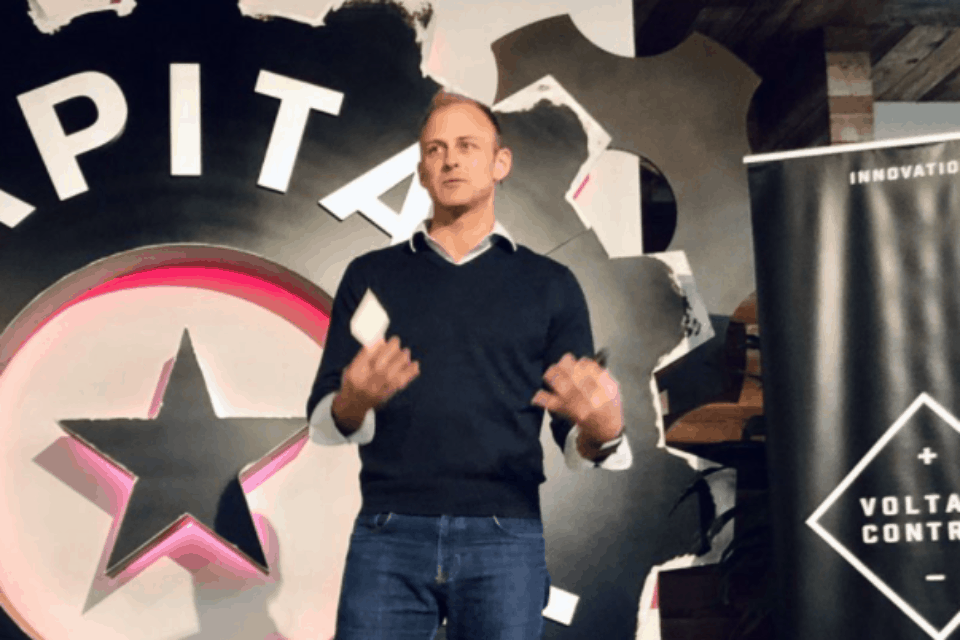
This is part of the 2019 Control The Room speaker video series. Control the Room 2019 was Austin’s 1st Annual Facilitator Summit with the goal of…
178 results found.
This is part of the 2019 Control The Room speaker video series. Control the Room 2019 was Austin’s 1st Annual Facilitator Summit with the goal of…
This post explores why decision-making, alignment, and facilitation are becoming the most critical skills for leaders. Learn how organizations can redesign meetings, prioritize decision quality over output, and build cultures that embrace productive conflict. Discover why facilitation is emerging as a competitive advantage and how leaders can start improving collaboration today to stay ahead in an AI-driven world.
At the 2026 Facilitation Lab Summit, Shannon Hart drew on five years of facilitating innovation sessions at Shell International to make a compelling case: real innovation doesn't come from a perfect agenda. It comes from creating the right conditions and trusting what emerges. From building a solid base camp before sessions begin, to running exercises that reveal how ideas evolve through co-creation, to protecting the open space where emergence actually happens, Shannon offered a practical and human-centered framework for facilitating in the unknown. A must-read for anyone who wants to move from controlling the room to truly holding it.
As AI moves from individual productivity hacks to shared collaboration systems, the real opportunity lies in how whole teams work with AI together. The future of human-AI collaboration isn’t a lone expert asking an AI chatbot for answers—it’s groups using artificial intelligence to map complexity, align decisions, and design better experiences. In this article, we explore how the future of work, learning, and facilitation will change as human-AI collaboration becomes truly multi-player.
Reflecting on the 8th Annual Facilitation Summit, this recap explores how facilitators navigate the “edges” where pressure, uncertainty, and possibility meet. Across two days, leaders like Douglas Ferguson, Dan Walker, Renita Smith, and others explored themes of presence, innovation, trauma-informed facilitation, and the evolving role of facilitators in the age of AI. From analog reflection exercises to embodied group dynamics, the summit highlighted how facilitators create conditions for insight, safety, and collaboration. Discover key lessons on reading the room, holding tension, unlocking collective brilliance, and why human presence—not just tools or agendas—remains the most powerful element of effective facilitation.
Enterprise AI adoption isn’t stalling because leaders lack strategy—it’s stalling at the “edges” where AI reshapes roles, decision rights, workflows, and trust. This article introduces Edge Maps, a lightweight tool debuted at our February summit with 150 leaders that helps teams name thresholds (like human vs. AI authority, governance bottlenecks, tool sprawl, and measurement confusion) and convert anxiety into small, reversible experiments. In just eight minutes, participants mapped Present–Threshold–Future to clarify ownership, create safe learning loops, and build momentum. Learn how to make AI transformation rhythmic, navigable, and scalable.
Josephine Jung shares a healthcare leader’s journey from admiring facilitation to practicing it in real, high-stakes rooms. Moving beyond toolkits and theory, she learned to “swim” through hands-on facilitation training with Voltage Control—designing purposeful gatherings, building psychological safety, and navigating group dynamics and conflict with confidence. With live projects, office hours, and an alumni community that keeps skills sharp, she explains how facilitation complements coaching, strengthens leadership, and becomes a human-centered advantage as AI reshapes work.
Make AI a visible teammate in 2025—not a side tool. This article shows how to move AI from “nice-to-have” prompts to the operating core of your team: weaving it through meeting arcs (open, explore, decide, close), speeding decisions with AI-generated options and consent-based methods, and building trust through clear working agreements and verification habits. You’ll learn how to redesign whole workflows (not isolated tasks), create living memory that reduces churn, and prototype AI-centered rituals you can test in two weeks. Includes an AI-at-the-Center Bingo diagnostic to assess maturity and pick January experiments that boost clarity, alignment, and throughput.
Tech leader Brian Buck shares how he shifted from being “the smartest person in the room” to designing rooms that are smart together. In this Voltage Control Facilitation Certification alumni story, he explains how bridging tech and business, embracing professional facilitation, and learning to trust the room helped him lead enterprise-level transformation, build psychological safety, and amplify others—especially in an AI-enabled world.
From stage lights to safe spaces, facilitator and storyteller Rabilyn Abalo shares how growing up in a tight-knit Filipino community, working at Philz Coffee, and navigating ambiguity at Strava shaped her facilitation superpower. In this personal reflection, she traces her journey from shy emcee to confident leader, and how Voltage Control’s Facilitation Certification, diversity scholarship, and tools like 1-2-4-All and portfolio projects helped her build psychological safety, inclusion, and shared ownership. Discover how embracing beginner’s mind, cultural roots, and community-centered leadership can transform meetings, empower teams, and turn everyday moments into spaces of belonging.