Most enterprise AI efforts produce knowledge, not change. This guide is for leaders ready to move past pilots and certificates — and embed AI into the workflows, rituals, and decisions that actually drive operational results.
200 results found.
Most enterprise AI efforts produce knowledge, not change. This guide is for leaders ready to move past pilots and certificates — and embed AI into the workflows, rituals, and decisions that actually drive operational results.
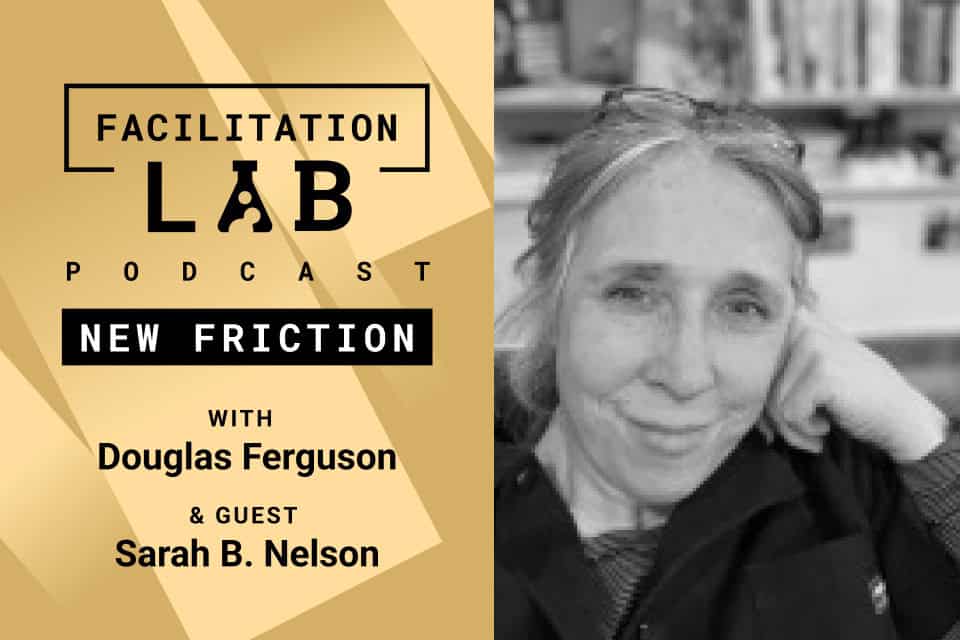
In this episode of the Facilitation Lab podcast, host Douglas Ferguson interviews Sarah B. Nelson, Distinguished Designer at Kyndryl and co-founder of Kyndryl Vital, about why AI's promise to remove friction is actually surfacing the human dynamics organizations have always avoided facing. They unpack how a single word like trust splinters into distinct concerns — model accuracy, data use, organizational credibility — and why treating human in the loop as a rubber-stamp step risks disengagement and stripped-out meaning. Nelson draws on the NeuroLeadership Institute's SCARF model to explain why AI rollouts stall on status, certainty, autonomy, relatedness, and fairness rather than on the technology itself, and shares stories spanning cybersecurity burnout, Holacracy at Zappos, and the extraction economics behind AI training data. The conversation keeps returning to her insistence on designing with people rather than at or for them, and on imagination as the resource most at risk of being engineered out of enterprises chasing speed. She closes with a Buckminster Fuller line she keeps returning to: that people are called to be architects of the future, not victims of it.
Generative AI has cleared the pilot stage at most large organizations. The harder question—how to turn early experiments into consistent, responsible, enterprise-wide practice—is where most AI adoption efforts run aground. Scaling generative AI is less a technology problem than a ways-of-working one.

Innovation theater happens when organizations generate excitement through workshops, hackathons, and brainstorming sessions but fail to turn ideas into real business outcomes. Learn how to recognize the warning signs of innovation theater, understand why promising innovation programs stall, and build a system that moves ideas from sticky notes to shipped results. Discover practical strategies for improving innovation management, involving decision-makers, creating accountability, establishing clear evaluation criteria, and designing a repeatable innovation process that delivers measurable impact instead of performative activity.

Agentic AI marks a genuine shift in how organizations can work—but unlocking that shift requires more than new tools. It demands redesigned workflows, aligned leadership, and a culture that lets autonomous AI participate responsibly alongside people.

AI is transforming how work gets done, but it's also disrupting one of the most effective ways professionals have traditionally learned: apprenticeship. As AI takes over many entry-level tasks, organizations risk creating "experience starvation," where junior employees produce polished work without developing the judgment, critical thinking, and decision-making skills that come from practice. Explore why the traditional learning ladder is disappearing, what this means for future talent development, and how leaders can redesign mentorship, coaching, and skill-building to create a new apprenticeship model for the AI era.
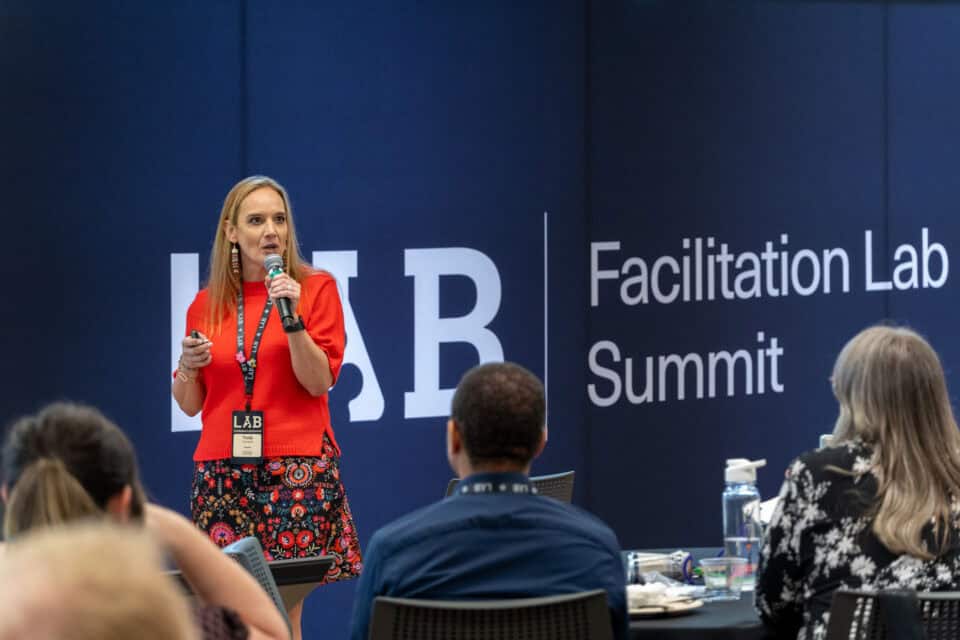
At the 2026 Facilitation Lab Summit, Trudy Townsend closed two days of deep work with a session that went straight at a topic every facilitator encounters but rarely names: trauma is already present in every room you enter, and it shapes how people show up, engage, and disengage. Drawing on the ACEs study, Dan Siegel's hand model of the brain, and years of practice, Trudy offered facilitators a grounded understanding of how the nervous system works, what dysregulation looks like in a group, and what it actually takes to create safety. Not a checklist, but a stance. A must-read for anyone committed to building spaces where participants can genuinely show up as their best selves.
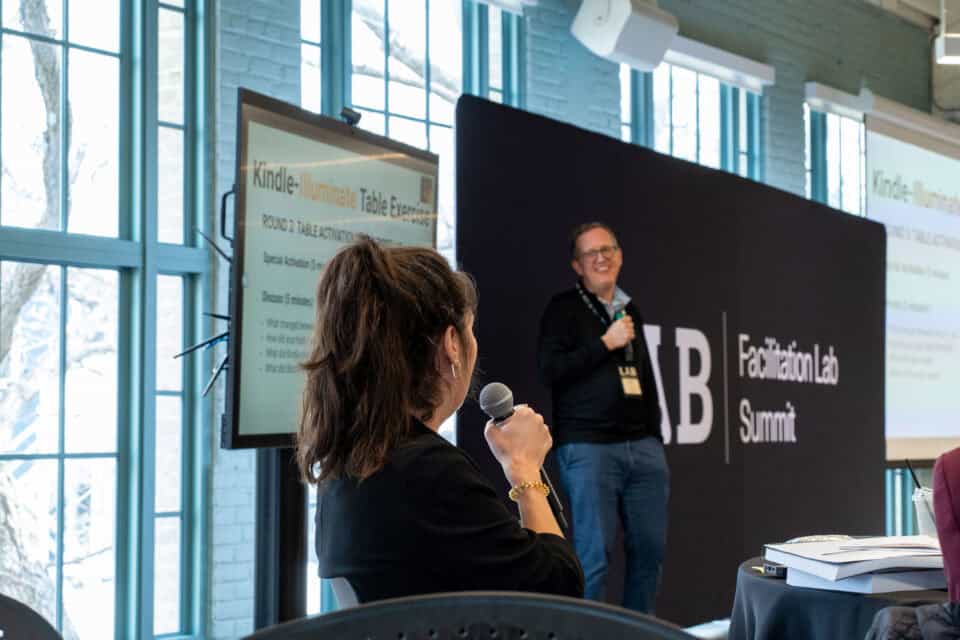
At the 2026 Facilitation Lab Summit, Brian Buck invited facilitators to ask a question most technique-focused training skips entirely: who are you becoming in this work, and why does it matter? Drawing on a three-part fire model built around ember, kindle, and illuminate, Brian offered a practical framework for shifting from a facilitator who brings the fire to one who ignites it in others. Through a paired exercise in illuminating presence, participants experienced firsthand how asking different questions and offering different kinds of attention can unlock belonging, collective intelligence, and breakthroughs that no agenda alone can produce. A powerful session for any facilitator ready to make presence their most important tool.

Communicating organizational change in the age of human–AI collaboration requires more than email blasts and slide decks. Today’s change leaders must align humans and AI agents around a shared story, create transparent decision-making processes, and design collaborative spaces where people can question, experiment, and co-create with generative AI. This article shows how to do that in practice.

As AI moves from a futuristic concept to a digital teammate, the shift brings significant hurdles. This guide explores the core challenges of human-AI collaboration: the "translation gap" of context and nuance, the "black box" problem of trust and explainability, and the risks of ethical bias and over-reliance. To unlock a hybrid workforce’s potential, leaders must move beyond simple tools to facilitate a relationship rooted in transparency, accountability, and shared context.