
Theres a better way to run Design Sprints using a customer-centered approach. A 2-Canvas System better serves participants by decreasing content overwhelm, heightening efficiency, and helping facilitators stay more organized.
145 results found.
Theres a better way to run Design Sprints using a customer-centered approach. A 2-Canvas System better serves participants by decreasing content overwhelm, heightening efficiency, and helping facilitators stay more organized.

Take a moment to consider your company's meeting culture. Would your team consider your meetings productive? Enjoyable? Engaging? Effective? Do you get work done in…

Optimal remote team communication needs to be steered by strong structures and methods that capture room intelligence–the idea that many minds are far greater than…

How many webinars have you been invited to lately? It seems like everyone in the world is flooding the internet with talks, seminars, and virtual…

When you think about meetings, what’s the first thought or feeling that comes to mind? If it’s reluctance, annoyance, avoidance, frustration, unproductiveness, ambiguity, or a…

Control the Room Podcast: host Douglas Ferguson talks with Conversation Factory Founder Daniel Stillman. They discuss what it means to be a conversation designer, the importance of having a well-rounded narrative for a productive conversation, impromptu networking, meeting mantras, his new book on innovation, and more.

I’m obsessed with better meetings. I’ve already written about the top reasons that meetings go poorly, so now it’s time to look at the positive.…

Be honest. Do you dread or relish the thought of business meetings? If you’d prefer to put your head down and focus on your work…
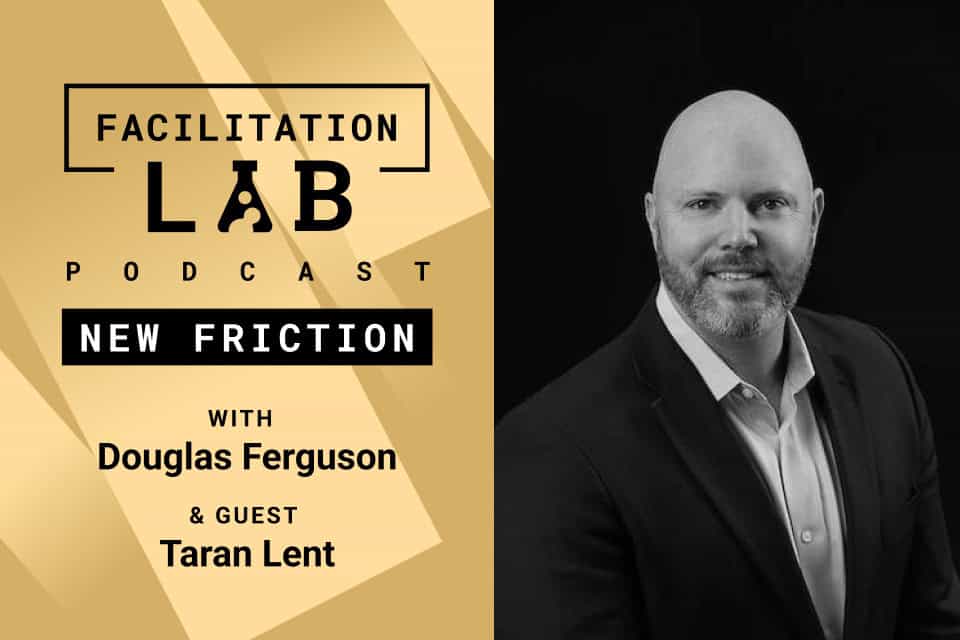
In this episode of the Facilitation Lab podcast, host Douglas Ferguson interviews Taran Lent, Chief Technology Officer at Illumia, about how his organization moved from individual AI experimentation to enterprise-wide capability. Lent describes building an "enablement task force" that deliberately avoided becoming a governing bottleneck, instead creating conditions for employees to play, learn, and share what worked, before this year's push to elevate personal AI habits into shared team and company-wide skills, standards, and vetted tools. He talks about using AI as a contrarian thought partner and even having it grade his own interviewing and meeting behavior, while cautioning that transcripts alone miss tone and body language. The conversation also covers the governance side of scaling AI, including a stakeholder review process for new tools and skills, the four-to-six-week approval timeline for new vendors, and guardrails to prevent incidents like an unauthenticated internal dashboard. Lent connects this to Illumia's recent merger of Transact and CBORD, crediting a shared "humble, hungry, smart" culture for making the integration smoother, and closes by arguing that judgment, creativity, and human discernment remain the differentiators as AI adoption accelerates.

AI for digital transformation succeeds when organizations align people before deploying technology. This guide explores why so many enterprise AI initiatives stall, introduces the Three-Layer Alignment model, and explains how structured facilitation helps bridge the gap between AI strategy and real adoption. Learn the role of the AI facilitator, avoid common transformation pitfalls, improve cross-functional alignment, strengthen AI governance, and build an AI product roadmap that drives measurable business outcomes. Discover how facilitation-first AI transformation helps organizations move beyond pilots to lasting organizational change and enterprise-wide adoption.