Brian Buck on Belonging, the Fire Model, and Shifting from Expert to Illuminator at the 2026 Facilitation Lab Summit
At the 2026 Facilitation Lab Summit, Brian Buck opened his session not with a framework but with a meditation. Before a single slide appeared, participants were invited to close their eyes, settle their breath, and bring to mind someone who had truly seen them. Not their performance. Not their output. Them. The exercise set the tone for everything that followed: a session about what it means to shift your identity as a facilitator from someone who brings the fire to someone who ignites it in others.
From Goals to Value Directions
Brian introduced a concept that gave the session its backbone: the difference between goals and value directions. Goals have endpoints. You reach them, and if you’ve built your sense of purpose around reaching them, you often find yourself flat on the other side. Value directions are different. They are orientations you move toward for the rest of your life, never fully arriving, always deepening. Brian’s example was simple: being the best father he can be. That never ends. But inside that direction, he can set annual goals, take specific actions, and measure progress.
The invitation to the room was to apply this to facilitation. What is your value direction as a facilitator? Not what certifications you’re pursuing or what methods you’re mastering, but who are you becoming in this work and why? Brian wove in the broader context of belonging, drawing on recent social science that connects it to engagement, performance, and psychological safety. Belonging, he noted, precedes performance. It’s relational energy. When people feel they belong in a space, they bring themselves into it fully. When they don’t, they withhold. And psychological safety, he reminded the room, is felt, not declared.
Ember, Kindle, Illuminate
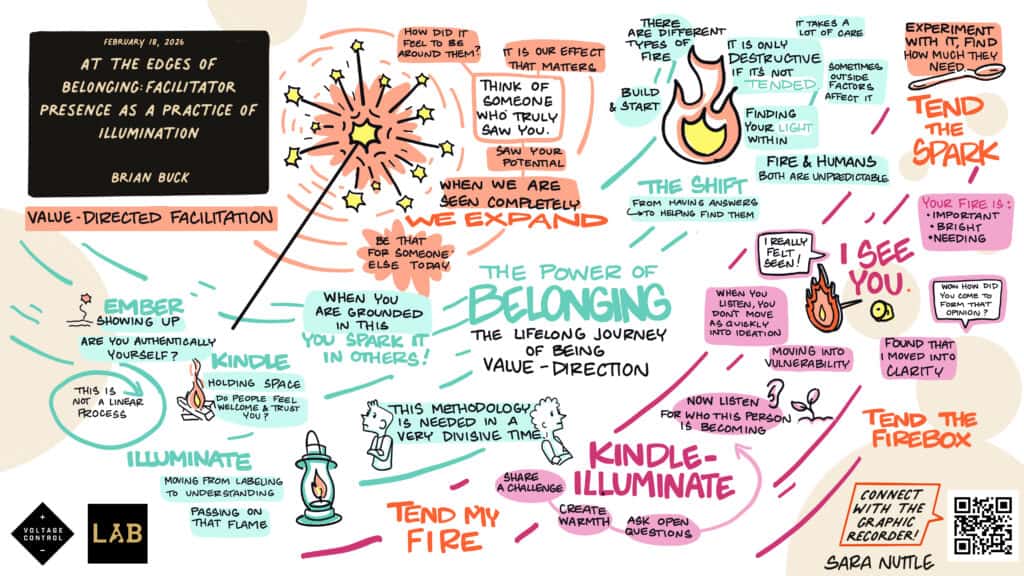
To make the value direction of presence illumination tangible, Brian introduced a three-part fire model developed through his capstone work in Voltage Control’s master’s program. The model uses fire as a metaphor for how facilitators can understand both their own internal state and the way they engage the people in their rooms.
The first edge is ember. This is the internal work: regulating before you facilitate, arriving grounded, tending the self before tending the room. Brian was candid about this one, sharing that when he finally accepted a part of himself he had suppressed for years and allowed his full self to show up, his facilitation changed completely. The room could feel it. “Your belonging starts with you first,” he said.
The second edge is kindle. This is where most facilitators live most of the time, holding space, building the container, structuring the session. It’s valuable and necessary. But in kindle, your flame is what people follow. The group is oriented toward you. That works well when you’re the subject matter expert, but it limits what’s possible when the real intelligence is distributed across the room.
The third edge is illuminate. This is the shift Brian was most focused on. Illuminators don’t spotlight answers; they spotlight the people who have the answers. When someone feels seen, Brian argued, they participate differently, contribute differently, and risk differently. That’s how belonging becomes collective intelligence. The model is flexible enough to move between all three edges within a single session. But naming them gives facilitators a lens for asking, where am I right now, and where does this room need me to be?
The Kindle vs. Illuminate Shift
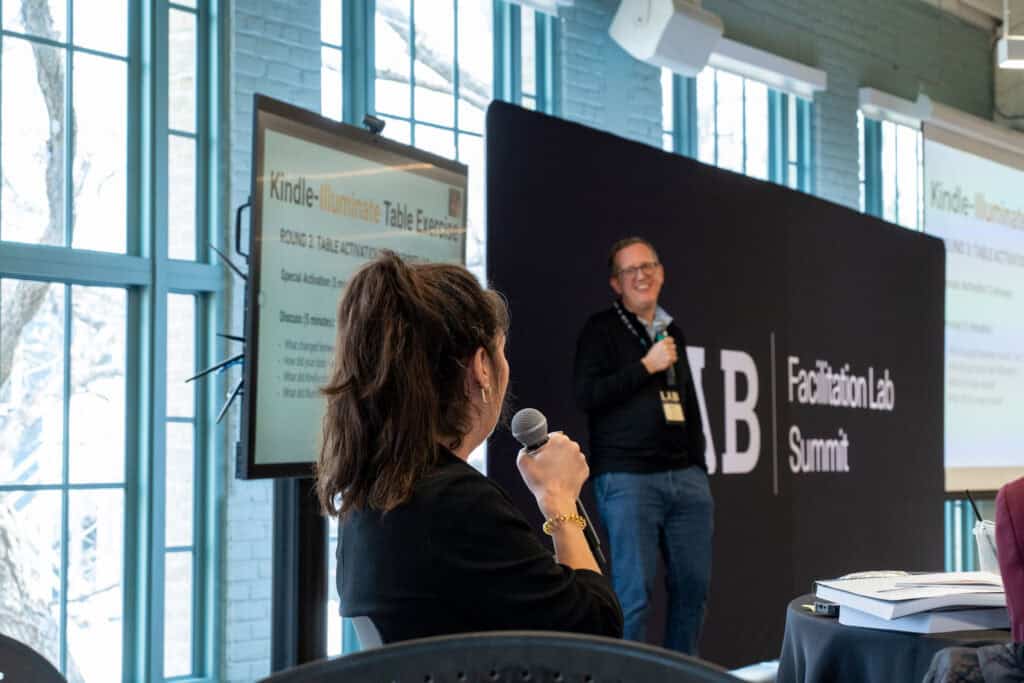
To make the difference between kindle and illuminate visceral, Brian ran a paired exercise in two rounds. In the first round, partners discussed a real facilitation challenge using the skills most experienced facilitators already have: holding space, asking open questions, creating warmth. In the second round, using a reference sheet drawn from David Brooks’ book “How to Know a Person,” participants shifted into illumination mode: listening for who this person is becoming, naming strengths, calling forward potential, reflecting identity rather than just gathering information.
The contrast was immediate and noticeable. One participant said that by the end of round two she had clarity on a challenge she had been navigating for 18 months. Another said that in round one she had been problem-focused; in round two, her partner reframed the same challenge as an opportunity for growth. The shift hadn’t required new information. It required a different kind of attention.
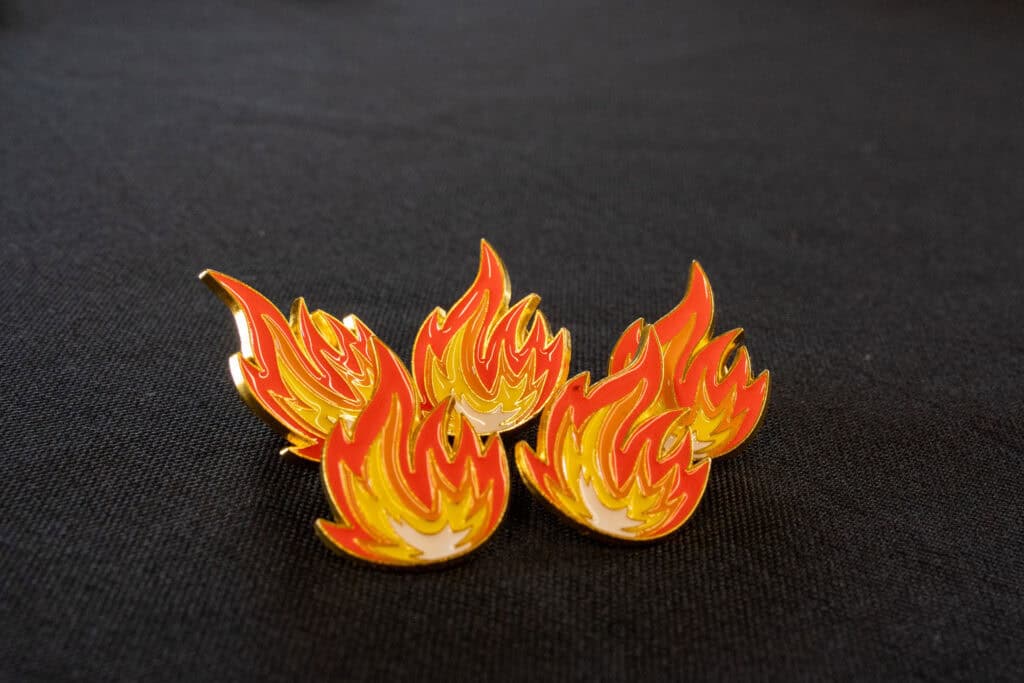
The exercise closed with each partner handing the other a small fire pin and, if they were comfortable, making eye contact and saying three words: “I see you.” Several participants described it as unexpectedly powerful. Brian explained the underlying logic: most difficult facilitation scenarios, in his experience, trace back to people not feeling seen, heard, or valued. Sometimes the real facilitation work happens before the session even begins, in one-on-one conversations that build the trust bridge the larger group will later need.
Brian closed with the question he hoped participants would carry with them: what is waiting to be illuminated through your facilitator presence? Not what tools to add, not what techniques to refine, but what kind of person you are choosing to become in the rooms you enter. The fire, he reminded the room, was already there.irreplaceable.
Reading the Room to Sculpt the Journey
Once you have a voice, the work shifts: now you have to learn when to use it, when to soften it, and when to get entirely out of the way. That’s track two, reading the room to sculpt the journey.
Joe used the image of Questlove performing with one earphone on and one earphone off to illustrate what great presence looks like in practice. The ear with the headphone on is listening to what’s cued up next, evaluating whether it’s still the right move. The open ear is listening to the room, sensing the energy and reading what’s actually happening. Preparation gives you the options, Joe noted. Presence is what tells you which one to choose.
For facilitators, this plays out in every transition. Joe offered three moves drawn from the DJ world: cut (intervene and redirect), blend (carry the current energy into the next activity), or let it end (honor what’s happening in the room even when you’re off schedule). He ran the room through a live scenario. A strategy session, 45 minutes in, a cross-functional leadership team in the middle of something real, and then: you’re 10 minutes over time and the client needs a deliverable by end of day. Cut, blend, or let it end. Ten seconds to decide.
The answers split across all three, and every person had a clear, considered reason. One facilitator said she’d blend because cutting would give her too much anxiety. Another said he’d let it end and let the system see itself, then co-design the path forward with the group. Another called for an “aggressive blend.” One participant named a fourth option entirely: divide, breaking into parallel conversations using remote tools, and compared it to a silent disco. What Joe lifted up was that the diversity of answers wasn’t a problem. It was voice in action. The lens you use guides the choice. The choice reveals who you are.
Joe closed by zooming all the way out to the largest unit of time: the journey. Transitions happen in seconds. Sequencing unfolds over minutes. Arc plays out across tens of minutes. Journey is the whole session, and it’s not something you prescribe at the start and hold to. It’s something you co-create and sculpt. And what people take away from it, Joe reminded the room, is never the specific activities or the particular transitions. It’s how they felt. Whether it meant something. Whether they left changed in some way they couldn’t entirely name. That, ultimately, is what facilitators are building, one choice, one lens, one room at a time.
Watch the full video below:
Transcript of Brian’s Session:
Brian Buck:
There is a reason why this song is playing. A couple of reasons. It’s going to tie back to later in our session. Not to mention Alicia Keys is an awesome person, but also in Colorado where I’m from, I happen to support a Native American, my volunteer time with a Native American charity in Colorado Springs that supports all of the Native reservations around the US that are going through major hardship. And so, my friends there call me Two-Spirit. And if you know what that means, you know why this girl’s on fire. So, I’ll leave it at that.
And I hope you’re all going to be on fire when we’re finished here. So, I should not put that down. So, what we’re going to do today is about your identity, my identity as a facilitator. It’s not about techniques so much, but I’m going to give you a framework and it’s going to really build on a lot of the discussions that we’ve had so far already. It’s going to be talking about a value-directed way of facilitating. And your value directions are yours as much as I have my own. And we’re going to talk about practicing presence at the edges of belonging. It’s not going to be so much a method, but a stance. And so, Dan talked about our ideas are better than my ideas, our ideas. Renita talked about stop performing facilitator, and start being a person who facilitates. Chris talked about sense making and building a trackable experiments.
Shannon yesterday talked about taking an adventurous approach to facilitation, co-creating and discovering hidden treasure. And Joe just finished talking to us about lens crafting, the power of metaphor and reading the room, which ties to presence. And so, I’m going to be talking about that today. But before we start, here’s some time for you. So, I invite you to get comfortable.
Before we talk about models, frameworks or techniques, I’d like to invite you to begin somewhere more human. Facilitation isn’t about what we do. It’s about how we see people. We have the privilege to be with the people that come into our spaces. We have the privilege and we steward those spaces and hold those spaces. So, before we go into further, I want to invite you to remember something. So, sit comfortably, feet on the floor, have your hands rested gently. Take a slow breath in, and exhale slowly. Again, inhale and exhale slowly. One more time. Inhale, and release.
Let your body settle. If you feel comfortable, close your eyes or just soften your gaze. Bring to mind one person, someone who truly saw you. Not just your performance, not just what you produced, but you. Maybe it was a teacher, a mentor, a leader, a friend, a family member, someone who looked at you and saw possibility. Remember how they listened to you, how they spoke about you, how they held space for you. What did they see in you? Now, notice what happened inside you when you were with them? Did you stand a little taller?
Did you take more risks? Did you try something new? Did you believe something about yourself that you hadn’t fully believed before? When someone sees us deeply, we expand. Stay with that feeling. Hold that feeling for a moment. The steadiness, the confidence, the sense of being known. Now, imagine that person standing just behind you, not speaking, just present, seeing you the way they always have. Let that steadiness settle in your body. And now, without opening your eyes, become that kind of presence for someone else in this room today. Someone here is carrying something invisible. Someone here is waiting to be seen.
Let yourself arrive as the kind of person who sees depth, who assumes worth, who makes space. When people feel seen, something opens. Let that openness be here. And open your eyes when you’re ready. So, like a lot of you, I’m on a facilitation journey. I think I call myself like an accidental facilitator. Does anybody else relate to that? This wasn’t like a major I picked in college or something, but I end up really… It’s encompassed my whole career now and I’m hooked and I’m in. And like a lot of you, I want to go deeper. And here, there’s a picture here I like to show you as we talk about illumination. My friend Zach Connor, you can Google him on Zach Connor photography on… He does a lot of outdoor photography in Colorado. The four people there are myself and my three sons camping in Marble, Colorado.
A little bit trivia about Marble, that’s where we harvest, those Coloradans know this, all of our white marble for our monuments in Washington DC. And so, we were camping here and if you notice, it might be hard to see, maybe you can see it better over here, the stars were literally like that with the naked eye. And it just was stunning. And the illumination against the backdrop, Eric talked about sometimes with the cracks of light. That’s what it was in real life. But what Zach did as an illuminator photographer is he said, “Just stand here,” myself and my three sons. And we each had a flashlight and he said, “Okay, Brian, you make a backwards B.” And then he handed the flashlight to my other son and my next son, and it was a U and C and a K. And I didn’t know what he was doing, frankly, until the picture came.
And it shocked me how awesome it was. And sometimes when we’re facilitating, people don’t need to always understand exactly how we’re doing things, but it’s the effect that we have. And often it’s when we bring light and we bring illumination. So, we’re going to talk about that today. I think for me, and I’m not making a plug just for the core and the cert programs, but it was very illuminating for me as a facilitator. Core was, “Oh, my gosh, everything I’ve been doing for the last five years actually has a term for it. There’s an actual science and oh, I could probably tweak it and be even more effective.” And then master’s recently in the last part of 2025 opened up a whole new vista of how I’m looking and practitioning as a facilitator. And I’m going to share that with you today. And I’m going to invite you to consider this for yourself as a model or think about and spark, “Hey, am I thinking in this same kind of way of how are I approaching my craft?” So, this is more of a personal evolution and not a theory.
I invite you to join me as I evolve. We’re all in this together, so here we go. So, when we were given the option to pick our themes, I don’t know if anybody’s seen some recent studies. We did some work inside Progressive around belonging. It’s a powerful concept and there’s a lot more social science around it. You can see where belonging is powerful for positive things. And if you’re trying to understand other things that are going on our society right now, you’re going to see that there’s connections on belonging there. So, you can’t underestimate the power that it has. But what I want to suggest today and introduce a concept to you is around belonging, a concept called a value direction. So, value directions is something that you never stop doing until maybe the day you take your last breath.
Goals, you nest in through the value direction. So, a lot of times we only set goals for ourselves and we end up with goal depression, which is once we reach the goal, it’s like we got it done. You hear the stories like people got the Oscar or they got the Grammy or they get something and they’re like, “I didn’t feel satisfied.” It’s because we end up only setting our lives around goals. Value directions are we’re always doing it. Me, I want to be the best dad I can be. That’s the value direction. I’m never going to stop working on that, right? But every year I’m going to set a goal of what can I do with my children that I can be a better father. So, I’d like to invite you to think about what is your value direction as a facilitator and how does that attach to your identity as a facilitator?
I’ve heard a lot of conversations these last, gosh, it feels longer than 24 hours, but of people feeling like, where do I fit? Where do I understand these terms? How do I see myself in my journey of maturity? And I want to share that a value direction could be a really good way for you to understand where you want to go. But here’s the change. I want to introduce the concept of illumination and we’ll talk about what that means, but it’s through presence working on ourselves, but the internal integrating to the external that we illuminate the people that are in the space with us, not the answers. A lot of us started facilitating because we were experts at something and they’re like, “Oh, why don’t you go in front of people?” And next thing you know, it keeps going, right?
But where do you transition from, everything is on me. Everybody’s looking at my fire and how could I be igniting others? So, we’re going to talk through that. And I just love high-performing teams because that’s really the outcome. Why does belonging matter? It precedes performance. Anybody that’s been on a high-performing team, there’s this thing that happens where everybody just feels connected. Hopefully you’re feeling belonging here, being part of Voltage Control’s facilitation lab in some way, either locally or on the larger ones. Engagement is relational energy. It’s energy. So, when people feel like they belong, they bring energy into your sessions. So, if you’re not having the energy you think, there could be a belonging issue. Psychological safety is felt not declared. We love, facilitators love to share that we build psychological safety.
Is belonging part of what we’re doing there? Or the people there are just an ingredient for us to get to our… Are they a cog to get to our goal? And then lastly, high performance is a byproduct of belonging. I’m sure all of you can think about the best outcomes you’ve had as a team. More than likely, you all felt like a strong sense of belonging during that period. And you can see some of the other definitions there. So, it’s really kind of transitioning from an expert. And there’s context for that. I’m going to talk a little bit about that, where it’s not that you can’t be an expert any longer, but understand where you may need to adjust and flex. So, flexing from I have the answers to illuminating the answers within others. Okay? It’s from defining content to focusing on the container where then the magic happens on the content.
And then lastly, from dominating the space, I don’t think any of us really show up going, “I want to dominate this space with all this group of people.” But I’ve learned being in community with a lot of you, those of you that are independent contractors, I’ve heard people say, “I have pressure when I show up. All eyes are looking at me, I’m supposed to deliver.” So, what happens is it almost puts you in this position of, “I got to do things,” versus inviting people in. And so, the shift that I’m going to talk about is not necessarily… It’s holding something different. It’s not giving up, it’s letting go and holding onto something that’s even more powerful.
So, thank you, Joe, for introducing the concept of metaphor. I’m going to introduce fire as metaphor. Think about fire when it’s tended. It’s powerful. How did most of us get here? With tended fire inside two circular things flying in the air? How did all of us stay warm last night wherever we were? Contained fire in a furnace. Who took a shower this morning, hopefully? With warm water, contained fire, tended fire. And I think through the master’s program, Mark Dressler’s book was introduced and for me, I learned that fire wasn’t destructive. It can be when it’s not tended. Intending is watching closely without smothering. Tending is protecting the flame, not dominating it, looking for derailments and distractions that could disrupt the flame that’s present and creating conditions for group thinking to ignite.
So, let’s pause for a minute. As I talk about belonging or this idea of shifting your stance from feeling like I have to have all the answers, has some of you gone through a shift and what do you think about that fire metaphor? What does it resonate with you? Let’s have three people. Let’s do a plus add. So, I’m going to go each section so we get equal distribution. Someone down here, what’s coming up for you when you hear some of these terms? Anything resonate? Yeah. Daniela.
Daniela:
You remember my name. The fire metaphor really resonated with me. I’ve been thinking about it from a different stance, but I think they’re very related. I come from a background in theater and when you’re on stage, the director will tell you, “Find your light.” So, you need to find your place on stage where the light hits you. And as a facilitator, I kind of reframe that as finding your light within. And that’s something that we want to do with other people and for other people as we’re facilitating, helping them find their light as a person and as a group. And so, I think it’s very close to this metaphor that you’re proposing and it’s-
Brian Buck:
Cool. Cool.
Daniela:
… nice.
Brian Buck:
How about someone here in the middle of the room?
Chris:
I grew up going to visit family in Toronto and they have a cottage north of the city by like three hours. And as a kid, you kind of do whatever you wanted in the woods and they would teach you how to light a fire. So, it was a very fun thing as a kid to like light a fire… You’re in the middle of the daytime, lightening tiny little fires in the woods, but quickly it became your chore too. If you’re going to cook that night, “Hey, Chris, would you go start the fire?” And you’re all excited because you’re like, “Yeah, totally. We get to burn something big now.” But you quickly understand the way that that fire is built and the materials around you, this aspect of like how to initiate a flame constructively, and then actually the intention of what that fire’s for at different times.
Brian Buck:
Yeah.
Chris:
A cooking fire is different than a marshmallow roasting fire, is different than, “Oh, we’re going to burn a bunch of stuff because it’s rotting in the front yard,” fire. And yeah, it just makes me think of the tools and the process and the context of that and tending too, and especially never leaving a fire that’s burning.
Brian Buck:
Yeah.
Chris:
Yeah.
Brian Buck:
Yeah. No, great. Great multiple examples of it’s sustaining, it has practical impact. Yeah, let’s have one more other person down here.
Speaker 4:
[inaudible 00:19:24], but this is about what I’m going to say. I’m from Oregon and I own a very large cattle ranch.
Brian Buck:
Oh, nice.
Speaker 4:
And this makes me think about, as a facilitator, what happens when you are doing your best to manage that fire and a wind comes up and all 10,000 acres burn. What do you do then? Tending fire takes an awful lot of care. That’s it.
Brian Buck:
Thank you for that. Thank you for that. So, a lot of times when you’re learning something new, and my job over the years in tech industry, as well as being at Progressive is helping complex things seem easier to adapt or adapt to. So, through the master’s program, I worked on a capstone project for my company, but this is me, Brian, speaking to you. And what I developed here is me and me in my journey. And what I developed was a three-part model that’s helping me move forward and understanding the gift of the fire that is showing up, the souls. If a person of faith, like an image of God or whoever you see coming in, that valuable human life that’s coming into your spaces, do you see that as something to cherish and to welcome? And it’s like the same beauty as when we look at a fire and fire’s unpredictable to what you just said, right? And so, guess what? Human beings are too, right? So, I want to talk about three edges of fire that could help frame how you can approach your facilitation as you continue maturing.
First is ember, how you show up, you as a facilitator. Second, how you hold space as a facilitator, that’s kindle. And the third one, which is the disruptor one I’m hoping today will be for you, which is illuminate how you see others. And for most of us, we may have never really thought about, when we originally start working with people, do I diminish people? Do I see someone and put them in a box and I haven’t even talked to them for two seconds or this person’s going to talk too much, so oh, they’re going to be a talker? Oh, I got to manage around that, right? So, I’m going to go through each one. And I also want to help invite you to say you could see yourself both as how you practice, but also yourself in each one of these. So, ember is about your internal work.
This is about regulating before you facilitate. Depending on your culture background, I can speak for the frenetic American that some of us were born into and we don’t even notice until we talk to people in other countries and they’re like, “You Americans live very high.” Like you never relax, you never focus, you never contemplate. I’m not going to generalize our entire country, but I’ll just say other people from other places say, “It feels different when you come to our country.” And so, a lot of times as facilitators, are you showing up frazzle, fried? Did you even breathe before you started your sessions? It’s all about being grounded and if you’re unsettled, the room’s going to feel it.
Does everybody relate to that? So, your belonging starts with you first. And honestly, I won’t go into a lot of details, but I went through a big life change where I didn’t accept a really big part of myself for many years. And when I finally did and I allowed my full self to show up, my facilitation took off because people knew this was fully me. And so, I welcome you however you’re made, however you look, whatever you… Be kind to yourself and just say, “This is me and this is how I’m going to show up.” It goes back to what Renita was talking about.
The intent though is work on that core self. This is where I think a lot of us are functioning right now, which is on the edge of kindle. This is the part… I love Chris how he did the imaginations. Could you all relate when he was sharing like you’re going out? Some of us can’t if you’re into camping. It’s always like, how am I going to stack the wood and how’s it going to be perfect and what am I going for? Am I going for like a gigantic bonfire or I just want to try to cook food? But it’s this idea of really thinking about how am I holding the space? So, I think a lot of you do that, but here’s the difference. Often this period here is your flame is what everybody’s following.
People are looking to your flame and that’s good in some cases. You may be facilitating some things where they may need that. You are an expert in a particular area, but this is where I stood for many years being a technologist, we could talk regularly to people. I was put in these situations where, “Hey, put him in here because he’ll translate.” What I found though was that was helpful, but it’s limiting. And I don’t know about you, but lost opportunities really annoy me, like really good opportunities where there’s more treasure to be found and it’s left unrealized. So, again, it’s not bad to be at kindle, there’s time for that, but here’s where things shift. I highly recommend a mentor of mine put me in front of a book. Has anybody read David Brooks, How to Know a Person? Raise your hand.
Hasn’t it changed your way you look at people? And by the way, I don’t make any commission for any book sells on this book, but he said, “The ultimate gift you can give another person is to see them deeply, to understand them and to make them feel known.” I have found in most cases and most challenging facilitation scenarios that most people just want to feel seen, heard and valued. Heard that? And sometimes the facilitation work is before the facilitation event. It’s meeting with some of the people that you identify as, I need to sit down with them and hear them and help them to feel seen before I get into the fun with the larger group. So, it’s this idea of seeing people as already worthy. Catch yourself if you’re finding that you’re judging people before you even get a chance to look at them as there’s a story here.
They’re the only person on the planet that has this DNA sequence. That starts baseline. There’s no one like them, right? There has to be depth. There has to be mystery, not just problems. It’s moving from labeling to understanding. And you as a facilitator have the opportunity to really impact someone’s life and amplify what is emerging in that person, not just in the topics you’re facilitating, and that’s where you’re pivoting.
Not only are you working on your presence, but now I can let go of being the content driver, and now I can be the person who shows up in the space and starts igniting the fire of other people. My flame is strong because I’m still doing that centering, that grounding, but now it’s not so much, “Hey, I have an opinion. I want to drive.” What gets decided so much is I want… [inaudible 00:27:54] smartest person in the room is room. Dan talked about that, right? I’m getting a tattoo. I’ll make sure if I summit next year, I will show it on my arm because I love that phrase, because that’s the treasure. But what are we doing to ignite it?
So, recognition creates… When we start doing this, it’s calling for their fire, not calling it out. It’s recognizing, creating belonging, and that belonging then deepens when people feel fully known, but you have to illuminate that. So, my invitation to you today has become an illuminator and not a diminisher. And some of you might be looking at me right now like, “He’s so weird.” But hopefully you’re shifting your mindset like, “I have a story, you have a story. Are we looking for that side of that?” So, it’s not about your fire and kindle, it’s about igniting theirs as an illuminator. So, illuminators don’t spotlight answers, they spotlight people who have the answers. So, when people feel seen, they participate differently, they contribute differently, they risk differently. That’s how belonging comes to collective intelligence. That’s one thing I was trying to figure out was like, okay, I agree. It’s all about how do we pull forward as… We all do strategic alignment, but how do we do that collective intelligence? And often it’s because we’re not really igniting the fire of others and there’s ways to do that. I’m going to talk about that.
But here’s the part that I really enjoy about this model that’s helping me right now because I’m… By the way, I have not arrived. This is something that I’m using for myself is you need to sense the edge. Where are you? Are you doing self-awareness like, “You know what? I need some ember time. I’m fried. I am burnt out. These people are annoying me, whoever I’m working with, whatever. I love them. They’re great, but I need some extra grace required.” But knowing when you need to work on that ember part, and maybe sometimes because some of you are in specialized facilitation roles, you are doing the kindle part. You’re helping create… We all need to be making sure that we’re creating the container of how the space is being held, but maybe you can lean in a little bit on that you are an expert in this space. But where the magic really happens is when you tap into that illumination and you can move in between.
It can happen in one session. So, it’s a very flexible model of… But hopefully it gives you a lens like what Joe was talking about of how to approach how you’re engaging the space. So, let’s have some three other people. So, let’s start-
Speaker 5:
I actually have something.
Brian Buck:
Okay, go ahead.
Speaker 5:
So, here, I’ll just sit down. So, we’ve talked a lot about how the world is like… My gosh. We’ve talked about how the world is divided. I’m just going to stand. We’ve talked a lot about how the world is divided. And I come from a family who’s very politically ideology. There’s a huge difference between me and the rest of my family. And I had a conversation with my aunt recently where we were doing something like this. And if you want to find a flow state, this is the way to do it. As a facilitator, that was so incredibly gratifying to just ask her questions. And we didn’t agree by the end of it. But you know what she did? She ended up telling me things that she wanted to take to her grave. I ended up coming out to her after 15 years and we have been closer than ever. And so, I want to praise this methodology because it is so gratifying and so needed at this time.
Brian Buck:
Oh, thank you. Yeah, yeah. All right. Let’s have… You were middle, right? So, why don’t we try down there? Anybody want to comment? Anything hitting you? Anything resonating? Yes. I like your purple color, by the way.
Speaker 6:
Thank you. I think what came up for me is I really appreciate the thought about moving from labeling to seeing people is already worthy. It feels easy right now in the world and very divisive to assume that some folks don’t have much to bring to the table because they’re so far apart.
Brian Buck:
Yeah.
Speaker 6:
And I appreciate that lens of seeing everyone is already worthy and having value in this space. Yeah. Thank you.
Brian Buck:
Sure. And I highly recommend if, again, if you’re a book reader, Brooks really goes through a whole new paradigm of how to engage people. Yeah, it’s amazing. Down here. Yes. Hi.
Speaker 7:
When you were talking about tending to the ember, like, am I at a point of burnout? Do I need to come back? I know facilitators, especially if you’re being paid and you’re like, “I need to be on,” and it can feel selfish or difficult to go inward. I like thinking about that ember, like if it’s too light, you’re not giving warmth in the space.
Brian Buck:
Yeah. Yeah.
Speaker 7:
And so, if you can think of it as like, “Oh, I really am providing if I tend to that.”
Brian Buck:
Yeah.
Speaker 7:
You’re creating a warmer room for people, so.
Brian Buck:
Yeah. And taking the metaphor, you can’t really have a bigger flame if you don’t start with something in the embers and it’s sustainable. The other piece I forgot to mention too, thanks for your comments, was it’s also an analogy of how you can see yourself as an evolving facilitator. Some of you have mentioned in passing, some of you are hearing some of our clinical language and nodding. And a lot of you are coming from very different perspectives. Ember is like a description of maybe where you are in your facilitation. In kindle is where you’re learning your craft and letting your flame… Because it’s important that your flame is seen because you’re building that trustworthy with whatever group you’re coming to. But then when you go… What I’m excited about is I know I’ve seen glimpses of one I’ve gone to illuminate and I’m like, “What just happened?” Like, whole what?
Even when you’re camping where the flame… Like you’re somewhere in the remote area and the fire’s going and then suddenly something in the fire makes the fire go big and then the whole darkness around you lights up that you didn’t see before. Think about that as a way from revelations to the talent that’s in the room and half the battle, a lot of times when we’re facilitating is people don’t feel like they’re providing or being helpful, right? Like, “I don’t know if I’m doing enough.” So, when we illuminate, we’re actually engaging people more and then you’re going to have that high-performing team effect. Great comments. Thanks everybody.
So, we’re going to have a table exercise now. Here we go. So, we’re going to move from concept to experience. So, I hope to see and guide you through how it’s going to feel the difference between facilitating with each other at kindle versus illuminate, okay?
So, what we’re going to do is in this first round, there’s going to be a… I can go to the next slide here. We’re going to pair up again, so just two by two. What I encourage you to do is find a partner that you haven’t known, because you’re going to be asking some questions that’ll just help to get to each other to know each other better. Use your discretion as far as how much of yourself you want to share, but you’re going to take turns speaking and listening. And the prompt for these discussions is sharing a real facilitation challenge you’re currently navigating.
Speaker 5:
Not have a handout?
Brian Buck:
Yeah. And the handout actually will come a little bit later, which I will reference that.
Speaker 5:
Oh, I’m so sorry. I thought it was this-
Brian Buck:
No, you’re fine. You’re fine.
Speaker 5:
Someone take the mic away from me.
Brian Buck:
No, you’re fine. Her fire’s showing. Did you see that? So, what you’re going to do is we’re going to take about five minutes or it’s going to be a 10-minute… The first part of this is 10 minutes. So, we’re going to practice kindle. Okay? So, what you’re going to do is… I’m going to leave this slide up here so you can reference it when you’re discussing the things. Partner A is going to speak for five minutes and person or partner B will listen. Then you’re going to switch. Person B speaks for five minutes and then partner A listens. So, the listener, you want to think about creating warmth, ask open any questions. You’re all really skilled at doing this, right? Like creating psychological safety. What I would suggest doing is not trying to solve things for them or… You just want to really help them think mostly.
Don’t reframe things. Don’t interpret identity. Don’t amplify strengths. Imagine when you’re in a… Especially some of you in certain facilitation standpoints where you just don’t have the context to be able to go that. You just want to be curious. Okay? The speaker again is sharing that challenge. I’ll lead you through the next session, but let’s go ahead and get started. Find a partner and I’ll guide you. I’ll tell you when it’s five minutes in where you can switch speaking. So, ready, set, go.
All right. We’re going to pivot a little bit. Do you want to wrap up? Now, that was experiencing kindle, which is probably what you’re often doing in most of your sessions. Okay? Now, what I want to introduce you to is there’s a sheet on their table. We’ll go over this chart, the empty chart later, but look at the one that has the words on the back. There’s like a little picture of me at the bottom. So, what does it mean to illuminate? Okay? You can see in this chart and you can kind of reference it and nobody has to be like… Don’t feel shy if you’re glancing down while you’re listening to the person speaking. Okay? But here’s the shift. Okay? If you can see here the illumination principle, these are based on my interpretation of Brooks’ book on how you can do illuminating questions, how to do accompaniment.
It’s a whole different approach of how to work with someone, both individually and in a group setting. Okay? So, you can see here, there’s illumination principle on the left, what it looks like in the room, and how you as a facilitator can practice each of these areas. Okay? I’m not going to go ahead and read through. I’ll just let you kind of jump in and start cooking. Okay? So, I’m going to set… You’re going to now pivot and as we practice illumination, what you’re going to be doing is we’re not just holding space now. What you’re going to be invited to do is you’re listening for who this person is becoming, okay? So, you want to assume depth. Be curious. There’s stories in each of us. All right? And there’s mystery and there’s magic.
Listen for strengths, reflect identity, call forward potential, and name what you genuinely see. So, listener, it’s basically what I just said here is on the left-hand side, the prompt for the speaker. We’re going to add a little bit more to that original prompt. Share the same real facilitation challenge you are navigating, but this time speak about how it is helping you grow professionally, personally, grow in general. Okay? So, let’s take another five minutes. Ready, set, go.
Okay. Now, we’re going to make this tangible both visually and hopefully meaningfully for those of you that are like more tactile. So, in a moment, each of you will receive a small fire pin and they are all at the tables. And if some of you already put them in your lanyards, that’s fine. Go ahead and take it off because this is the activity, an activation activity. What I invite you to do is look to your partner that you’ve been talking to, hand them the pin. You can hand it to them or if they want you to put it on their lanyard, feel free, whatever space thing that you feel comfortable with, but simple thing, if you feel comfortable, look at them in the eye and say, “I see you.”
Ready, set, go.
Okay. I’d like to bring everybody’s attention back. Hopefully you’ve done your pinning. All right. Let’s have some discussion. I was going to originally have you do at the tables, but I think everybody’s quite warmed up. The dialogue’s just been incredible to hear up here. Why don’t we do sharing across the room, okay? So, mic runners, if you can get ready for your workout. So, the first question I want to ask to the group, everybody, is what changed between round one and two for you? How did it feel different? Raise your hand if you want to share. Okay. Why don’t we go here and then we’ll go here? Go ahead.
Speaker 8:
I think when we started round one, I was really thinking about, and I think we were both thinking about a challenge and something kind of hairy that we’d been struggling with. And by round two, I had clarity. So, I felt… And something that I’d been dealing with for about 18 months. And so, I really had some clarity around what my next step is in both how I tend to myself to make that happen, but also the people that I’m working with.
Brian Buck:
And did you feel through the conversation you had, like that’s how the revelation happened, being able to feel seen or you want to-
Speaker 8:
Yes, being seen and also just asking the right questions. So, being able to ask each other the questions, which is so much of what we’re trying to do, asking each other the questions, to think about the questions that we’re going to ask of the other questions. So, it was like all of that tied together.
Brian Buck:
Okay, great. Great. No, the questions are a really big thing. And again, I don’t want to sound like I’m always pitching Brooks’ book, but he talks about even something… These illuminating questions of when someone gives an opinion, a lot of us will be like, “Oh, okay, that’s interesting.” Or might not even say anything. He invites people to say, “Wow, how did you come to form that opinion?” That’s just one example of where then you start seeing the person deeper and then you have these breakthroughs. So, congratulations. That’s awesome. Woo. All right. Next person.
Speaker 10:
Hi.
Brian Buck:
Hi.
Speaker 10:
I felt that this really resonated with us a lot. Actually, I feel between one and two, we were more problem-focused on like, “Oh, this is all I’m struggling with.” But then round two, it really makes you become vulnerable and have a way more open conversation. And we actually really enjoyed pinning the pin on each other too. It felt like really special. And I don’t know, I think admitting the vulnerability that you have really creates an opportunity to be like, “Actually this is,” and you can understand the person way better. And I just really loved how that was framed and [inaudible 00:45:31]-
Brian Buck:
And hopefully you’re all going to walk around the rest of today and see everybody’s flames now symbolically. So, you can remember there’s a story, right?
Speaker 10:
Yeah.
Brian Buck:
There’s a story, you have dimension, you have value, you have worth, and we can help remember that.
Speaker 10:
Yeah. And when we said we were like ICU, when you said it, we were all like, “Oh.” But then when we actually did it, I was like, “Oh, my gosh, you do see me.” It was just really wonderful.
Brian Buck:
And a lot of people ask, “Well, how can I do that in a large facilitation session?” I had a big challenge where I had to lead… There’s someone in the room here, Mike, who was with me, 11 top-tier domain architects think Sheldon plus, okay? And at first, it was like all the alphas and it was mixed genders too. It wasn’t just your typical Sheldon male. It was people were not used to being in the same space together. And what we learned through that exercise and we stumbled into it, but then that’s what started this was we started meeting with people individually and boy did their continents change when they felt seen, heard and valued ahead of the larger meeting. So, for some of you, you’re like, “How am I going to do this in a larger group?” You may need to spend time with these important people one-on-one and do the same kind of questions ahead of it.
Now, if you have already a strong, tight, strong belonging group, then go use the illuminating questions, but you may need to illuminate one-on-one, okay? And that’s what we did here. How about down here? Anybody? Any revelations, thoughts? What was different between one and two, between kindle and illuminate?
Speaker 9:
I think what was a challenge in round one was just listening and asking clarifying questions.
Brian Buck:
Yeah.
Speaker 9:
And I noticed that I’m a fixer and I like to jump right to ideation, which is funny because when I’m facilitating, I try to pause the ideation, but when I just shut up and listen to what he was really saying and felt he was struggling with. And then in the second round, A, it was great to be able to shout out what I saw as being potential and promising, but B, it was really cool to hear my partner reframe it as opportunity instead of challenge.
Brian Buck:
Great. And did you see this is where the fire model works. Your fire… Typically, in kindle, we’re structuring around the space, we’re doing all our facilitation stuff, right? But we leave space to intentionally illuminate in the sense of, what am I doing to ignite? And so, that’s what I’m practicing now. This is a journey I’m on. If you want to come with me, let’s go. But it’s like, how do we now take our fire and ignite someone else’s? And I love both of these stories because they came from the person, not from you. You weren’t the fixture, right? You revealed, you illuminated, and that’s a great example. Okay.
So, you’re probably wondering, how can I apply this in real life? So, this is the other side of your sheet. Again, my German side, I’m like, “I need to plan.” So, what you’re going to see here, and it’s not filled on in your side. So, this is for you to take some time and reflect and do some contemplation on your own. You can do it here, you can do it back at your hotel or on the airplane tomorrow if you’re flying somewhere or wherever you have it. But what I did is broke out, and let me introduce you to a new term that I’ve developed, which I was inspired by all my peers in master’s. Again, I had no idea I was going to end up here. So, this is like a Forrest Gump moment for me, like, “How did I get here?” But it’s combining what a lot of us know about presence with this idea of intentional illumination.
Your fire is important. You got to where you are because your fire burns bright and people look at it and they follow it. But our story is not stopping there. It’s about igniting with your fire igniting others and then watching that whole thing light up, the whole room. But that’s different, right? So, how are you going to get there? So, the value direction is I’m now going to be a presence eliminator the rest of my facilitation journey. I’m never going to stop doing it. It’s going to be challenging in some ways of breaking old behaviors or thinking I have the answer when it’s really the room. The first is I need to tend my own fire. What am I doing… Somebody mentioned therapy the other day. Oh, my gosh, therapists. Every facilitator should be in therapy. Right? I mean, you talk about tips that only work on yourself, but then you’re like, “Oh, that person’s transferring.”
You have language, but my point is without joking, what am I doing to prepare myself? Are you slowing down enough to work? You deserve to be kind to yourself, to think about how you’re showing up and setting boundaries around that. Tending the fire box. Uncontained fire is dangerous, like our friend over here talked to us. It can be very destructive. So, what firebox are you creating? What is that container and kindle that you’re doing to make sure that your session? And that’s hard too. We live in a very busy time. But again, these are all value directions. It’s aspirations that you can continue to work on. In each of these, it’s like, what are my tactics? What are my goals and what does it look like? I’m giving you an example of what mine are, and I’m going to continue to develop them because value directions, you just never stop.
So, these are almost like goals you could set inside your value direction. The third one is tending the spark. How am I coming into that session expecting to ignite other people in a good way? Am I coming in with, “Oh, these people are going to be a really… They’re going to be really tough or this person that’s in their [inaudible 00:52:07], who was it?” How am I going to prep myself for that? And then lastly, how am I doing like designing questions that surface the spark? I think all of you are successful because you do preparation ahead of time, but it’s a different mindset of how you can frame it.
And that’s what I wanted to help with because there’s such a rich amount of facilitation techniques and methods, but how am I showing up as an identity? And this is what this is. It’s a combination of me and how I had to be healthy, but an outward focus of… Because you’re all change agents. Most facilitators are doing transformation or some big thing in most cases. So, what I’d like to do is… Any questions on how this works, I guess is my question before we go to the next slide? Does this make sense? But here’s the key thing. We are intentional in leaving that blank because this is your journey. Yes, Daniela.
Daniela:
Could you give an example of tactics of [inaudible 00:53:23]-
Brian Buck:
Yeah. On which one? On all of them or?
Daniela:
Any.
Brian Buck:
Okay. You know what? I like the one. I’ll go on illuminate because that’s the one I think a lot of us might be newer to. So, on illuminate, it’s designing questions that surface and spark insight and it’s about practicing intentional restraint. Our friend down here talked about that. It was a repositioning of, you want to help, right? But how can I help that was meaningful to the person? And it’s also name and reinforcing contribution. So, that’s the tactics. So, it’s almost, again, books like David Brooks or others, look for resources or our friend, ChatGPT or Claude or Gemini, start asking your AI partner, how can I ask illuminating questions that are aligned with David Brooks’ book? Okay?
The goals would be for tending this spark is it should help foster participant ownership. When I talked to you about that domain architect example, we had kind of, it was like friction and then suddenly when they started feeling like… Showed up, we, Mike and I, they knew that we had their back. They felt like that we had built a trust bridge with them. There was a lot more participation and it also changed the way they talked to each other. It was a lot less ringer. And then they get collective intelligence because a lot of you are taking people probably from multiple disciplines. So, the outcome would be when you’re doing these… Some of those questions may not be to the same people.
So, it may take a little extra work to understand what goals could be for the different types of groups that you could be leading. And then lastly, I think some of you have seen the spark. I’m thinking, I’m sure you’ve been somewhere where the collective intelligence happens and it’s like, “What just happened?” And sometimes I think you could kind of stumble into it, but often it’s because somewhere you let everyone feel seen, heard and valued, but that doesn’t always show up automatically. And so, taking this approach intentionally. And now what I love about this model is it lets you decide what ingredients you want to do, how you want to do it. But the fact is that as a value direction, you’re going to make space now to try to spark the fire of other people, not just have them look at your fire.
And then what does it look like? Participant-generated insights increase, not insights from you necessarily, unless you’re the expert that was brought in. Broader, deeper participation and the feedback reflects empowerment. You feel like… Like with these architects that we had someone go into another role and there was a replacement. This group got all upset because they’re like, “Wait a minute, we’re this group and now we have this new person.” They felt like we bonded and now we had this outsider and we had to quickly bring them in. So, you’re going to find when you do this, like the belonging’s going to be very powerful because people feel safe, they feel like we created this thing. Did that help a little bit? Okay. Yes. Question.
Speaker 11:
How do you not over index here? Because this is like my life. This is why I’m around. This is who I am.
Brian Buck:
Yeah.
Speaker 11:
And so much for people sometimes.
Brian Buck:
Thank you for this question. I have these things called Buckisms, and one of my favorite one is your biggest strength can be your biggest liability when you overpivot. That’s been my case at least. And so, I think it goes back to some of the messages about reading the room and understanding the temperature of what’s going on. I think honestly, what I’m seeing is I think, and it takes more time, there’s a lot more to facilitation in the session that you’re doing. There’s a lot of pre-work and post-work and mid-work, right? I see a lot of nods and that it’s how do you balance that? But I think it’s judging, is this room ready to go here? Right?
And you can signal, you ca
n try little things, like watch if you get the reaction like, “Oh…” Or suddenly everybody, cameras go off or whatever. What are the non-verbals that you see when you try it? So, you might want to try an incremental approach to this, but often you’ll find is once you start the conversation, what I found is people are already ready to do it, right? Yeah. So, it goes back to the experiments Chris talked about. Do some experiments with it and see how it tests you, because it needs to be genuine on your side too, right?
Speaker 11:
I just realized that if the room isn’t ready, [inaudible 00:58:47] for a long way.
Brian Buck:
Yeah. Yeah.
Speaker 11:
So, it doesn’t have to be a…
Brian Buck:
And isn’t that make it fun as a practitioner, you’re like, “Ooh, I’m cooking. I’m helping create the space. Now, you can play with it.” And if some of you have been bored, like I’ve been doing kindle my whole… Now, it hopefully opens a whole new realm of there’s untapped treasure in these folks that you’re probably working with because not everybody’s taught how to go down this path. And again, I think my mentor who gave me this book. All right. So, with that said, I think you’ve seen ember, kindle, and illuminate give you a new framework to think about how you’re facilitating. Okay? Hopefully this is helpful to you. I want to say I have to acknowledge… Or the prompt that I want to leave you with is what is waiting to be illuminated through your facilitator presence?
If you were to adopt a presence illuminator identity, this is how I’m going to show up. How does it look and where could you start applying that now? I have to acknowledge my sources of inspiration. So, Standing in the Fire, some of you know that from the certification programs. There’s Brook’s book. The coaching Habit, this is such, what’s it called? The advice monster. This is really an anecdote for us fixtures that I always want to fix. And then Liberating Structures has a thing called heard, seen, respected. And then I also have to call out, we should do these things in community. So, Kathy Ditmore over here and Skye Osunde who helped me as I was working through this and bouncing off the ideas like, “Is this going to make sense to people? Is it too esoteric or is it too symbolic or whatever?” We should do these things develop in community and I just want to call them out and embarrass them a little bit. Skye can’t be here, but I told her I was going to name-drop her. So, thank you.