Fall 2026 Facilitation Certification Application Deadline Sept 18th
post image
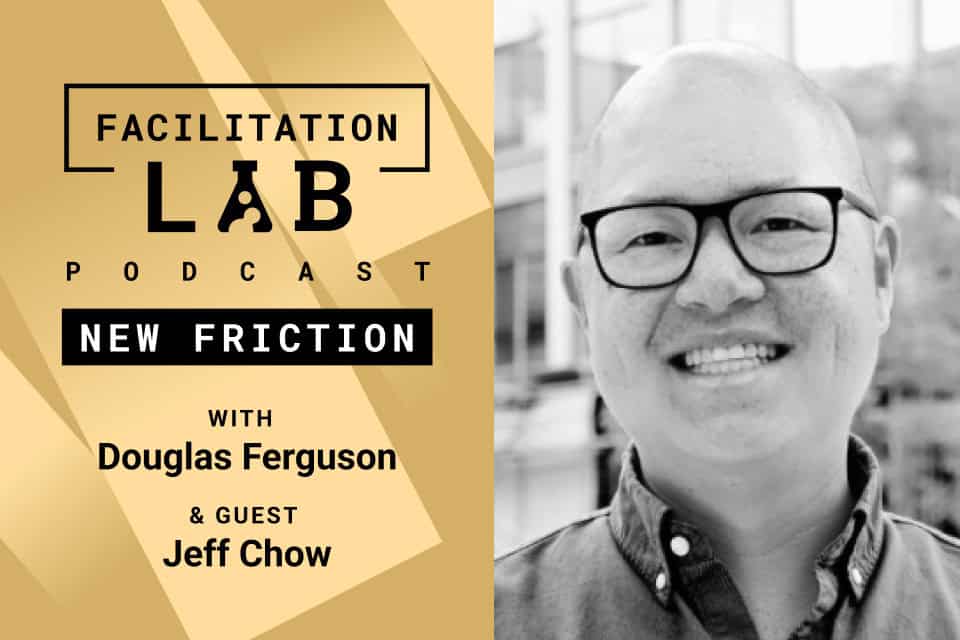
New Friction | August 25, 2026

In this episode of the Facilitation Lab podcast, host Douglas Ferguson interviews Jeff Chow, Chief Product and Technology Officer at Miro, about where friction is showing up inside product teams as AI reshapes how work gets done. Jeff describes how PMs prototyping in high fidelity, designers coding, and engineers orchestrating agents are collapsing old role boundaries, and argues the underlying tensions — who owns a decision, who gets paged at 2am, how a designer receives feedback — aren't new, just amplified. Much of the conversation centers on decision-making as the real bottleneck: Jeff makes the case that 10x individual output doesn't translate into 10x business results unless organizations can also accelerate cross-functional alignment and cascade decisions with their underlying context, not just their conclusions. He and Douglas dig into Miro's bet that a shared visual canvas — carrying both artifacts and a decision log of why choices were made — is the connective layer that keeps AI-assisted work and human teams moving together instead of fragmenting into isolated single-player sessions. The two also trade observations on viral AI adoption patterns inside organizations, the psychology of design crits applied to AI-generated work, and the early signs of "ephemeral UI" and custom, vibe-coded widgets reshaping what software teams expect to build for themselves.

post image
AI | August 21, 2026

AI transformation is often measured by how much friction it removes, but not every obstacle in the workplace is waste. Some friction creates opportunities for judgment, mentorship, collaboration, and the development of critical leadership skills. Explore why leaders need to look beyond speed and efficiency when redesigning work with AI, how removing too much productive friction can weaken teams over time, and what organizations can do to preserve the human interactions that build expertise, strengthen decision-making, and prepare the next generation of leaders in an AI-enabled workplace.

post image
Podcast | August 11, 2026

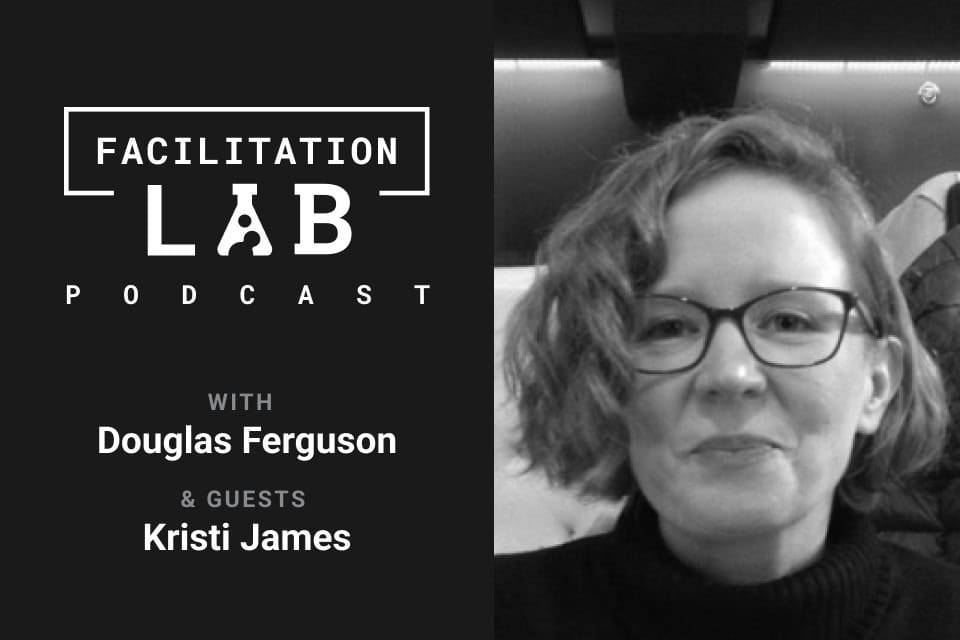
In this episode of the Facilitation Lab podcast, host Douglas Ferguson interviews Kristi James, a Lead Change Manager at the World Health Organization's Health Emergencies Programme in Berlin. Kristi traces her facilitation instincts back to childhood event planning and an early corporate career at DHL, where she discovered that sketching out processes and user journeys helped teams see where they belonged, resolve role confusion, and surface disagreement productively. She describes how a coach, Mary Beth Maines, helped her recognize creativity she had dismissed in herself, and how that shift now shapes the way she draws out scientists and doctors at WHO who are more comfortable debating than co-creating. Kristi walks through concrete practices, from visual cues and whiteboards that anchor group memory to 1-2-4-All exercises that convert passive listeners into active participants, and a recent example of using a user-journey diagram to unstick a stalled budget negotiation. The conversation closes on her core belief that visualizing a process doesn't just clarify tasks, it gives groups a safer, more concrete way to name resistance and work through conflict together.

post image
AI | August 3, 2026

As AI rapidly transforms how work gets done, one leadership skill is becoming more valuable than ever: facilitation. While AI can accelerate execution, it cannot replace the human ability to align teams, navigate complexity, build trust, and guide better decisions. Organizations that invest in facilitation create leaders who can turn diverse perspectives into meaningful action, foster collaboration, and unlock the full value of AI. Discover why facilitation is emerging as the defining leadership competency for the AI era and how it empowers teams to thrive through constant change, innovation, and increasingly complex challenges.

post image
AI | June 19, 2026

AI governance is no longer theoretical. Recent cases involving Air Canada's chatbot and iTutorGroup's AI recruiting system show that organizations, not AI tools, are legally accountable for AI-generated outcomes. This article explores what these landmark cases reveal about AI liability, governance failures, and the risks of deploying AI without human oversight. Learn why monitoring, data quality, human review, and cross-functional decision-making are essential for responsible AI implementation. Discover four practical governance patterns that help organizations reduce risk, improve accountability, and build AI systems that are both innovative and defensible.

post image
AI | June 12, 2026

AI is quietly reshaping the workforce in ways most leaders aren’t measuring. While concerns often focus on entry-level job loss, the bigger risk is the erosion of apprenticeship and skill development. Drawing on research from Cornell, MIT, Yale, Microsoft, and real-world examples from organizations adopting generative AI, this article explores how “AI chains” remove the learning experiences that turn juniors into future experts. Learn why experience starvation threatens leadership pipelines, how hidden AI adoption creates governance blind spots, and what organizations can do to preserve mentorship, judgment, and long-term capability while still capturing AI-driven productivity gains.

post image
AI | May 15, 2026

Organizations are no longer debating whether AI matters. They are being pulled into two very different futures. This post explores the growing divide between companies investing heavily in AI infrastructure and automation, and those focusing on the human capabilities required to make AI actually work inside organizations. Drawing from nearly a decade of experience in facilitation and AI transformation, it examines why trust, decision-making, collaboration, and organizational adaptability are becoming the real differentiators in the age of AI. A thought-provoking look at the widening gap between technological acceleration and human readiness, and why the middle ground is quickly disappearing.

post image

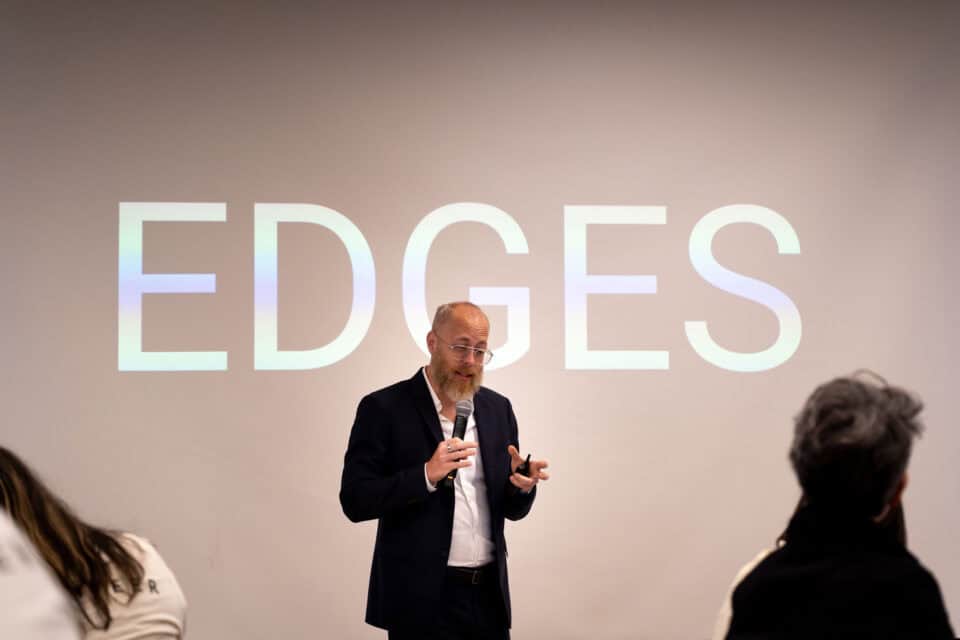
The 2026 Facilitation Lab Summit brought eight extraordinary facilitators together in Austin, Texas to explore the theme of Edges: the moments of tension, uncertainty, and emergence where the most powerful work gets done. Across two days of hands-on sessions, participants explored collective wisdom, whole intelligence, embodied presence, trauma-informed facilitation, the power of metaphor, and what it truly means to show up as a facilitator rather than just perform as one. This recap covers every session with links to the full blog post and video for each speaker, offering both a window into what happened and a practical resource for your ongoing facilitation practice.

post image
AI | May 8, 2026

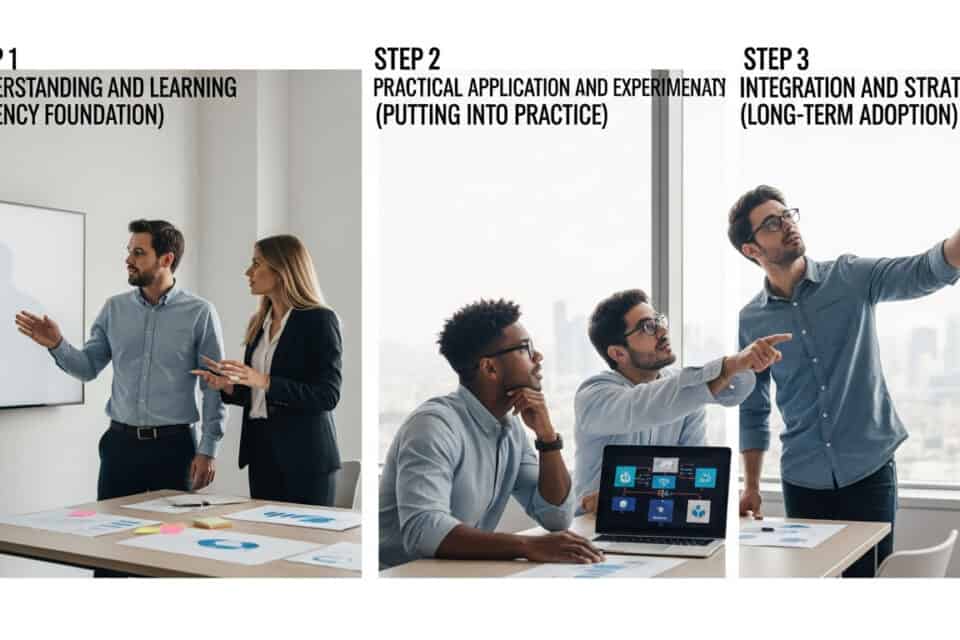
Most organizations are investing heavily in AI adoption but seeing little return because traditional training models fail to create lasting behavior change. Research from organizations like Gartner and Anthropic reveals that employees quickly forget one-time AI training and struggle to integrate AI into daily workflows. While licenses and training programs increase, real usage and collaboration remain low. This article explores why AI adoption is a design problem rather than a training problem, highlighting emerging research, behavioral insights, and a new three-part framework that helps organizations build true AI fluency through practice, iteration, and collaborative ways of working.

post image

At the 2026 Facilitation Lab Summit, Trudy Townsend closed two days of deep work with a session that went straight at a topic every facilitator encounters but rarely names: trauma is already present in every room you enter, and it shapes how people show up, engage, and disengage. Drawing on the ACEs study, Dan Siegel's hand model of the brain, and years of practice, Trudy offered facilitators a grounded understanding of how the nervous system works, what dysregulation looks like in a group, and what it actually takes to create safety. Not a checklist, but a stance. A must-read for anyone committed to building spaces where participants can genuinely show up as their best selves.