Fall 2026 Facilitation Certification Application Deadline Sept 18th
post image
Podcast | August 11, 2026

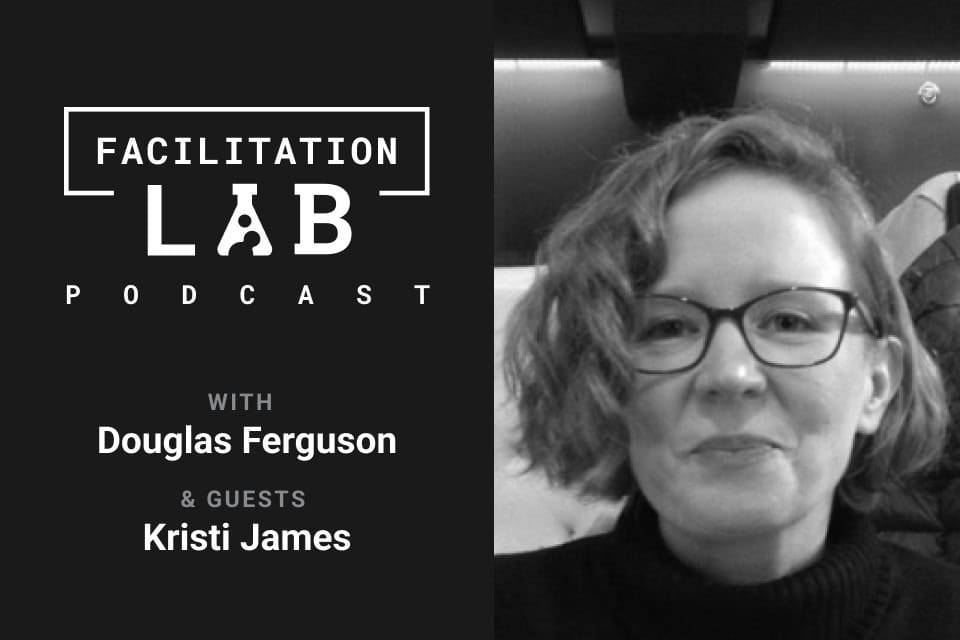
In this episode of the Facilitation Lab podcast, host Douglas Ferguson interviews Kristi James, a Lead Change Manager at the World Health Organization's Health Emergencies Programme in Berlin. Kristi traces her facilitation instincts back to childhood event planning and an early corporate career at DHL, where she discovered that sketching out processes and user journeys helped teams see where they belonged, resolve role confusion, and surface disagreement productively. She describes how a coach, Mary Beth Maines, helped her recognize creativity she had dismissed in herself, and how that shift now shapes the way she draws out scientists and doctors at WHO who are more comfortable debating than co-creating. Kristi walks through concrete practices, from visual cues and whiteboards that anchor group memory to 1-2-4-All exercises that convert passive listeners into active participants, and a recent example of using a user-journey diagram to unstick a stalled budget negotiation. The conversation closes on her core belief that visualizing a process doesn't just clarify tasks, it gives groups a safer, more concrete way to name resistance and work through conflict together.

post image
AI | August 3, 2026

As AI rapidly transforms how work gets done, one leadership skill is becoming more valuable than ever: facilitation. While AI can accelerate execution, it cannot replace the human ability to align teams, navigate complexity, build trust, and guide better decisions. Organizations that invest in facilitation create leaders who can turn diverse perspectives into meaningful action, foster collaboration, and unlock the full value of AI. Discover why facilitation is emerging as the defining leadership competency for the AI era and how it empowers teams to thrive through constant change, innovation, and increasingly complex challenges.

post image
AI | June 19, 2026

AI governance is no longer theoretical. Recent cases involving Air Canada's chatbot and iTutorGroup's AI recruiting system show that organizations, not AI tools, are legally accountable for AI-generated outcomes. This article explores what these landmark cases reveal about AI liability, governance failures, and the risks of deploying AI without human oversight. Learn why monitoring, data quality, human review, and cross-functional decision-making are essential for responsible AI implementation. Discover four practical governance patterns that help organizations reduce risk, improve accountability, and build AI systems that are both innovative and defensible.

post image

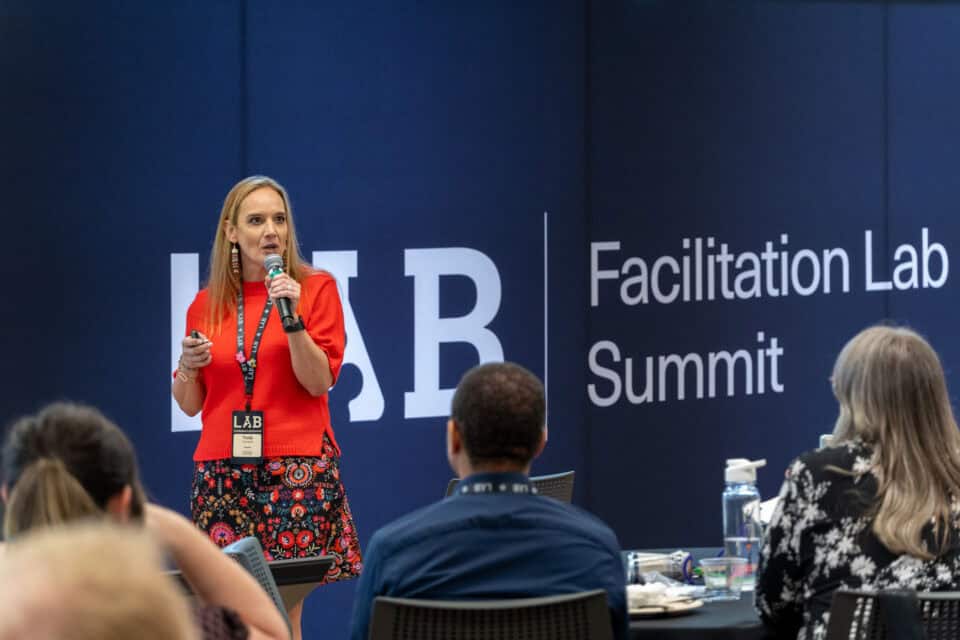
At the 2026 Facilitation Lab Summit, Trudy Townsend closed two days of deep work with a session that went straight at a topic every facilitator encounters but rarely names: trauma is already present in every room you enter, and it shapes how people show up, engage, and disengage. Drawing on the ACEs study, Dan Siegel's hand model of the brain, and years of practice, Trudy offered facilitators a grounded understanding of how the nervous system works, what dysregulation looks like in a group, and what it actually takes to create safety. Not a checklist, but a stance. A must-read for anyone committed to building spaces where participants can genuinely show up as their best selves.

post image
Facilitation Lab Summit | April 30, 2026

At the 2026 Facilitation Lab Summit, Robin Neidorf opened with a room full of people singing in three-part harmony and spent the next 90 minutes making a case that facilitation is not just a cognitive practice. It is a bodily one. Drawing on nearly 30 years of parallel practice in facilitation and yoga, Robin introduced tools for activating body-based awareness before and during sessions, a practical framework for understanding what different group sizes do to the relational field, and experiential exercises that help facilitators sense more and interpret less. A must-read for anyone who has ever felt the room shift before they could name why, and wanted better tools to work with that knowing.

post image
Facilitation Lab Summit | April 23, 2026

At the 2026 Facilitation Lab Summit, Brian Buck invited facilitators to ask a question most technique-focused training skips entirely: who are you becoming in this work, and why does it matter? Drawing on a three-part fire model built around ember, kindle, and illuminate, Brian offered a practical framework for shifting from a facilitator who brings the fire to one who ignites it in others. Through a paired exercise in illuminating presence, participants experienced firsthand how asking different questions and offering different kinds of attention can unlock belonging, collective intelligence, and breakthroughs that no agenda alone can produce. A powerful session for any facilitator ready to make presence their most important tool.

post image
AI | April 23, 2026

Discover why AI adoption often falls short despite powerful technology. This article explores five hidden organizational frictions—consensus, trust, governance, identity, and talent pipeline—that quietly derail AI initiatives. Learn how misalignment, lack of trust, unclear rules, shifting roles, and broken development paths prevent teams from realizing ROI. Backed by real-world insights and research, it reframes AI transformation as a human and facilitation challenge, not a technical one. If your organization is investing in AI but struggling to see results, this guide reveals what’s really holding you back and how to address it.

post image
Facilitation Lab Summit | April 16, 2026

At the 2026 Facilitation Lab Summit, Joe Randel — roadie, musician, radio DJ, and talent buyer — used the lens of a DJ to explore one of facilitation's most important and underexamined questions: how do you find your voice? Drawing on the DJ's approach to repertoire, interpretation, and real-time presence, Joe offered a practical framework for understanding what makes your facilitation distinctly yours — and why that voice is your greatest competitive advantage in an age of AI. From the cut-blend-let-it-end decision framework to the idea that journey is always co-created rather than prescribed, this session is a must-read for any facilitator looking to move from competent to truly irreplaceable.

post image
AI | April 14, 2026

This post explores why decision-making, alignment, and facilitation are becoming the most critical skills for leaders. Learn how organizations can redesign meetings, prioritize decision quality over output, and build cultures that embrace productive conflict. Discover why facilitation is emerging as a competitive advantage and how leaders can start improving collaboration today to stay ahead in an AI-driven world.

post image

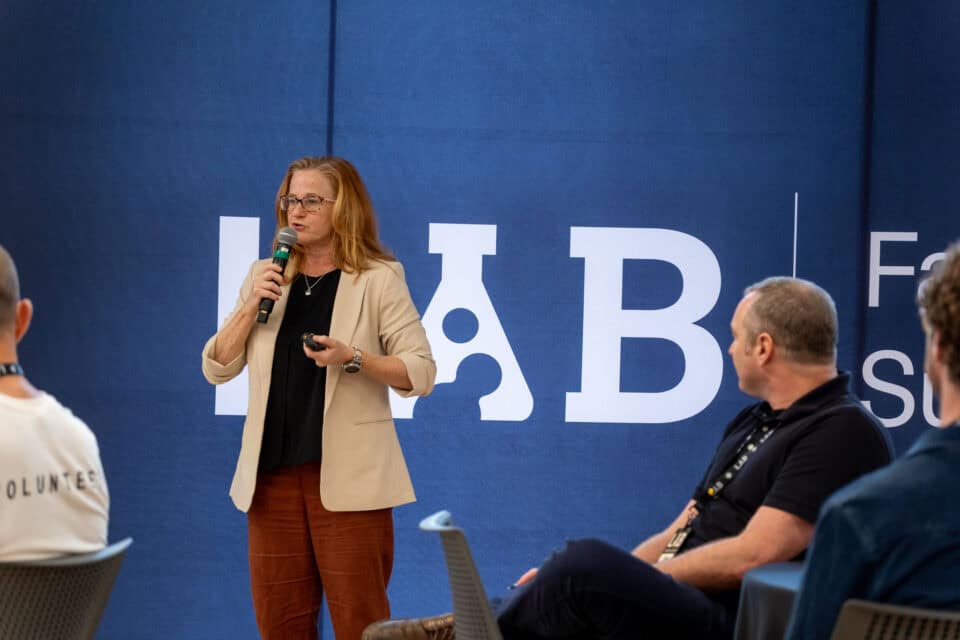
At the 2026 Facilitation Lab Summit, Shannon Hart drew on five years of facilitating innovation sessions at Shell International to make a compelling case: real innovation doesn't come from a perfect agenda. It comes from creating the right conditions and trusting what emerges. From building a solid base camp before sessions begin, to running exercises that reveal how ideas evolve through co-creation, to protecting the open space where emergence actually happens, Shannon offered a practical and human-centered framework for facilitating in the unknown. A must-read for anyone who wants to move from controlling the room to truly holding it.