Winter 2027 Facilitation Certification Deadline January 1st
post image
New Friction | November 5, 2026

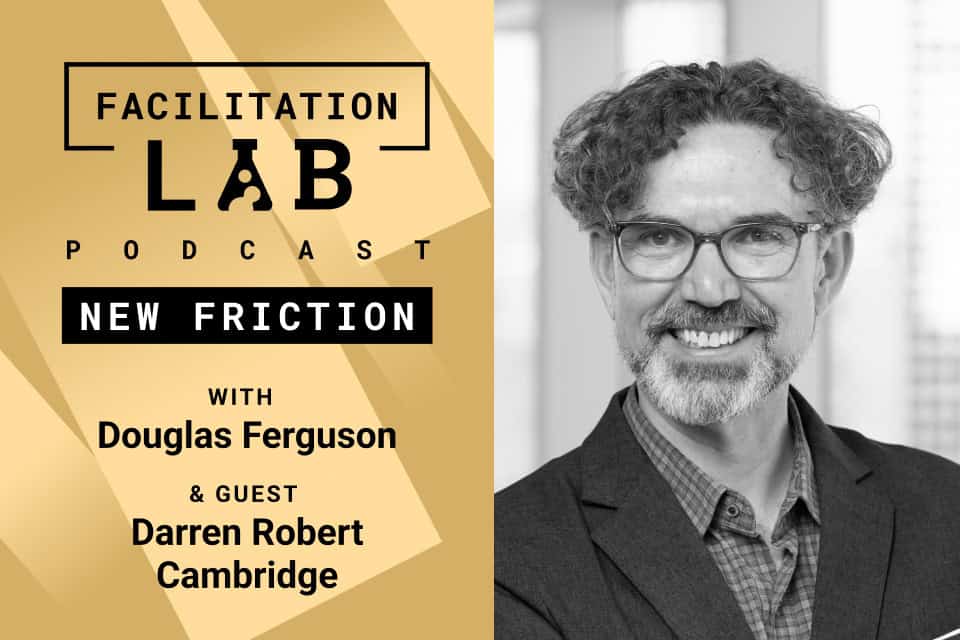
In this episode of the New Friction series from the Facilitation Lab podcast, host Douglas Ferguson interviews Darren Cambridge, Managing Director of the Institute for Trustworthy AI in Law & Society (TRAILS) at the University of Maryland. They start from Darren's framing that the next decade's central question is capabilities and authentic humans together, not humans fitted in around AI. Darren distinguishes agency (having a voice) from autonomy (freedom within boundaries), and explains how explicit guardrails can support autonomy while still leaving people a say in where the lines are drawn. He draws on aviation, basketball, and football to argue that safety practices and rules evolve through iteration, and he warns that participation theater, where organizations listen but don't share power, does more harm than good. The two discuss productive versus unproductive friction, how efficiency-first AI strategies can erode skill development and produce too much low-value output, and why organizations with strong participation and deliberation habits will handle AI more steadily. Darren closes with an invitation for practitioners to partner with researchers at TRAILS.
post image
New Friction | October 29, 2026

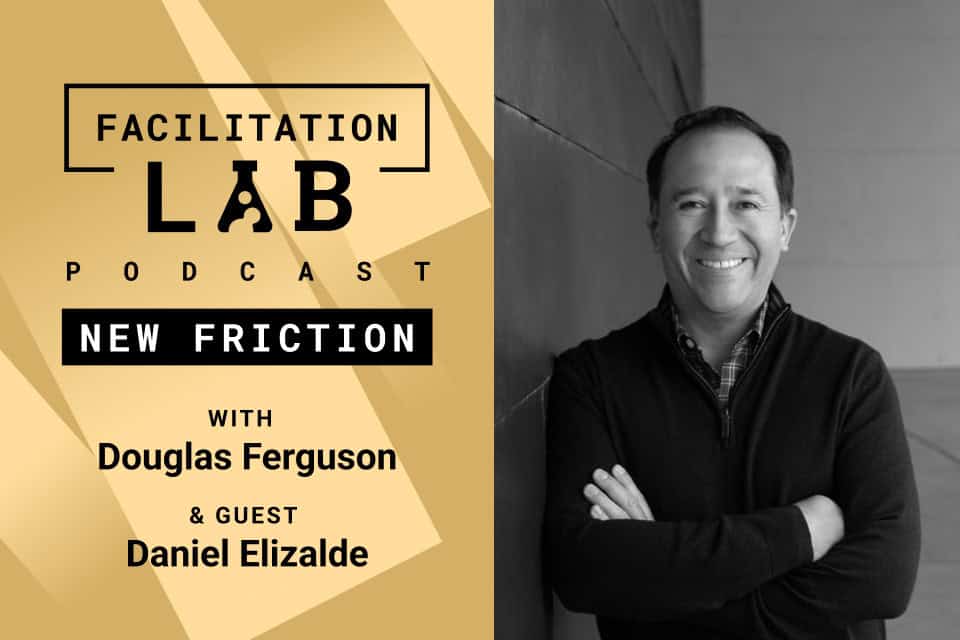
In this episode of the New Friction series from the Facilitation Lab podcast, host Douglas Ferguson interviews Daniel Elizalde, VP of Product and Technology at ReUp Education, about why faster AI-powered building doesn't automatically produce business results. Daniel describes the "speed fallacy" in B2B, where long sales cycles, security reviews, and limited customer attention cap how fast products can be adopted. He explains how he now treats product and engineering as a portfolio, pausing roadmaps and moving teams to wherever the real bottleneck sits, anchored by a shared company vision that his team communicated through an AI-generated video. The conversation covers misaligned incentives in sales and marketing, the risk of everyone vibe coding their own tools without a shared data layer, and the standardized agents and skills his engineers use with Claude. Daniel closes with the F1 analogy that a faster engine means little if the rest of the car and the track can't keep up.

post image
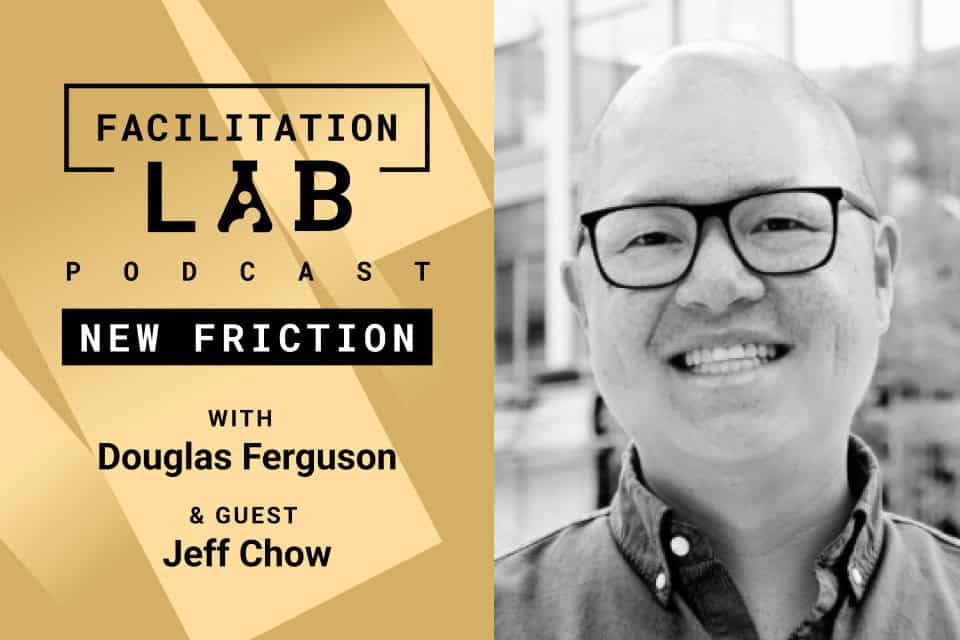
New Friction | August 25, 2026

In this episode of the Facilitation Lab podcast, host Douglas Ferguson interviews Jeff Chow, Chief Product and Technology Officer at Miro, about where friction is showing up inside product teams as AI reshapes how work gets done. Jeff describes how PMs prototyping in high fidelity, designers coding, and engineers orchestrating agents are collapsing old role boundaries, and argues the underlying tensions — who owns a decision, who gets paged at 2am, how a designer receives feedback — aren't new, just amplified. Much of the conversation centers on decision-making as the real bottleneck: Jeff makes the case that 10x individual output doesn't translate into 10x business results unless organizations can also accelerate cross-functional alignment and cascade decisions with their underlying context, not just their conclusions. He and Douglas dig into Miro's bet that a shared visual canvas — carrying both artifacts and a decision log of why choices were made — is the connective layer that keeps AI-assisted work and human teams moving together instead of fragmenting into isolated single-player sessions. The two also trade observations on viral AI adoption patterns inside organizations, the psychology of design crits applied to AI-generated work, and the early signs of "ephemeral UI" and custom, vibe-coded widgets reshaping what software teams expect to build for themselves.

post image
Podcast | August 11, 2026

In this episode of the Facilitation Lab podcast, host Douglas Ferguson interviews Kristi James, a Lead Change Manager at the World Health Organization's Health Emergencies Programme in Berlin. Kristi traces her facilitation instincts back to childhood event planning and an early corporate career at DHL, where she discovered that sketching out processes and user journeys helped teams see where they belonged, resolve role confusion, and surface disagreement productively. She describes how a coach, Mary Beth Maines, helped her recognize creativity she had dismissed in herself, and how that shift now shapes the way she draws out scientists and doctors at WHO who are more comfortable debating than co-creating. Kristi walks through concrete practices, from visual cues and whiteboards that anchor group memory to 1-2-4-All exercises that convert passive listeners into active participants, and a recent example of using a user-journey diagram to unstick a stalled budget negotiation. The conversation closes on her core belief that visualizing a process doesn't just clarify tasks, it gives groups a safer, more concrete way to name resistance and work through conflict together.

post image
Podcast | June 18, 2026

In this episode of the New Friction podcast, host Douglas Ferguson speaks with Jeff Grabill, Dean of the College of Arts and Sciences at the University at Buffalo, recorded in the immediate aftermath of the IHE US AI Summit 2026, which both men attended. Grabill recounts what emerged from that two-day working convening: the foundation of the Buffalo Statement, a collective public agenda for AI in higher education, and reflects on why the room's patience, grounded confidence, and willingness to question prior assumptions exceeded his expectations. The conversation explores why universities, often criticized for moving slowly, may possess exactly the right instincts for AI transformation: designing conversations intentionally, engineering productive friction, and moving fast and slow at the same time. Ferguson and Grabill dig into how AI has relocated rather than eliminated friction, particularly in learning environments, where effortless output now threatens the productive struggle that actually builds expertise and ideas. They close on a librarian's insight from the summit — "I don't care if AI created it, I care if it's true" — and Grabill's call for businesses and universities to actively seek one another out as partners in working through this moment.

post image
Podcast | May 26, 2026

In the inaugural episode of New Friction, host Douglas Ferguson and Erik Skogsberg explore how AI has shifted organizational friction from execution to decision-making and alignment. While AI accelerates production, it magnifies existing dysfunctions when teams lack collaborative habits. They introduce the concept of "multiplayer AI"—moving beyond individual productivity gains toward team-level collaboration. The conversation emphasizes that facilitation, judgment, and organizational health are now the critical differentiators. Practical takeaways include assessing whether your organization operates in "single player" or "multiplayer" AI mode and intentionally slowing down at key decision points to maximize human impact.

post image
Podcast | May 5, 2026

New Friction is a podcast from Douglas Ferguson on the real organizational challenges of AI transformation. AI made execution almost free but most organizations are still stuck. Not because the technology doesn't work, but because the people problems got harder: decision-making, governance, and trust friction. Each episode features practitioners navigating AI change at ambitious organizations — what broke, what they tried, and what actually worked. We explore the shift from building to deciding, the 4x perception gap between leaders and the workforce, multiplayer AI organizations, and how the next generation learns judgment. Episode 1 drops May 26, 2026.

post image
Podcast | January 20, 2026

In this episode of the Facilitation Lab podcast, host Douglas Ferguson interviews Erin Warner, founder of Head + Heart Coaching and Facilitation. Erin shares her journey from traditional leadership training to interactive facilitation, emphasizing the power of peer learning, rituals, and the “flow channel” for team engagement. She discusses authentic facilitation, embodied practices, and her holistic “3D wellness” approach. Erin also explores how words and self-talk shape reality, encouraging leaders to foster connection, courage, and creativity. The episode highlights facilitation as a transformative tool for personal and collective growth in organizations and beyond.

post image
Podcast | December 17, 2025

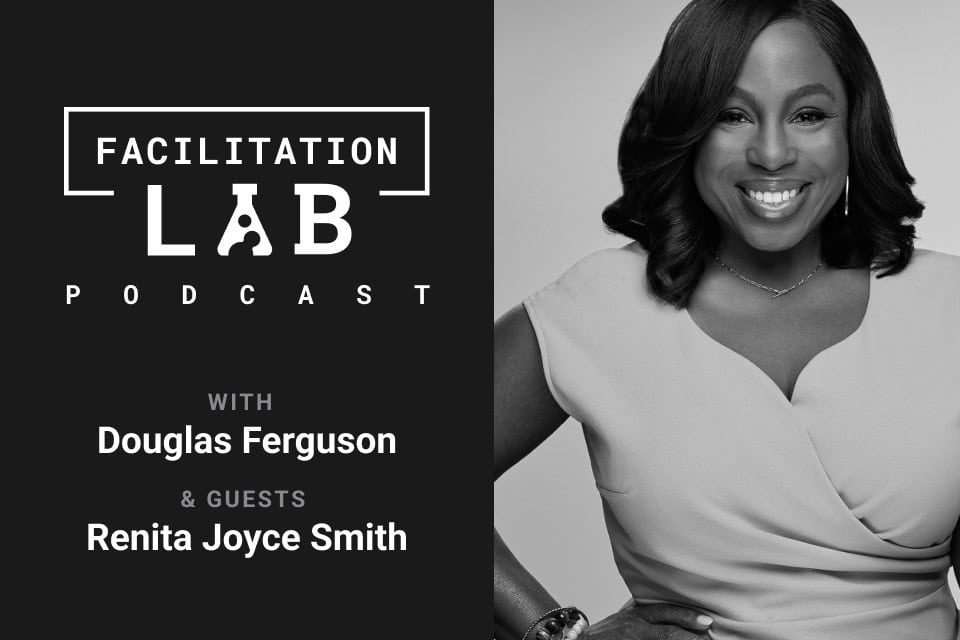
In this episode of the Facilitation Lab Podcast, host Douglas Ferguson interviews Renita Joyce Smith, CEO of Leap Forward Coaching and Consulting. Renita shares her journey into facilitation, emphasizing the importance of authenticity, humor, and humanity in meetings. She discusses how facilitation bridges structure and human connection, offers practical techniques for engagement, and highlights the transformative impact of skilled facilitation on organizational culture. Renita also explores the role of technology, the value of adaptability, and the need to prioritize human connection in the workplace, leaving listeners inspired to lead with empathy and authenticity.

post image
Podcast | December 8, 2025

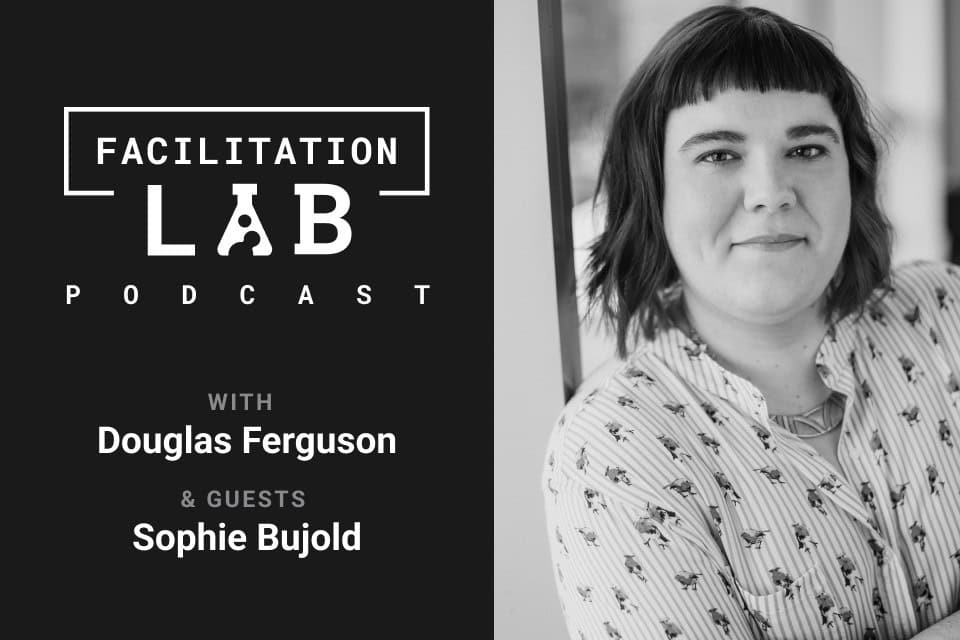
In this episode of the Facilitation Lab podcast, host Douglas Ferguson interviews Sophie Bujold of Cliqueworthy. Sophie shares how her early experiences in MIRC chat rooms shaped her approach to building human-centered, connected communities. They discuss the importance of trust, generosity, and adaptability in online spaces, as well as Sophie’s journey from digital explorer to expert facilitator. Sophie reflects on lessons learned, balancing structure with emergent conversations, and her impact on social causes, including the UN Sustainable Development Goals. The episode highlights the enduring power of technology and facilitation to foster authentic connection and belonging.