Winter 2027 Facilitation Certification Deadline January 1st
post image
New Friction | November 5, 2026

In this episode of the New Friction series from the Facilitation Lab podcast, host Douglas Ferguson interviews Darren Cambridge, Managing Director of the Institute for Trustworthy AI in Law & Society (TRAILS) at the University of Maryland. They start from Darren's framing that the next decade's central question is capabilities and authentic humans together, not humans fitted in around AI. Darren distinguishes agency (having a voice) from autonomy (freedom within boundaries), and explains how explicit guardrails can support autonomy while still leaving people a say in where the lines are drawn. He draws on aviation, basketball, and football to argue that safety practices and rules evolve through iteration, and he warns that participation theater, where organizations listen but don't share power, does more harm than good. The two discuss productive versus unproductive friction, how efficiency-first AI strategies can erode skill development and produce too much low-value output, and why organizations with strong participation and deliberation habits will handle AI more steadily. Darren closes with an invitation for practitioners to partner with researchers at TRAILS.

post image
AI | November 3, 2026

AI is producing work faster than traditional approval workflows can handle, creating bottlenecks in code reviews, security checks, and organizational decision-making. But speeding up review gates or adding more reviewers won't solve the underlying problem. Effective AI review gate redesign requires distinguishing repetitive approval toil from protective friction that catches meaningful risks. Learn why AI-generated work overwhelms human judgment, how risk-based routing and smarter approval workflows can reduce unnecessary delays, and why organizations must rethink which decisions truly require human oversight. Discover how to redesign AI governance processes that protect quality, improve efficiency, and scale without sacrificing accountability.

post image
New Friction | October 29, 2026

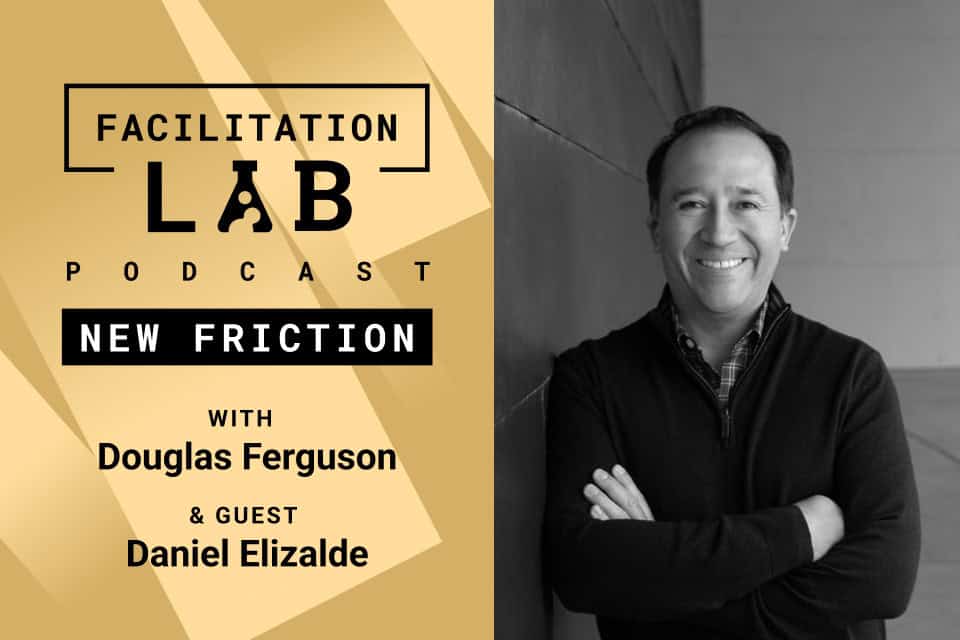
In this episode of the New Friction series from the Facilitation Lab podcast, host Douglas Ferguson interviews Daniel Elizalde, VP of Product and Technology at ReUp Education, about why faster AI-powered building doesn't automatically produce business results. Daniel describes the "speed fallacy" in B2B, where long sales cycles, security reviews, and limited customer attention cap how fast products can be adopted. He explains how he now treats product and engineering as a portfolio, pausing roadmaps and moving teams to wherever the real bottleneck sits, anchored by a shared company vision that his team communicated through an AI-generated video. The conversation covers misaligned incentives in sales and marketing, the risk of everyone vibe coding their own tools without a shared data layer, and the standardized agents and skills his engineers use with Claude. Daniel closes with the F1 analogy that a faster engine means little if the rest of the car and the track can't keep up.

post image
New Friction | October 7, 2026

In this episode of the New Friction podcast, host Douglas Ferguson interviews Bryon Jacob, a technology advisor and AI strategist who previously co-founded data.world as CTO and spent a decade at HomeAway. Jacob argues that the teams succeeding with AI-assisted software development share one thing in common: rigorous governance — including near-100% automated test coverage, strictly enforced architectural standards, and code bases deliberately organized for agentic development. He explains why zero tech debt has shifted from aspirational to economically necessary, since AI amplifies good patterns and railroads bad ones, making clean, well-documented, thoroughly tested code the prerequisite for real productivity gains. The conversation examines how leaders are rethinking code review, prototyping, and the entire software development lifecycle, including why a CEO drafting a pull request in Claude Code is a fundamentally better spec than any design brief. Jacob closes by drawing the arc from assembly language to compilers to natural language programming, framing today's moment as the natural next step in a decades-long evolution — and a preview of the governance-driven transformation already coming for legal and every other structured profession.

post image
New Friction | September 24, 2026

In this episode of the Facilitation Lab podcast, host Douglas Ferguson interviews Yvette Cronje, Head of UX Design for HP's unified consumer app experience, about how design leadership is shifting as AI compresses production time. Cronje argues that AI hasn't removed the hard part of design so much as relocated it: craft is shifting from executing pixels to judgment, taste, and critique, and teams need shared principles and decision frameworks in place before they diverge into AI-generated options, or misalignment simply accelerates alongside execution. She and Ferguson trace how this plays out in practice, from workshops that align teams on principles before production, to using AI as a critique partner and coaching tool rather than a production shortcut, to the delegation and communication skills leaders increasingly need as ICs manage AI collaborators. They also discuss trust, both customers' trust in AI-driven product features and organizational trust in people through constant change, as a central design and leadership problem. The conversation closes on reframing AI anxiety as an opportunity for curiosity and growth rather than a threat to craft or job security.

post image
New Friction | September 11, 2026

In this episode of the Facilitation Lab podcast, host Douglas Ferguson interviews Alyssa Coughlin, Director and Chief of Staff for Autodesk's Data, AI, and ML Platform organization, about what it actually takes to move a large engineering company from AI-enabled to AI-native. Coughlin describes how bottlenecks have shifted away from writing code toward code review, deployment permissions, and design decisions now that AI has made execution fast and cheap. She walks through concrete changes her org has made, including abandoning two-week Scrum sprints for Kanban flow, moving from PRDs to spec-driven development consumable by both humans and AI, and building shared "knowledge graph" brains to catch duplicated work before it ships. Throughout, she frames change management as a balance of carrot and stick, arguing that engineers aren't losing their jobs so much as shifting from author to orchestrator, and that managers themselves must stay hands-on with the tools to coach effectively. She closes by describing AI as an amplifier that exposes organizational seams rather than a fix, so the real work is continuously finding and addressing the friction it reveals.

post image
New Friction | August 25, 2026

In this episode of the Facilitation Lab podcast, host Douglas Ferguson interviews Jeff Chow, Chief Product and Technology Officer at Miro, about where friction is showing up inside product teams as AI reshapes how work gets done. Jeff describes how PMs prototyping in high fidelity, designers coding, and engineers orchestrating agents are collapsing old role boundaries, and argues the underlying tensions — who owns a decision, who gets paged at 2am, how a designer receives feedback — aren't new, just amplified. Much of the conversation centers on decision-making as the real bottleneck: Jeff makes the case that 10x individual output doesn't translate into 10x business results unless organizations can also accelerate cross-functional alignment and cascade decisions with their underlying context, not just their conclusions. He and Douglas dig into Miro's bet that a shared visual canvas — carrying both artifacts and a decision log of why choices were made — is the connective layer that keeps AI-assisted work and human teams moving together instead of fragmenting into isolated single-player sessions. The two also trade observations on viral AI adoption patterns inside organizations, the psychology of design crits applied to AI-generated work, and the early signs of "ephemeral UI" and custom, vibe-coded widgets reshaping what software teams expect to build for themselves.

post image
New Friction | August 5, 2026

In this episode of the Facilitation Lab podcast, host Douglas Ferguson interviews Joe McLean, Group Product Manager for the AI Stream at Miro, who led the overhaul of Miro's Sidekicks and Flows AI surfaces launched at Canvas 25. Joe traces how his hobbyist love of Eurorack modular synthesizers shaped Flows, arguing that visible, patchable connections reveal what a chat box hides, and that a good tool's structure can enable rather than constrain creativity. He and Douglas dig into what he calls the "visual trace" - treating an AI agent like a new hire who needs onboarding, check-ins, and a replayable record so a whole team, not just one operator, can trust and build on its work. The conversation covers how cheap execution is reshaping product development, from teams showing up to meetings with working prototypes instead of slide decks, to Miro's internal VibeLab tool solving the "Git problem" of AI-generated design branches, to the rise of throwaway personal software built for an audience of one. They close on a candid discussion of the switching costs of chat-interface lock-in and Joe's conviction that the healthiest relationship with AI comes from building things with it, not just asking it questions.

post image
New Friction | July 22, 2026

In this episode of the Facilitation Lab podcast, host Douglas Ferguson interviews Taran Lent, Chief Technology Officer at Illumia, about how his organization moved from individual AI experimentation to enterprise-wide capability. Lent describes building an "enablement task force" that deliberately avoided becoming a governing bottleneck, instead creating conditions for employees to play, learn, and share what worked, before this year's push to elevate personal AI habits into shared team and company-wide skills, standards, and vetted tools. He talks about using AI as a contrarian thought partner and even having it grade his own interviewing and meeting behavior, while cautioning that transcripts alone miss tone and body language. The conversation also covers the governance side of scaling AI, including a stakeholder review process for new tools and skills, the four-to-six-week approval timeline for new vendors, and guardrails to prevent incidents like an unauthenticated internal dashboard. Lent connects this to Illumia's recent merger of Transact and CBORD, crediting a shared "humble, hungry, smart" culture for making the integration smoother, and closes by arguing that judgment, creativity, and human discernment remain the differentiators as AI adoption accelerates.

post image
New Friction | July 14, 2026

In this episode of the Facilitation Lab podcast, host Douglas Ferguson interviews Sarah B. Nelson, Distinguished Designer at Kyndryl and co-founder of Kyndryl Vital, about why AI's promise to remove friction is actually surfacing the human dynamics organizations have always avoided facing. They unpack how a single word like trust splinters into distinct concerns — model accuracy, data use, organizational credibility — and why treating human in the loop as a rubber-stamp step risks disengagement and stripped-out meaning. Nelson draws on the NeuroLeadership Institute's SCARF model to explain why AI rollouts stall on status, certainty, autonomy, relatedness, and fairness rather than on the technology itself, and shares stories spanning cybersecurity burnout, Holacracy at Zappos, and the extraction economics behind AI training data. The conversation keeps returning to her insistence on designing with people rather than at or for them, and on imagination as the resource most at risk of being engineered out of enterprises chasing speed. She closes with a Buckminster Fuller line she keeps returning to: that people are called to be architects of the future, not victims of it.