Winter 2027 Facilitation Certification Deadline January 1st
post image
AI | October 9, 2026

Build an AI governance framework that supports responsible adoption and helps teams move faster. Learn how to govern AI tools and agents like new hires, with least-privilege access, clearly defined roles, named human accountability, and review processes that match the stakes. Explore why blanket restrictions encourage shadow AI, how an AI driver's license can help employees earn access through practical skills, and why involving people in policy design builds trust and ownership. Voltage Control shares concrete steps to assess agent permissions, write AI job descriptions, strengthen review rituals, and create governance your organization can understand and follow.


post image
AI | October 2, 2026

Why are legal teams adopting AI faster than engineering? This article explores a surprising trend emerging across regulated enterprises: legal professionals are embracing AI not because they are more confident, but because they feel the greatest urgency to adapt. Drawing on insights from leaders at Endava, LinkedIn, and Gartner research, it examines how fear, leadership, and organizational psychology shape successful AI transformation. Learn why governance should empower rather than restrain high-stakes teams, and discover practical strategies for helping legal, compliance, and other regulated functions become active designers of AI adoption instead of passive reviewers.

post image
AI | August 28, 2026

AI adoption doesn’t fail because employees need more mandates, training, or oversight. It fails when organizations deploy AI without involving the people whose work will be transformed by it. Explore why employee involvement, psychological safety, and trust are critical to successful AI transformation, and why shadow AI adoption may reveal more about your workforce than traditional adoption metrics. Learn how an involve-before-mandate approach can uncover real AI opportunities, reduce resistance, build trust, and create AI-enabled workflows that employees actually want to use.

post image
Podcast | August 11, 2026

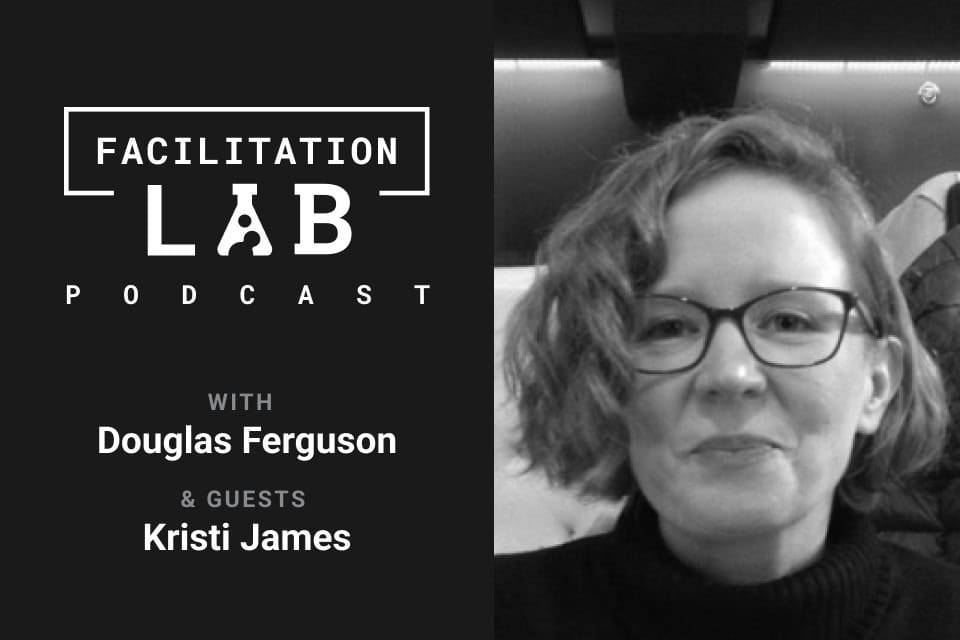
In this episode of the Facilitation Lab podcast, host Douglas Ferguson interviews Kristi James, a Lead Change Manager at the World Health Organization's Health Emergencies Programme in Berlin. Kristi traces her facilitation instincts back to childhood event planning and an early corporate career at DHL, where she discovered that sketching out processes and user journeys helped teams see where they belonged, resolve role confusion, and surface disagreement productively. She describes how a coach, Mary Beth Maines, helped her recognize creativity she had dismissed in herself, and how that shift now shapes the way she draws out scientists and doctors at WHO who are more comfortable debating than co-creating. Kristi walks through concrete practices, from visual cues and whiteboards that anchor group memory to 1-2-4-All exercises that convert passive listeners into active participants, and a recent example of using a user-journey diagram to unstick a stalled budget negotiation. The conversation closes on her core belief that visualizing a process doesn't just clarify tasks, it gives groups a safer, more concrete way to name resistance and work through conflict together.

post image
AI | July 24, 2026

Most organizations are measuring AI success the wrong way. Tokens consumed, adoption rates, lines of code generated, and tasks completed may look impressive on a dashboard, but they don’t reveal whether AI is actually improving performance or creating business value. Learn why traditional AI productivity metrics can mislead leaders, how output accounting differs from outcome accounting, and which metrics matter most. Explore a smarter framework for measuring AI transformation through quality, autonomy, novel work, cost-to-serve, and measurable business impact.

post image
Design Thinking | June 30, 2026

According to statistics, 79% of companies agree that design thinking improves the ideation process, and 71% have enjoyed a significant shift in their work culture after adopting design thinking. While it does contain the word design, design thinking and it’s iterative approach to creative ideas is not only for design teams, in fact, any team can benefit from this human-centered design process.

post image

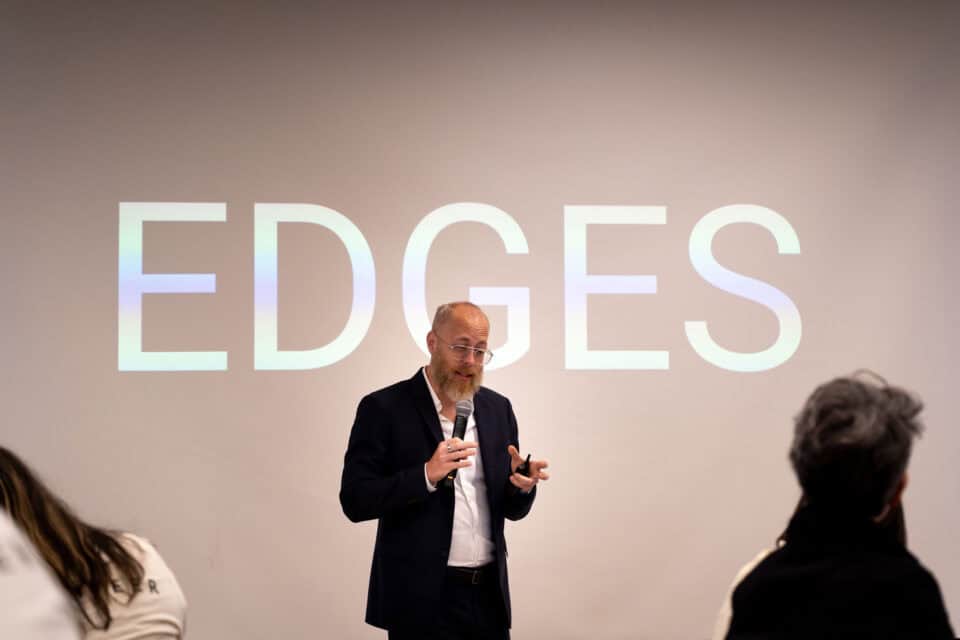
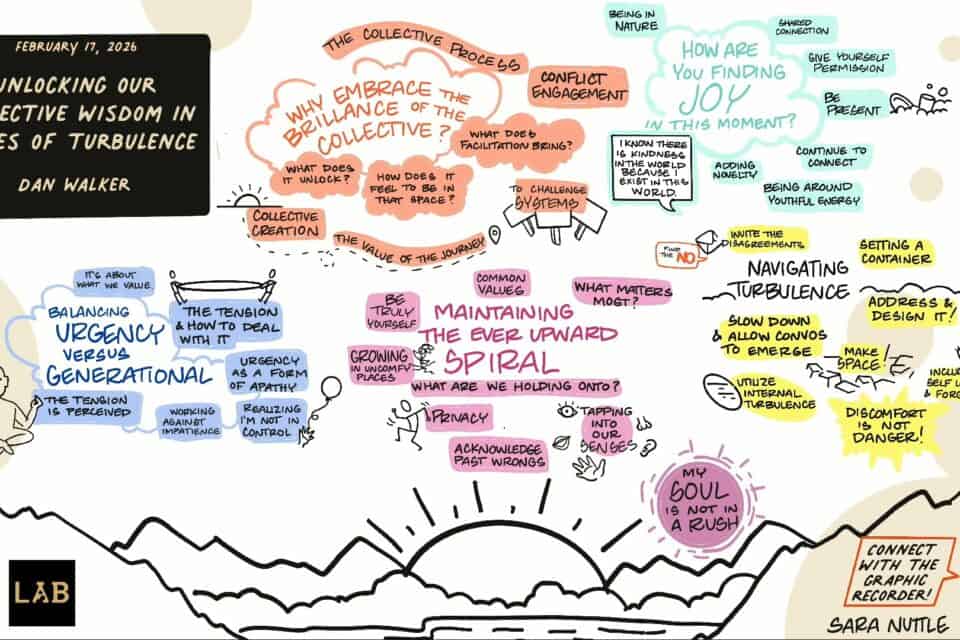
The 2026 Facilitation Lab Summit brought eight extraordinary facilitators together in Austin, Texas to explore the theme of Edges: the moments of tension, uncertainty, and emergence where the most powerful work gets done. Across two days of hands-on sessions, participants explored collective wisdom, whole intelligence, embodied presence, trauma-informed facilitation, the power of metaphor, and what it truly means to show up as a facilitator rather than just perform as one. This recap covers every session with links to the full blog post and video for each speaker, offering both a window into what happened and a practical resource for your ongoing facilitation practice.

post image
AI | April 23, 2026

Discover why AI adoption often falls short despite powerful technology. This article explores five hidden organizational frictions—consensus, trust, governance, identity, and talent pipeline—that quietly derail AI initiatives. Learn how misalignment, lack of trust, unclear rules, shifting roles, and broken development paths prevent teams from realizing ROI. Backed by real-world insights and research, it reframes AI transformation as a human and facilitation challenge, not a technical one. If your organization is investing in AI but struggling to see results, this guide reveals what’s really holding you back and how to address it.

post image
AI | April 14, 2026

This post explores why decision-making, alignment, and facilitation are becoming the most critical skills for leaders. Learn how organizations can redesign meetings, prioritize decision quality over output, and build cultures that embrace productive conflict. Discover why facilitation is emerging as a competitive advantage and how leaders can start improving collaboration today to stay ahead in an AI-driven world.

post image
Meeting Culture | February 25, 2026

At the 2026 Facilitation Lab Summit in Austin, eight facilitators explored what it means to lead from the “edge”—where certainty dissolves and something new can emerge. This recap traces facilitation’s evolution from expert control to illuminated presence: shifting from certainty to curiosity, expertise to authenticity, analysis to whole intelligence, structure to exploration, and control to safety. Featuring insights on collective intelligence, expedition-style innovation, finding your facilitation voice, embodiment, belonging, and trauma-informed practice—plus why these skills matter now as organizations face unprecedented complexity.